4 min readNoidaMar 27, 2026 01:15 AM IST
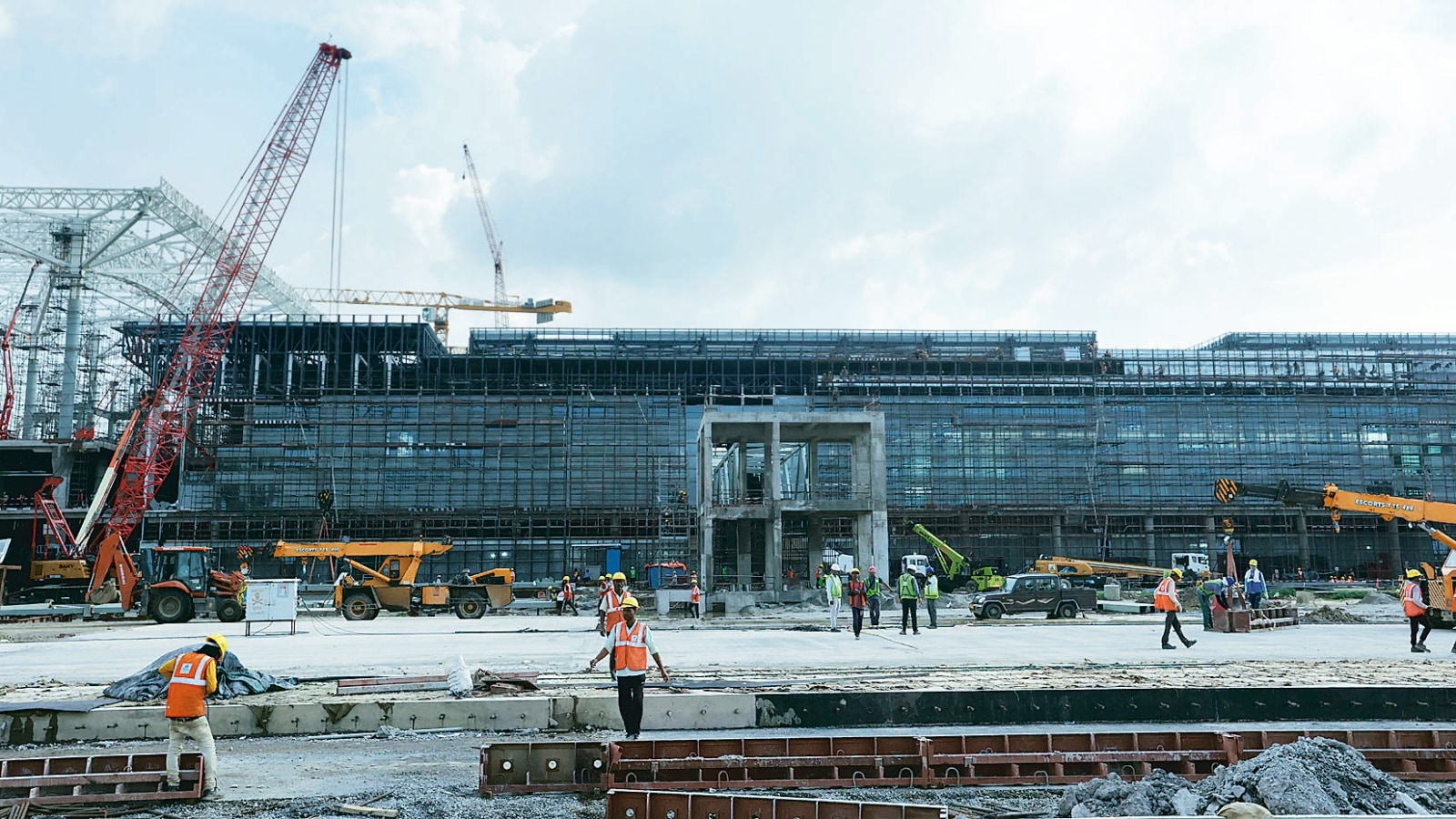
Prime Minister Narendra Modi will inaugurate Phase 1 of Noida International Airport in Jewar on Saturday, the second international airport of the Delhi-NCR region, which will also serve parts of Western Uttar Pradesh.
An investment of Rs 11,200 crore has been made in Phase 1 of the project, which is being developed under a Public-Private Partnership (PPP) model.


According to a release issued by the Prime Minister’s Office on Thursday, the PM will undertake a walkthrough of the terminal building at 11.30 am, followed by the inauguration at noon. He will also address the public on the occasion, the release said.
The airport is coming up on 1,334 hectares of land adjacent to the Yamuna Expressway, about 40 km from Pari Chowk in Greater Noida. The airport received security approval from the Bureau of Civil Aviation Security (BCAS) earlier this month. Flights are expected to begin soon, even though no official timeline has been announced yet.
Noida Airport officials said the design of the airport is inspired by the culture and heritage of UP, Uttarakhand, and Rajasthan. “Local materials and limestone calcined clay cement has been used in the construction, and the Noida International Airport aspires to operate at carbon net zero,” officials told The Indian Express on Thursday.
The most striking feature of the terminal building is its roof, says an official document – “a sweeping, translucent white canopy that rises and falls gently” like the waves of the Yamuna, Ganga and Hindon rivers.
“The simple layout of the terminal will ensure ease of operations, efficient flows and intuitive wayfinding,” officials from the design team said. Noida International Airport Chief Executive Officer Christoph Schnellmann had said earlier: “This world-class airport will combine Swiss efficiency and Indian hospitality to offer rich experiences and comprehensive commercial attractions and services to its passengers.”
Story continues below this ad
According to the official document, red stone has been used in the floor of the check-in hall, which features ornamental lattice (jali) screens that allow natural light and ventilation. Airport officials said Terminal T1 covers an area of approximately 1,38,000 square metres. “By the time Phase 4 is complete, the combined terminal footprint will approach 5,00,000 square metres,” says the document.
This airport has been positioned as the gateway to some of India’s most spiritually and culturally significant destinations including the Taj Mahal, the Kumbh Mela sites, the Buddhist sites of Shravasti and Kushinagar, and the towns of Mathura and Vrindavan.
The airport will initially have a passenger handling capacity of 12 million passengers per annum, which is expected to be scaled up to 70 million passengers per annum upon full development. The first runway, 3,900 metres long and 45 metres wide, will be capable of handling wide-body aircraft, and will have all modern navigation systems and advanced airfield lighting for all-weather operations.
The cargo hub at the airport spans 80 acres of land, and is expected to provide quick, convenient, intermodal connectivity to manufacturing hubs in the country. It is designed to handle more than 2.5 lakh metric tonnes of cargo annually, expandable to around 18 lakh metric tonnes, and includes a dedicated 40-acre Maintenance, Repair, and Overhaul (MRO) facility, an official release said.
Story continues below this ad
According to officials, the airport has been designed as a sustainable and future-ready infrastructure project that integrates energy-efficient systems and environmentally responsible practices.
The airport “marks a significant milestone in India’s journey towards becoming a global aviation hub”, says the PMO release. The airport was commissioned in 2021 to lighten the existing passenger load on Delhi’s Indira Gandhi International Airport, which handled nearly 8 crore fliers in 2024.