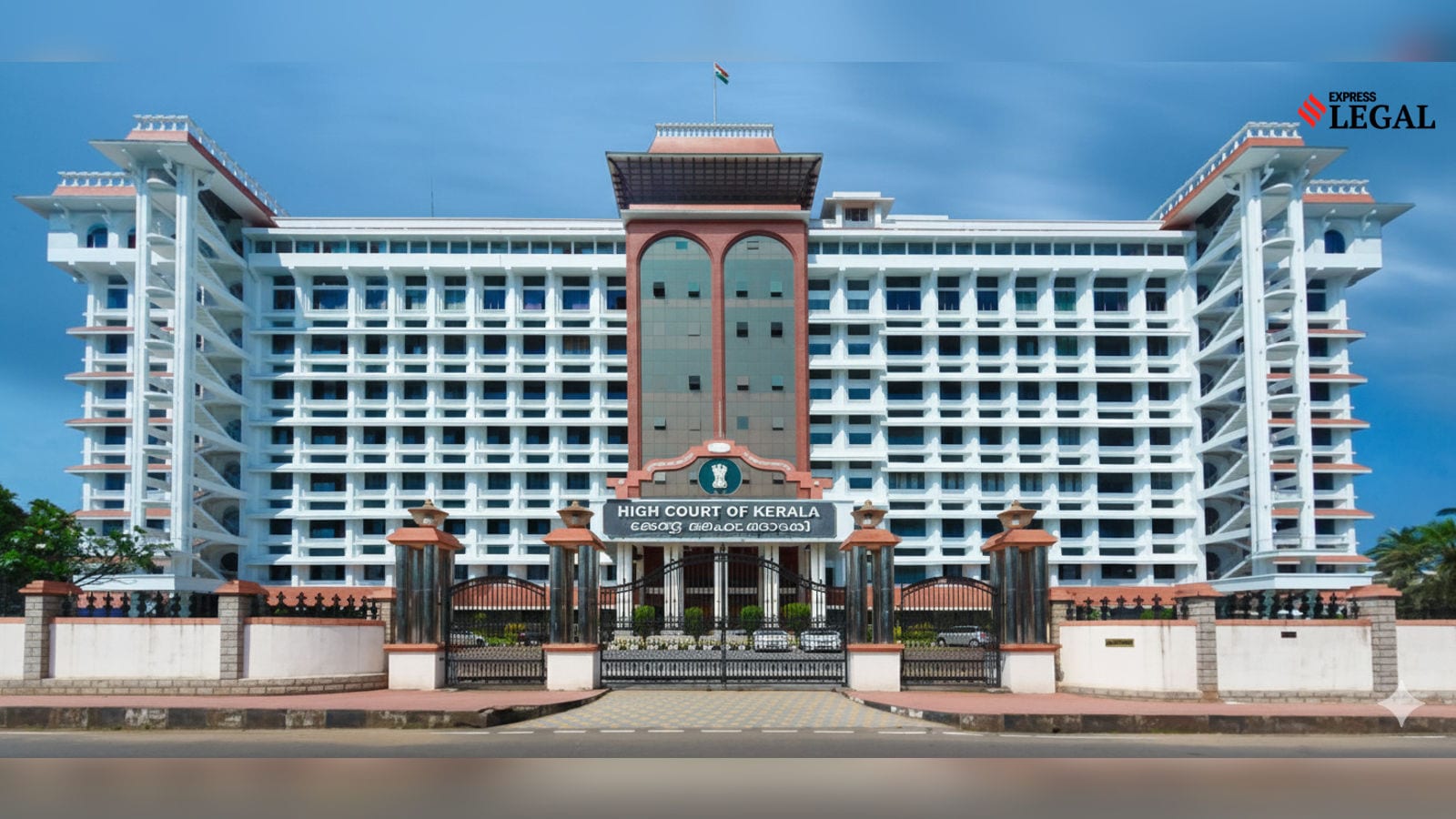
Kerala High Court news: The Kerala High Court has criticised the “belated” and “rigid” approach taken by the Chief Electoral Officer (CEO) regarding the court’s essential internal infrastructure and expressed concern over the delay by the election authorities in granting exemption from the Model Code of Conduct (MCC) for urgent civil and electrical works.
A division bench of Chief Justice Soumen Sen and Justice Syam Kumar V M was hearing a Public Interest Litigation (PIL) filed by the Registrar General of the High Court.
The plea was seeking to stay requirements that would force the judiciary to route its internal infrastructure proposals through a government-constituted screening committee during the election period.
“The application of the Model Code of Conduct to such essential judicial infrastructure works, rigidly and mechanically, is likely to defeat the very object of the MCC and result in unwarranted interference with the functioning of a constitutional institution,” the court said on April 7.
 The bench will next hear the matter on April 10.
The order added that there cannot be any doubt that the communication dated 21 March 2026 was not immediately attended to by the Chief Electoral Officer and that the communication was received belatedly and perilously close to the summer vacation.
High court v ECI
On March 21, the Registrar General addressed a communication to the CEO requesting exemptions from the MMC. The request pertained to essential and urgent internal infrastructure works, including civil, electrical, and electronics projects, intended to be executed during the summer vacation commencing April 11.
On April 2, the CEO informed the Registrar General that the proposal requires prior clearance from the Election Commission of India, and directed that such proposals should be routed through the Screening Committee constituted by the Government of Kerala.
Story continues below this ad
Appearing for the ECI, advocate M Ajay pointed to Clause ‘C’ and Clause 5(1) of the MCC, which stipu;ates that works cannot start if they have not actually commenced in the field, even if work orders were issued before the MCC.
High court’s case
Representing the high court, advocate Leo Lukose submitted that details and operational aspects of the screening committee were not communicated to the petitioner on time by the office of the CEO and were made available only after a considerable lapse of time, thereby contributing to further delay in processing the request submitted by the petitioner.
He further submitted that the execution of the proposed works involves multiple stages, including administrative sanction, tendering, award of contract, mobilisation of resources, and actual execution.
He stated that each of these stages requires sufficient lead time, and any delay at the initial stage of approval would render the entire exercise impracticable within the limited duration of the summer vacation.
Story continues below this ad
It was further submitted that failure to execute the said works during the Summer Vacation would necessarily result in the same being carried out during working days, thereby causing disruption to court proceedings, inconvenience to litigants, advocates, and staff, and adversely affecting the administration of justice.
He further argued that the application of the MCC to such essential judicial infrastructure works, rigidly and mechanically, is likely to defeat the very object of the MCC and result in unwarranted interference with the functioning of a constitutional institution.
Court’s directions
- The works are urgent and essential. Unless the works commence immediately, it would completely disrupt the functioning of the court.
- We direct the CEO to immediately forward and place the letter of the Registrar General before the screening committee, and the entire process contemplated in the order issued by the General Administration (Coordination) Department.
- The matter shall be listed on April 10, along with the report being filed by the ECI and the CEO.
- The Public Works Department shall take necessary steps and coordinate with the Election Commission by furnishing the information that may be required for a decision by the Election Commission in this regard.
- In view of the fact that the matter is urgent and the summer vacation of the Court will commence on and from April 11, and during this period, the internal works described in the letter dated March 21 are required to be completed.