Iran and its allies have launched attacks on targets in Saudi Arabia and other Gulf states and blockaded their shipments after the US and Israel attacked it on 28 February.
In Yemen, Iran-backed Houthi rebels – who control the north of the country – have been fighting government forces, which are backed by a Saudi-led coalition.
Last month the Houthis announced a “maritime embargo” against Saudi Arabia and targeted Saudi airports, oil facilities and tankers in the Red Sea.
Saudi Arabia has responded with strikes targeting Houthi positions and by forming a new naval coalition to protect shipping in the Red Sea and the Gulf of Aden.
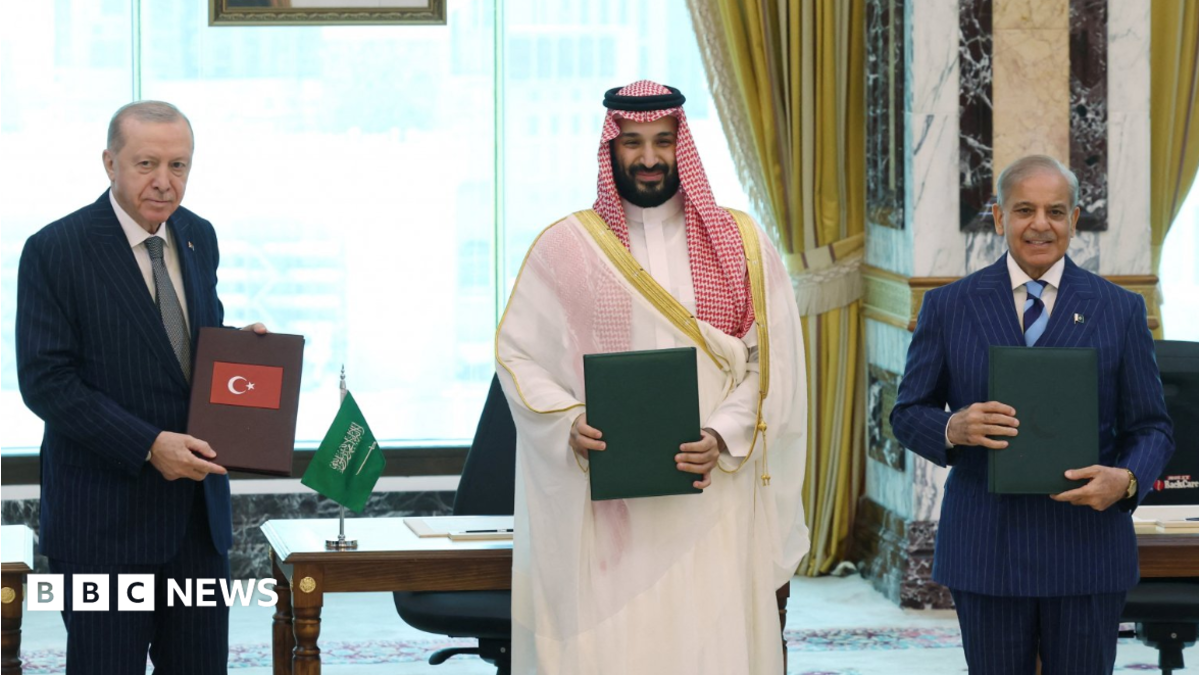
Announcing the pact on Friday, Pakistan’s foreign ministry said an attack on any of the three states “shall be regarded as an attack against them all”.
The “Mecca Joint Defence Agreement” pledges mutual support between the three Sunni states, but provides no specifics on the obligations of each.
A Turkish official quoted by Reuters news agency said the pact was “purely defensive in nature”.
The three countries have expressed concern as the conflict between Israel and Iran shows no sign of abating and their common ally, the US, struggles to contain regional repercussions.
Saudi Arabia brings the financial power and is one of the largest weapons purchasers.
Turkey is the second-largest military force in Nato, with an advanced defence production capacity. Pakistan has nuclear weapons.