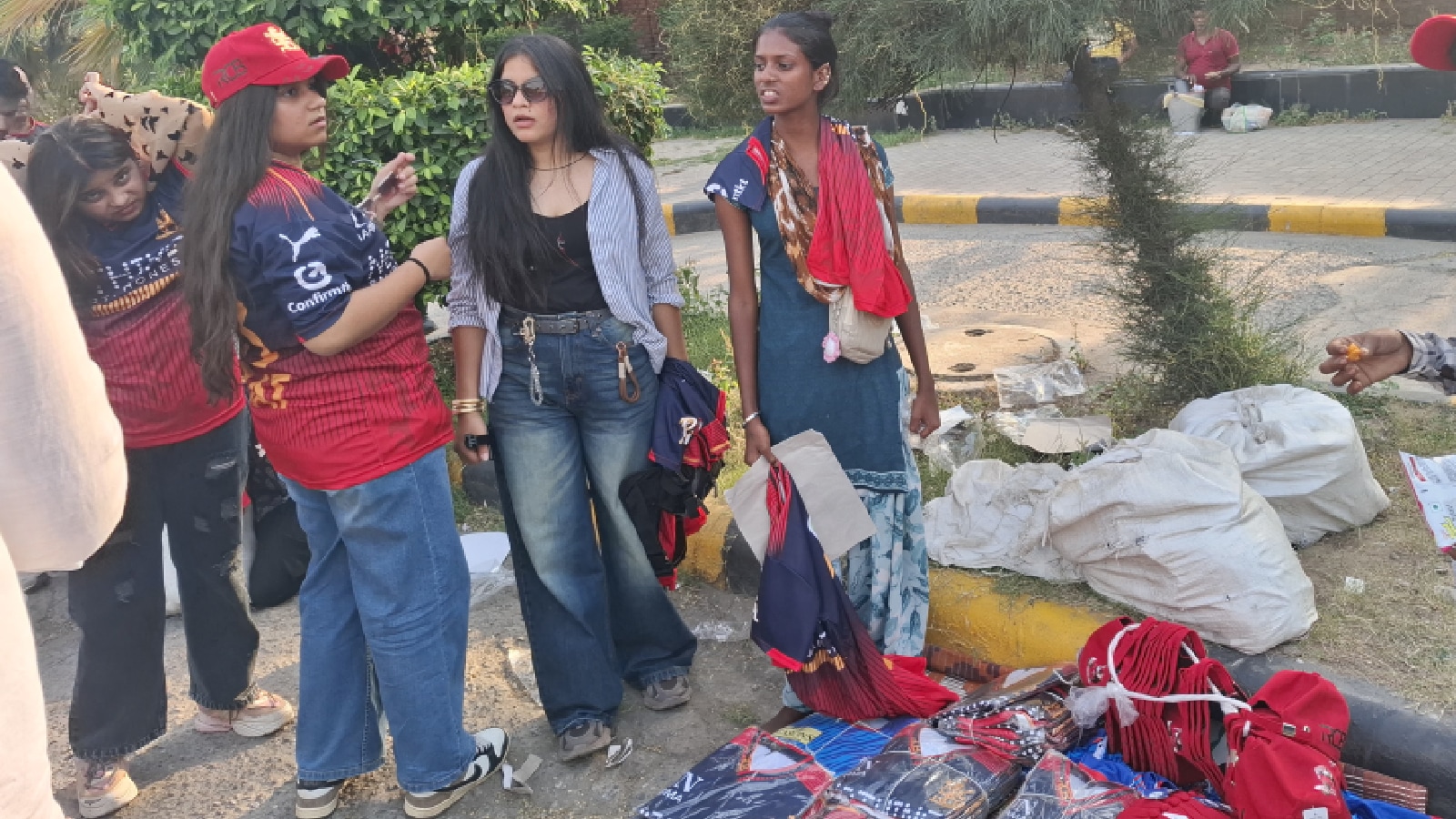
Outside the Arun Jaitley Stadium in Delhi, the evening builds gradually. It’s April 27 and chants of “RCB, RCB” rise from groups of supporters as they spill out of autos and the Delhi Metro. Between the sea of Royal Challengers Bengaluru (RCB) and Delhi Capitals jerseys at entry gates, along the pavement is a parallel economy.
There are blue plastic sheets spread on the concrete path, jerseys and caps in neat piles while some are draped on shoulders as a waking advertisement. It’s a market that depends on these ardent, exuberant crowds, who have paid anywhere from Rs 1,400 to Rs over 2,500 for a ticket, but their margins as merch vendors are way narrower.
For 28-year-old Maahi, who has been selling jerseys for nearly 10 years, the cricket leagues remain the most reliable period of business in the year. “If it’s a good match, I can earn Rs 2,000- 3,000,” she says, arranging a stack of RCB jerseys. Originally from Bihar, she moved to Delhi after her marriage about 12 years ago. “My husband does not get paid regularly. So this helps run the house” she says, “There is a lot of hard work, but not much profit.”
She sources the jerseys from Mumbai at around Rs 160 a piece and sells them for Rs 200 to Rs 250, depending on demand. On days when popular teams such as RCB, Mumbai Indians, Chennai Super Kings play, she is able to sell about 40 to 50 pieces. Unsold stock, she says, is returned to the supplier in Mumbai.
A few metres away, another vendor, Imran 46, travels from Ghaziabad during the season, says the earnings are not guaranteed. “Some days we sell 20, some days 50. It depends on the match and the crowd. Weekend matches are better.” He says, indicating to the pile of unsold jerseys because of a weekday match. “People come, ask the price and leave. Many already have branded jerseys or jerseys bought earlier when they arrive,” he says.
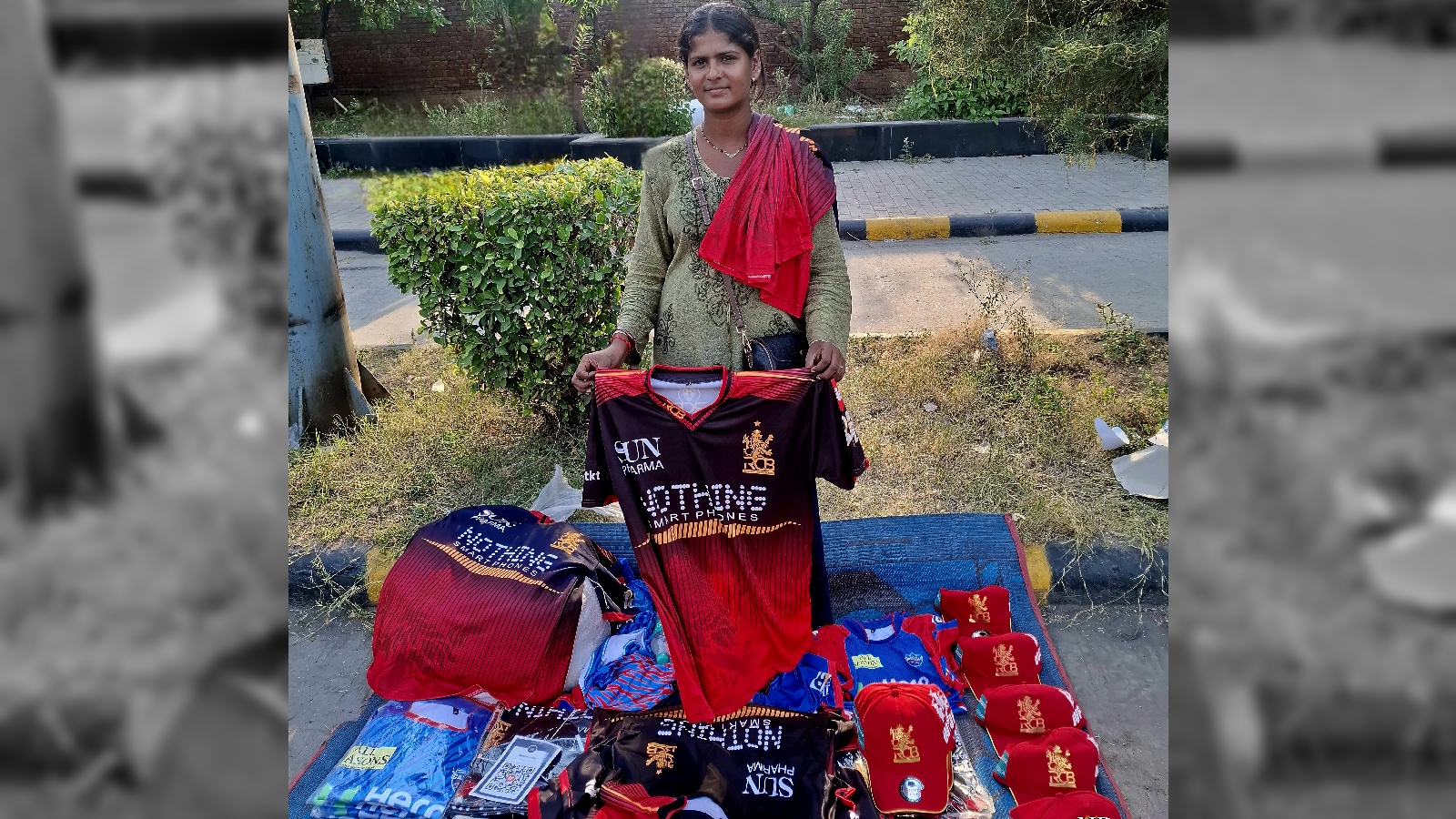 A vendor who sells team jerseys for anything between Rs 200 to Rs 250. (Photo: Navya Dua)
For 24-year-old Rohit Kumar, the work is temporary. A resident of Seelampur, he works at a garment shop the rest of the year, stitching and packing clothes. “During the IPL, I take time out to come here,” he says, “From this we can earn money faster but this job is not steady. After the matches, I go back to my regular work. You cannot depend on this for the whole year.”
Story continues below this ad
The vendors arrive early morning to secure a spot near the stadium, but where they sit is often negotiated. “We are not allowed on the main road. The police ask us to move to the side because of the crowd,” says Maahi. Most vendors operate without formal licences, relying on the turnout outside the stadium rather than access to licensed selling spaces, which are often inside the stadium.
They rely usually on last-minute buyers – those who arrive without team colours but want to be a part of the crowd. “Some people don’t want to spend too much. They just want something for the match,” says Imran.
As the evening goes by, the difference between those entering the stadium and those waiting outside become sharper. Groups of fans, many already in branded jerseys, walk past without stopping, while others pause briefly, bargain and move on. Nineteen-year-old college student Aditya Sharma, who is attending the match with his friends, says he chose to buy the jersey here, outside the stadium. “Branded ones are too expensive. Here you can get something for Rs 200-300. It’s good for one match,” he says.
For vendors, the sale is less about impulse, more about survival. “We sit the whole day for this.” says Imran, “If the match is not between popular teams or if the crowd is less, then we get nothing.”
Story continues below this ad
By the time the match begins and the crowd lessens, the pace slows down. Some vendors pack up early, while others wait for the post-match rush. The outcome, they say, is rarely certain. “Some days it works, some days it doesn’t,” says Maahi, folding unsold jerseys back into her bag as the first cheers from inside the stadium start rising. “But, we come with hope for every match,” she says.
Navya Dua is an intern with The Indian Express