In a major step towards conducting the panchayat elections in Uttar Pradesh, the state Cabinet on Monday (May 18) approved the formation of the UP State Dedicated Backward Classes Commission to determine reservation for Other Backward Classes (OBCs) in three-tier Panchayati Raj institutions.
The move is in line with directions issued by the Supreme Court and the Allahabad High Court on implementing OBC reservation in local body elections.
Hearing a petition in March, the Allahabad HC had taken a stern view of the delay in forming the commission and asked if the process would be completed before the ongoing five-year tenure of panchayats ends on May 26.
Why does this matter?
Courts have made it clear that states cannot just hand out political reservations to OBCs in local elections. They must first pass a strict “triple test”:
This includes:
-Setting up a dedicated commission
-Conducting empirical inquiry into backwardness
-Determining reservation proportion within constitutional limits.
By forming this commission, UP is checking the first box to legally clear the way for voting.
What is the larger political significance?
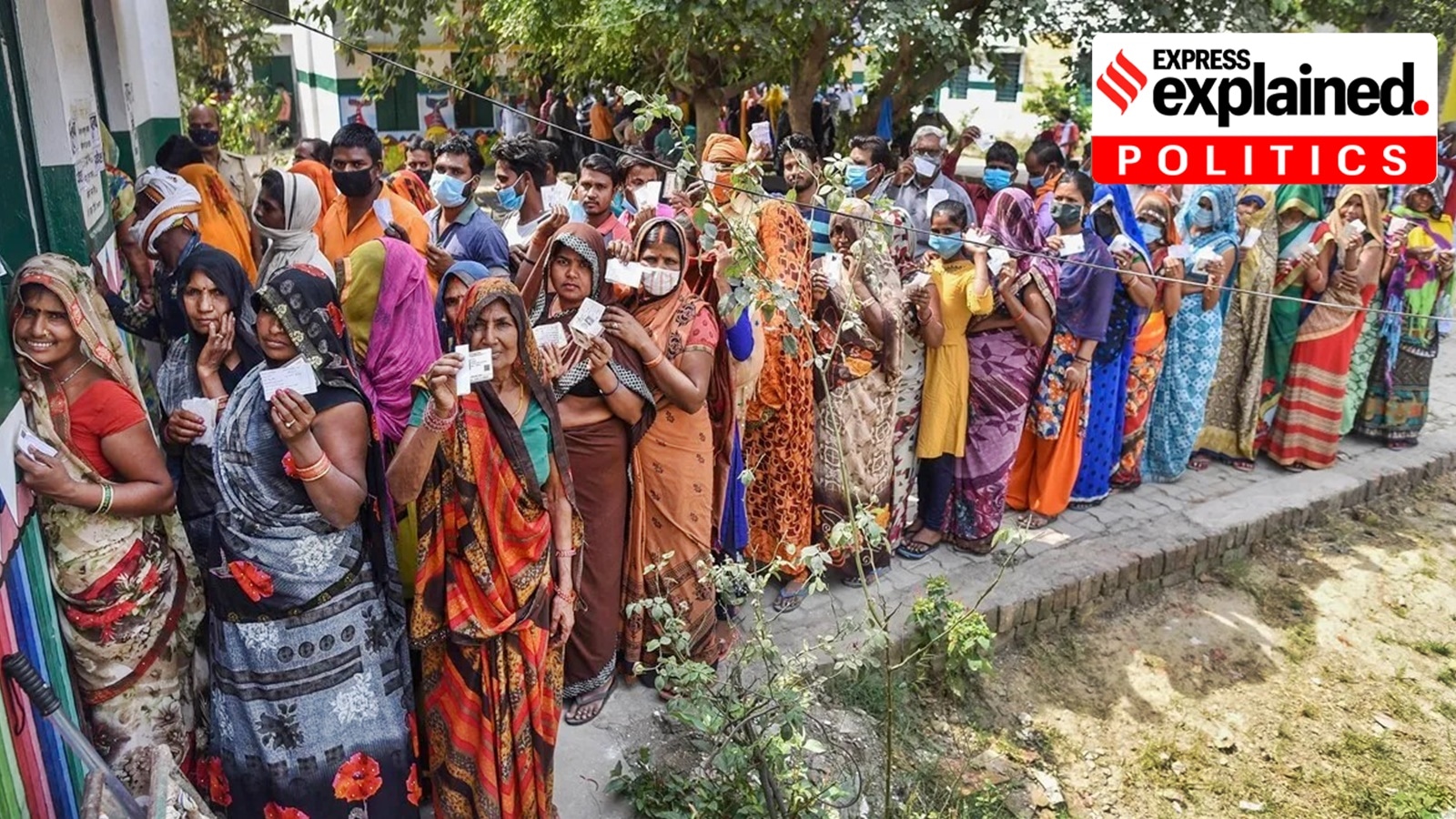
Panchayat elections in UP are a mammoth affair, covering over 8 lakh posts, at different levels of panchayat. In the 2021 polls, elections were held for 7.32 lakh wards across 58,189 Gram Panchayats, 75,855 wards of 826 Kshetra Panchayats, and 3,051 members of 75 Zila Panchayats.
Story continues below this ad
Although local body elections in the state are not contested on symbols of political parties, considering the significant role played by the grassroot representatives in the Assembly elections, major political parties are treating the grassroots polls as a key battleground to show their strength.
And in the run-up to the 2027 UP Assembly elections, national parties and even regional parties are eyeing the panchayat polls to strengthen their ground and “bargaining power”.
What will the commission actually do?
1. Conduct empirical study
According to the Cabinet note, the commission will carry out a detailed and updated empirical study to assess the nature, extent and impact of backwardness among OBC communities across the state.
Based on the findings, the panel will recommend the proportion and manner of reservation for backward classes in rural local bodies.
2. Examine reservation framework
Story continues below this ad
The commission will examine provisions related to reservation under the Uttar Pradesh Panchayat Raj Act, 1947, and the Uttar Pradesh Kshettra Panchayat and Zila Panchayat Adhiniyam, 1961.
It will also review the operational framework under:
-Uttar Pradesh Panchayat Raj (Reservation and Allotment of Seats and Offices) Rules, 1994
-Uttar Pradesh Kshettra Panchayat and Zila Panchayat (Reservation and Allotment of Seats and Offices) Rules, 1994
Officials said these rules govern reservation and allotment of seats for members and chairpersons across gram panchayats, kshettra panchayats and zila panchayats.
The reservation breakdown
Story continues below this ad
According to the Cabinet note, under Article 243D of the Constitution and relevant state laws, reservation in panchayat bodies is provided for Scheduled Castes (SCs), Scheduled Tribes (STs) and backward classes.
The Cabinet note states that while reservation for SCs and STs will continue in proportion to their population, OBC reservation in panchayats will remain capped at 27% of the total seats.
The note further mentions that if updated population data for backward classes is unavailable, their population can be assessed through a prescribed survey process.
Who is on the commission?
It will comprise five members having expertise and knowledge of backward class issues, appointed by the state government.
Story continues below this ad
One of the members will be a retired High Court judge, who will serve as chairperson. The tenure of the chairperson and members will ordinarily be six months, officials said.