5 min readNew DelhiMay 5, 2026 08:36 PM IST
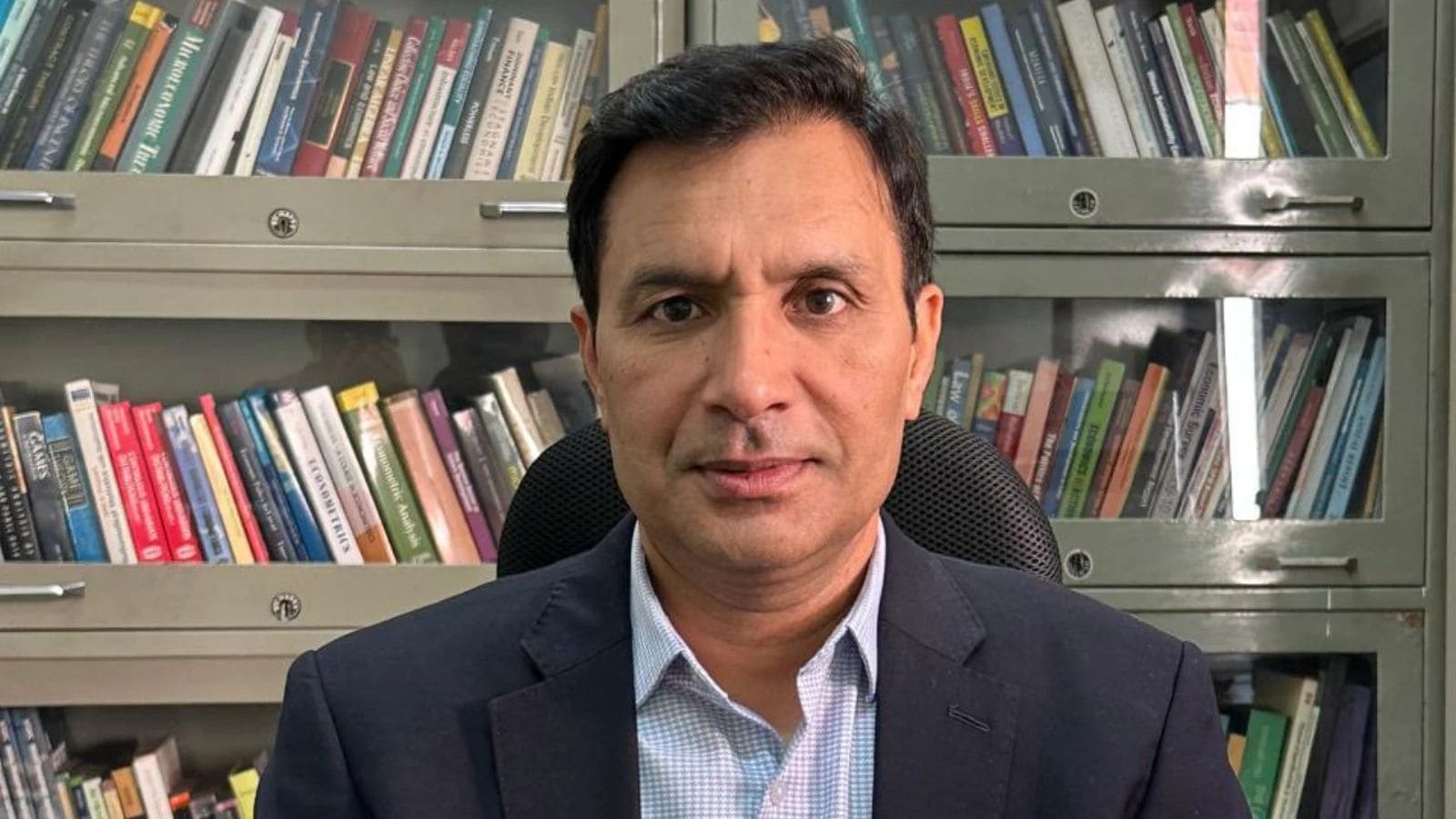
While some pass-through of higher global energy prices due to the West Asia war has happened through a weaker rupee, the conclusion of state elections should lead to retail fuel prices being raised, according to Ram Singh, one of the three external members on the Reserve Bank of India’s (RBI) Monetary Policy Committee. Speaking on Tuesday at the National Council of Applied Economic Research (NCAER), Singh said that not raising fuel prices so far had been a “prudent” move.
“Now that state elections are over, I expect some pass-through happening at the retail price level. Therefore, to that extent, we are moving in the direction where the right price signals will be sent out to households, commercial sector to optimise the energy mix,” Singh said, adding that there were already signs of a shift in the energy mix towards electricity through reports of higher use of inductions. “With the retail price pass-through happening, we will see more of this nudge materialising and taking concrete form.”

Singh’s comments come amid speculation that pump prices of petrol and diesel may be raised, although the petroleum ministry has assured for the last two months that there was no proposal to hike prices in the wake of international oil and fuel prices persisting at supernormal levels. In April, the average price of India’s crude oil basket was $114.48 per barrel, little changed from March’s $113.49/bbl, but sharply higher than February’s $69.01/bbl. State-owned oil marketing companies (OMCs) are incurring heavy losses on the sale of petrol and diesel, whose prices have been frozen for over four years now.
According to Singh, who is the Director of the Delhi School of Economics, had there been a full or substantial pass-through to pump prices, it could have led to second-round inflationary effects and unanchored inflation expectations. “But the pass-through has to happen; the effect of a staggered pass-through will be that the second-round effects will be more manageable.”
Inflation targeting framework
Speaking at the same event, RBI Deputy Governor Poonam Gupta said India could perhaps consider tweaking its flexible inflation targeting framework if the economy’s growth-inflation mix evolves as it has in the past ten years, with growth robust and inflation lower and stable. “But if the global environment remains as challenging as it has been during the past six years, it would warrant both predictability and flexibility inherent in the existing framework,” she said.
In late March, the government – after consultation with the RBI – retained the framework for the five years through March 2031. As per the framework – which was adopted in 2016 and is reviewed every five years – the central bank has to keep Consumer Price Index (CPI) inflation at 4% in a band of 2-6%.
Gupta said renewal of the inflation targeting framework has come at a moment of considerable global uncertainty, with geopolitical tensions, supply chain disruptions, energy price volatility, and an uneven global growth outlook having made the macroeconomic environment “more complex and less predictable.” As such, the renewal “strengthens the framework precisely when it is most needed”, the central banker added.
Story continues below this ad
The retention of the flexible inflation targeting framework has received the International Monetary Fund’s (IMF) backing, with Krishna Srinivasan, Director of the agency’s Asia and Pacific Department, saying on Tuesday at the same event that the framework had served India very well and a 4% target in a band of 2-6% is “appropriate” and any change to the target should meet a very high bar given the credibility risks such a revision would entail.
Problem with forecasts?
Commenting on the IMF’s economic forecasts, Deputy Governor Gupta noted that over the last three years, the multilateral agency’s projection for India’s growth “have always been lower” than the outcomes.
“So, the point I am trying to make is that Indian growth has been robust and resilient in the past few years… I am also trying to make a polite remark on the forecasting (accuracy) of the IMF. I also compared it with what the RBI does around the same time… Yes, RBI also has projection errors, but they seem narrower. So, it’s an apple-to-apple comparison and perhaps it will make sense for us to exchange notes more,” Gupta said, seemingly tongue-in-cheek.
IMF’s Srinivasan responded that studies have shown the Fund’s forecasts have no systematic bias. “We make projections every three months. Yes, we can get our projections wrong. It’s never intended badly. We work very closely with country authorities… And we will continue to try and see how our numbers can match with that of the RBI going forward,” Srinivasan said to laughter.
Story continues below this ad
The RBI currently expects India’s GDP to grow 6.9% in 2026-27, while the IMF is forecasting a growth of 6.5%.


© The Indian Express Pvt Ltd