It took Indian sprinters nine years to lower the national benchmark from 10.26 seconds to 10.20. Now, in the span of just 24 hours, they have shattered that barrier — first 10.17, then 10.15, and now 10.09.
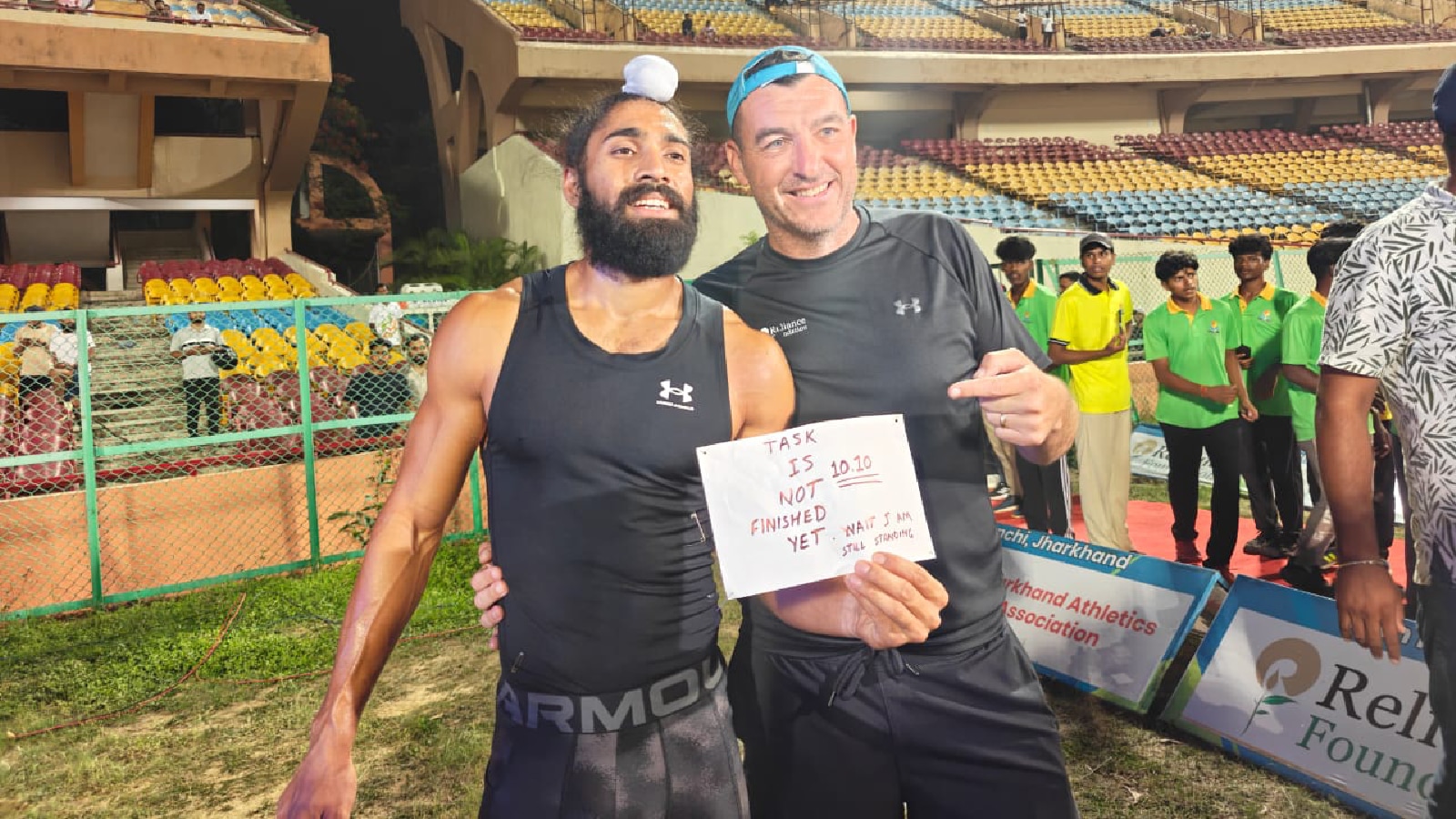
On Saturday evening in Ranchi, Gurindervir Singh — who had cruised to 10.17 seconds in Friday’s heats — blew apart the field in the final to clock the fastest 100m ever run by an Indian.
One of the key architects behind this sprinting revolution has been James Hillier, head coach of the sprints programme at Reliance Foundation.
“I always knew if we followed the process, the Indian sprinters would improve. The talent has always been there; it was about breaking the barrier, and once that happens, you see regular improvements,” Hillier said with a palpable excitement on his face.
For the larger part of the 21st century, Indian sprinting hovered in the 10.30s range, with timings in the 10.40s and 10.50s often enough to secure podium finishes at national meets. But once Amlan Borgohain broke through the 10.25 barrier in 2022, the floodgates opened.
Soon, a new crop of sprinters — Manikanta Hoblidhar, Gurindervir Singh, and Animesh Kujur — began lighting up national meets and pushing the limits even further. Manikanta clocked 10.23s in 2023 before Gurindervir and Animesh seized the baton, rewriting the national record five times in just 14 months.
Gurindervir stuns everyone!
India’s sprint has gone below 10.10s.
In a space of 24 hours, the national record has gone from 10.18 to 10.09.
Absolutely crazy scene. pic.twitter.com/4Wz5ei1KPm
— Pritish Raj (@befikramusafir) May 23, 2026
For James Hillier, the rivalry between Gurindervir and Animesh has been central to this surge. “Oh, the duel between these two has been magnificent. You know they are trying to kill each other on the track but are best buddies off track,” he told The Indian Express earlier.
Story continues below this ad
One target at a time
The biggest benefit of having a bunch of consistent sprinters is that they keep pushing each other. “Well, these sprinters have no choice. When one of your training partners runs a national record, you have to go faster than that guy. That’s what increases the competition,” Hillier quipped.
When the British coach started the 100m sprint programme at Reliance, the idea was to build a group of Indian sprinters who could form a strong relay team and push each other.
“When we started, the goals were different, and now we are looking at a different goal. I’m someone who focuses on one goal at a time. The training models we have now are well designed to achieve timings between 10.06s and 10.10s,” explained Hillier. “The boys need to execute the training models a bit better to reach the 10.06s mark. What Guri did today showed that execution, and that sets the template for how it can be done.”
The group of Indian sprinters have been on each other’s heels over the past two years, with three different athletes holding the national record across three different years.
Story continues below this ad
“I think the Commonwealth Games qualification mark also played an important part. The high qualification mark of 10.16s really pushed all the sprinters. We also feel happy and motivated when we see our compatriots breaking national records like this. It shows that we can do this and become better every day,” said sprinter Pranav Gaurav, who clocked 10.29s to finish third in the historic final.
Lower times
While the 10.09s mark is a huge achievement for India, given that no Indian had dipped below 10.10s before Saturday, it is still nowhere close to the current world or even the Asian standards; the Asian record stands at 9.83 seconds, recorded by China’s Su Bingtian.
However, Hillier believes Indian sprinting can go even further as more athletes continue to improve. “It will only go lower once that mental barrier is broken. That’s the thing in athletics — once you go past a certain mark, others also follow, knowing that someone else has already done it,” said Hillier.
The Commonwealth Games and Asian Games are going to be crucial events for Indian sprinters this season. A strong showing at these two competitions could further catapult Indian sprinting onto a bigger stage.
Story continues below this ad
But Hillier’s targets remain very micro-focused, and he knows the chase has only just begun. “You know, the real work starts now. These guys have gone below 10.10s, and if they want to go further, they have to follow the training pattern and keep repeating it. It’s a process of doing the same things every day until you master them,” concluded Hillier.