3 min readMumbaiJul 30, 2026 11:15 AM IST
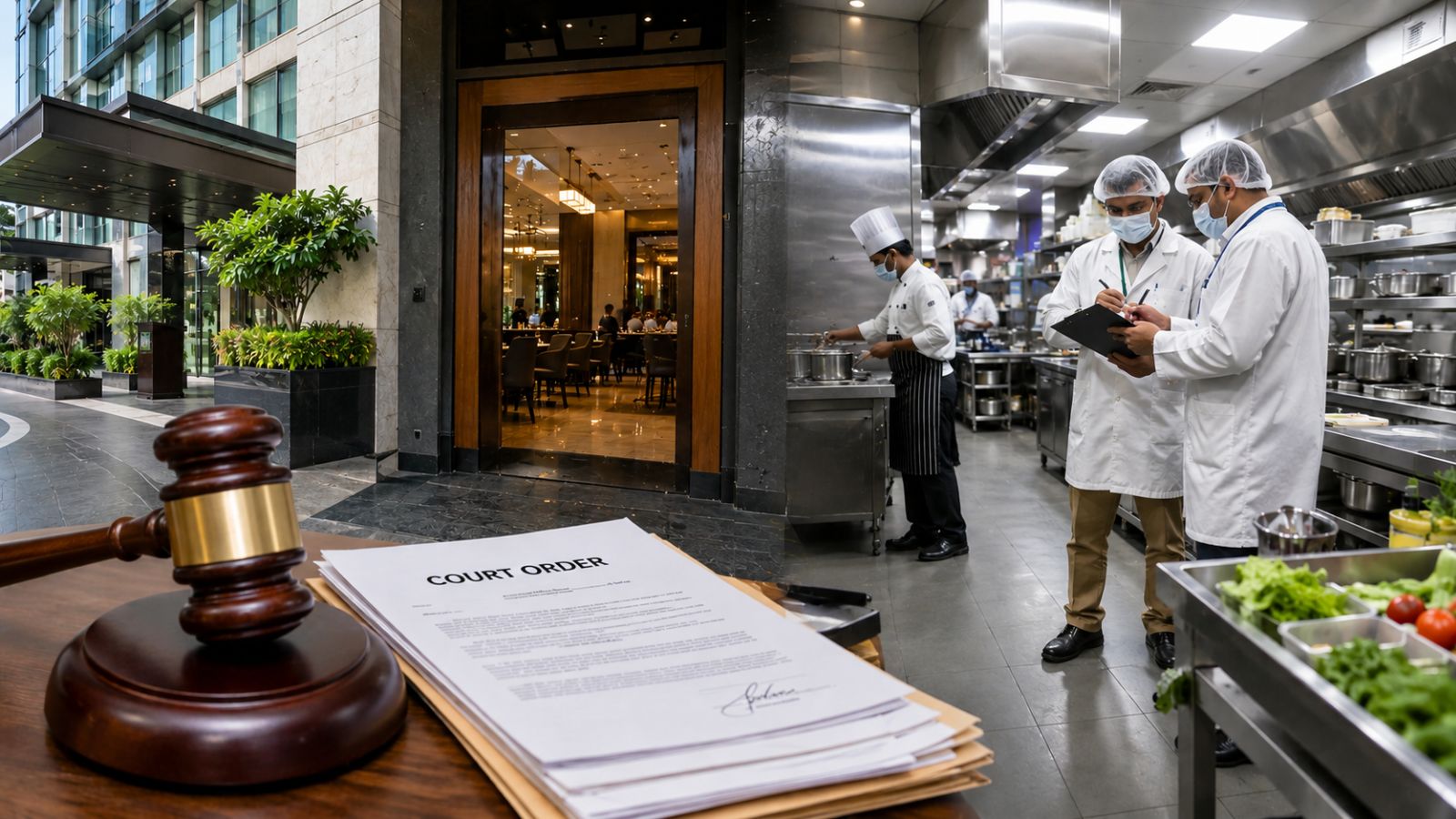
Observing that the discovery of “two insects” in an otherwise “satisfactory” kitchen inspection report was not sufficient grounds to continue the suspension of a five-star hotel’s food licence, the Bombay High Court Wednesday revoked the suspension and allowed it to resume operations.
A bench of Acting Chief Justice Ravindra V Ghuge and Justice Gautam A Ankhad heard a plea by the senior manager of Lotus Pond Hotel Private Limited, which manages Park Inn by Radisson in Navi Mumbai, challenging the suspension of its Food Safety and Standards Authority of India (FSSAI) licence under the Food Safety and Standards Act, 2006.

The licence was suspended on July 3, a day after officials from the Maharashtra Food and Drug Administration ( FDA) conducted a surprise inspection and reported alleged deficiencies and regulatory non-compliances. The suspension brought the hotel’s food business operations to a standstill, prompting it to move the Bombay High Court.
“The solitary finding regarding the presence of two insects, when viewed in the context of the overall inspection report recording the establishment as ‘compliant/satisfactory’, does not justify the continued suspension of the petitioner’s licence,” the bench held.
Allowing the plea, the court restored the license and accepted the hotel’s undertaking to maintain the “highest standards of hygiene and sanitation” and ensure strict legal compliance.
Second inspection
The bench referred to the July 22 report of the second inspection conducted by a special committee under a court order, in which the petitioner was awarded “Grade A” with an overall assessment of “compliance/satisfactory”.
The only adverse observation was the “presence of two insects in the dish-washing and sweet section of the kitchen premises,” the bench noted.
Story continues below this ad
The bench observed that the factual position of July 3 had been “altered” and Section 32(3) of the 2006 Act was “preventive in nature” to “safeguard public health until the identified deficiencies are rectified.”
It held that once the hotel remedied substantial deficiencies and attained 95 per cent compliance, the suspension order’s “very object” and continuance “ceased to serve the purpose.”
‘Arbitrary and disproportionate’
Appearing for the hotel, Advocate Mayur Khandeparkar argued that the power to suspend a licence was an “extraordinary” measure that could be invoked only when there was an “immediate threat to public health”, which, he contended, was absent in the present case.
Khandeparkar added that the suspension order was “arbitrary” and “disproportionate,” as it had been issued without first serving the mandatory improvement notice required by law.
Story continues below this ad
Government Pleader Neha Bhide justified it, citing “serious lapses” in hygiene, sanitation, food storage, and handling practices warranting immediate action.