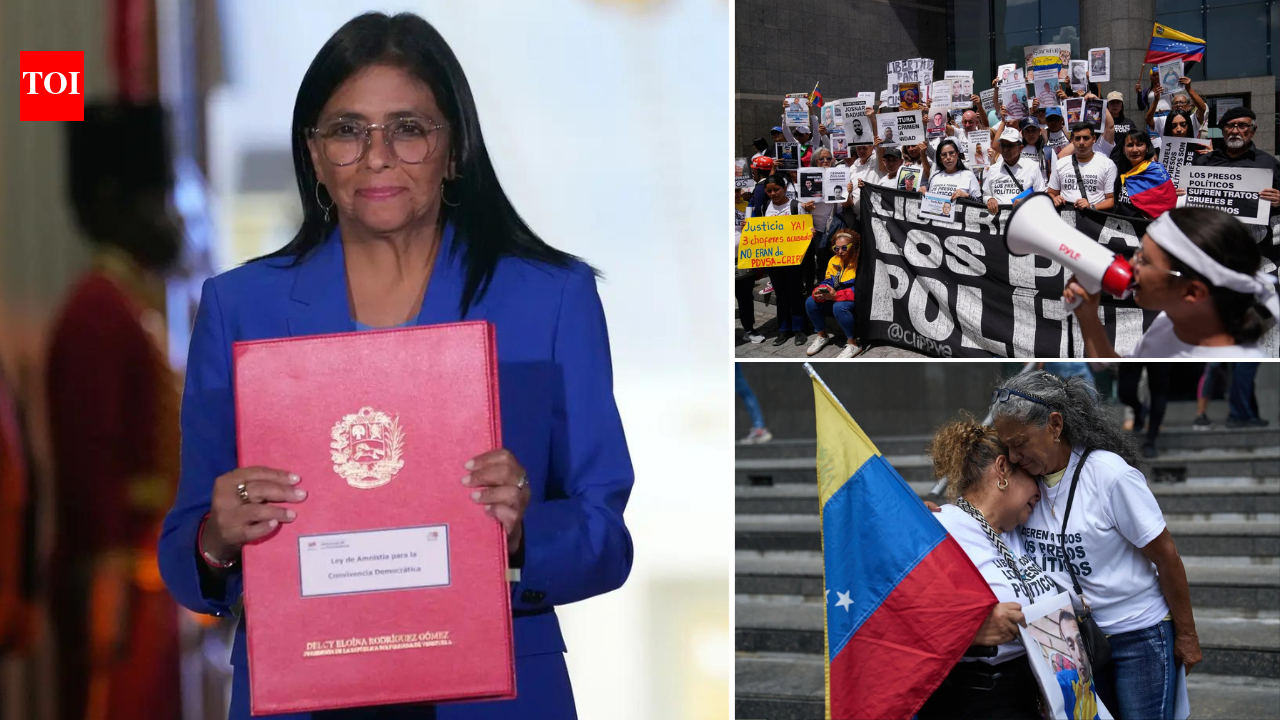
Venezuela’s Interim President Delcy Rodríguez on Thursday signed into law a long-awaited amnesty bill, paving the way for the potential release of hundreds of political prisoners jailed in recent years.The legislation was unanimously approved by the Venezuelan parliament earlier in the day after several previously delayed sittings. Rodríguez enacted the bill at the Miraflores presidential palace in Caracas, framing it as a step towards reconciliation.“One must know how to ask for forgiveness, and one must also know how to receive forgiveness,” she said following the signing ceremony.The move comes amid mounting domestic and international scrutiny over the fate of detainees held during the turbulent final years of former president Nicolás Maduro’s rule.Who Is Excluded?Despite its broad scope, the amnesty law contains significant exclusions.Article 9 specifies that individuals prosecuted or convicted for promoting or participating in armed actions, or for facilitating foreign intervention against Venezuela’s sovereignty and territorial integrity, will not qualify for amnesty.This clause could affect high-profile opposition figures, including Nobel Peace Prize winner María Corina Machado, whom the ruling party has accused of advocating international intervention — including the US military raid that led to Maduro’s capture on January 3.United Nations human rights experts urged caution ahead of the vote, warning that the law’s scope must be carefully limited. In a statement from Geneva, they said it should apply to victims of human rights violations while expressly excluding those responsible for serious abuses and crimes against humanity, whether state or non-state actors.Retroactive Reach and Lingering DoubtsThe new law applies retroactively to 1999, covering major flashpoints in Venezuela’s modern political history.These include the failed coup against Hugo Chávez, the 2002 oil strike, and the 2024 unrest that followed Maduro’s disputed re-election.For families of detainees, the measure has raised hopes that loved ones could soon return home. However, critics fear the legislation could be used selectively — potentially shielding government allies while denying relief to genuine prisoners of conscience.Prisoners and PressureHuman rights groups estimate that hundreds, possibly thousands, of Venezuelans were detained in recent years over alleged plots to overthrow Maduro’s government. Family members have reported torture, mistreatment and neglect of inmates’ medical needs, news agency AFP reported.Citing NGO Foro Penal, the report said around 450 prisoners have been released since Maduro was ousted, but more than 600 remain in custody. In recent weeks, relatives have staged vigils outside prisons, while a small group in Caracas ended a nearly week-long hunger strike on Thursday.Political BackdropRodríguez assumed power after Maduro was captured during a US military raid in early January. Her interim government has operated with the consent of US President Donald Trump, reportedly in exchange for granting Washington access to Venezuela’s vast oil reserves.On Wednesday, the head of the US military command responsible for operations against alleged drug-smuggling vessels in the region met Rodríguez in Caracas, alongside Defence Minister Vladimir Padrino and Interior Minister Diosdado Cabello — both long-time Maduro allies known for their staunch anti-imperialist rhetoric.The amnesty bill marks Rodríguez’s most significant domestic policy move since taking office, and its implementation is likely to serve as an early test of her administration’s commitment to reconciliation in a deeply polarised nation.