
4 min readNew DelhiUpdated: Jul 8, 2026 11:46 AM IST
The Madras High Court has held that a woman teacher cannot be denied posting in a boys’ school, which claims not to have the requisite infrastructure to cater to a female teacher, observing that neither the Tamil Nadu Private Schools Act nor the rules provided such a prohibition for government-aided schools.
The court held that the boys’ school’s objection had no legal basis and that the authorities wrongly relied on the resistance instead of independently deciding the issue.

Justice B Pugalendhi was acting on the plea of the high school teacher challenging the decision of the state education department denying her the posting. The court, therefore, directed the authorities, including the Virudhunagar district chief education officer, education officer and the school, to reconsider the transfer order of the petitioner afresh. The court asked the authorities to strictly comply with the provisions of the law and the rules.
“The petitioner has already placed on record her undertaking before this court that she would not seek any special treatment or additional facilities merely because she is a woman teacher. More importantly, neither the Act nor the Rules prohibit the deployment of a woman teacher to a boys’ school,” the July 3 order read.
The court added that public funds are spent not merely to pay salaries but to ensure that students receive the benefit of adequate teaching staff. It observed that when a surplus teacher continues in one school, a sanctioned vacancy remains unfilled elsewhere, defeating the purpose of the deployment system.
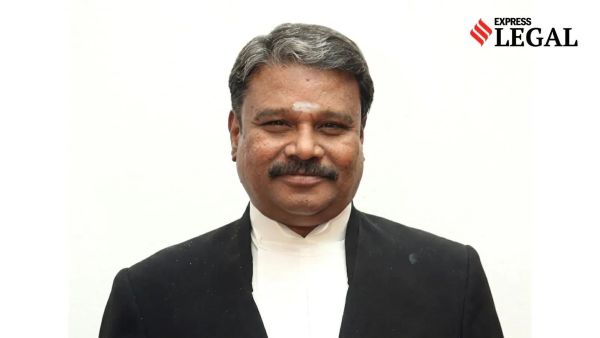 Justice B Pugalendhi pointed out that the public funds are spent not merely to pay salaries but to ensure that students receive the benefit of adequate teaching staff.
Transfer blocked by boys’ school
The woman claimed to be a qualified special teacher (drawing) who during the academic year 2024-2025, was declared surplus at Sri Renuga Hindu High School. On May 28, 2025, she was transferred to Gurugnana Sampandar Hindu Higher Secondary School, an aided non-minority private school receiving grant-in-aid from the government.
However, the petitioner claimed that she was declined to join the faculty on the ground that it was a boys’ only school. She submitted that the school claimed that they neither had any female staff nor the required infrastructural facilities for accommodating a woman teacher.
Story continues below this ad
Acting on the school’s objection, she said, the authorities did not implement the transfer order and instead posted her to another school.
The woman, therefore, moved the high court seeking the transfer to a vacant special teacher (drawing) post in another government-aided school in the same Virudhunagar district or to the boys’ school.
In an earlier round of litigation, she filed an undertaking stating that she would not seek any special treatment or additional facilities if posted to the boys’ school. Recording this undertaking, the high court directed the authorities on November 6, 2025, to reconsider her request.
However, instead of independently examining her claim, the authorities once again sought the school’s views. The school reiterated its refusal, following which the authorities again decided to deploy her elsewhere. This prompted the present petition.
Story continues below this ad
‘100s of crores of rupees spent on teachers’ salaries’
The court noted that the petitioner was identified as surplus during the academic year 2024-2025, but the transfer order was issued only on May 28, 2025, almost at the end of the academic year. It was found that no explanation was provided for such an inordinate delay.
“When the Government spends several hundreds of crores of rupees every year towards the salaries of teachers, it is under a corresponding obligation to ensure that such teachers are effectively utilised in institutions where their services are actually required,” the court underlined.
While passing the ruling in her favour, the court emphasised that if every delayed deployment is allowed to remain unimplemented, surplus teachers would continue in schools where they are no longer required, noting that in such a scenario the government would continue to incur salary expenditure without securing the benefit of utilising their services in schools where vacancies exist.