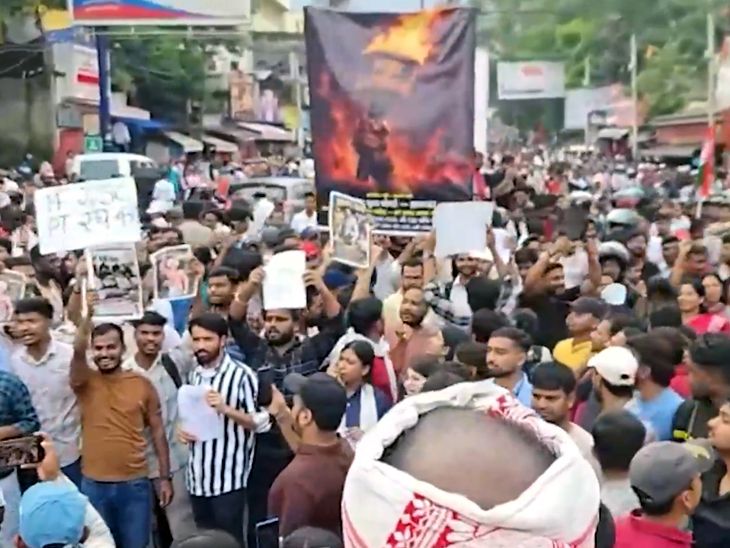
Wrapping up a two-day debate punctuated by acrimonious exchanges as the Opposition mounted a sharp attack on the government over the police crackdown on student protesters in Delhi, Lok Sabha Wednesday passed the stringent Public Examination (Prevention of Unfair Means) Amendment Bill, 2026 by a voice vote amid sloganeering by the Opposition.
While Leader of Opposition Rahul Gandhi’s remarks against Union Home Minister Amit Shah over the police crackdown led to stormy scenes with strong protests from the treasury benches, the government hailed the passage of the Bill. Union Minister Jitendra Singh, who replied to the debate, said it reflected the government’s “openness to incorporate constructive inputs, learn from experience and further strengthen the law” to deal with exam paper leaks.

Shah, in a post on X, congratulated “every student in India” on the passage of the Bill, saying it “shields the dreams and aspirations of our youth by laying down iron-clad provisions imposing the harshest punishment on those who dare to breach the sanctity of public examinations”. The Modi government, he said, “will spare no one who attempts to imperil the future of our students and will leave no stone unturned to ensure that they face the full wrath of the law”.
Gandhi, on the other hand, demanded Shah’s resignation. Earlier, while participating in the debate, accused Shah of “ordering police action” against students during the July 20 protests in Delhi.
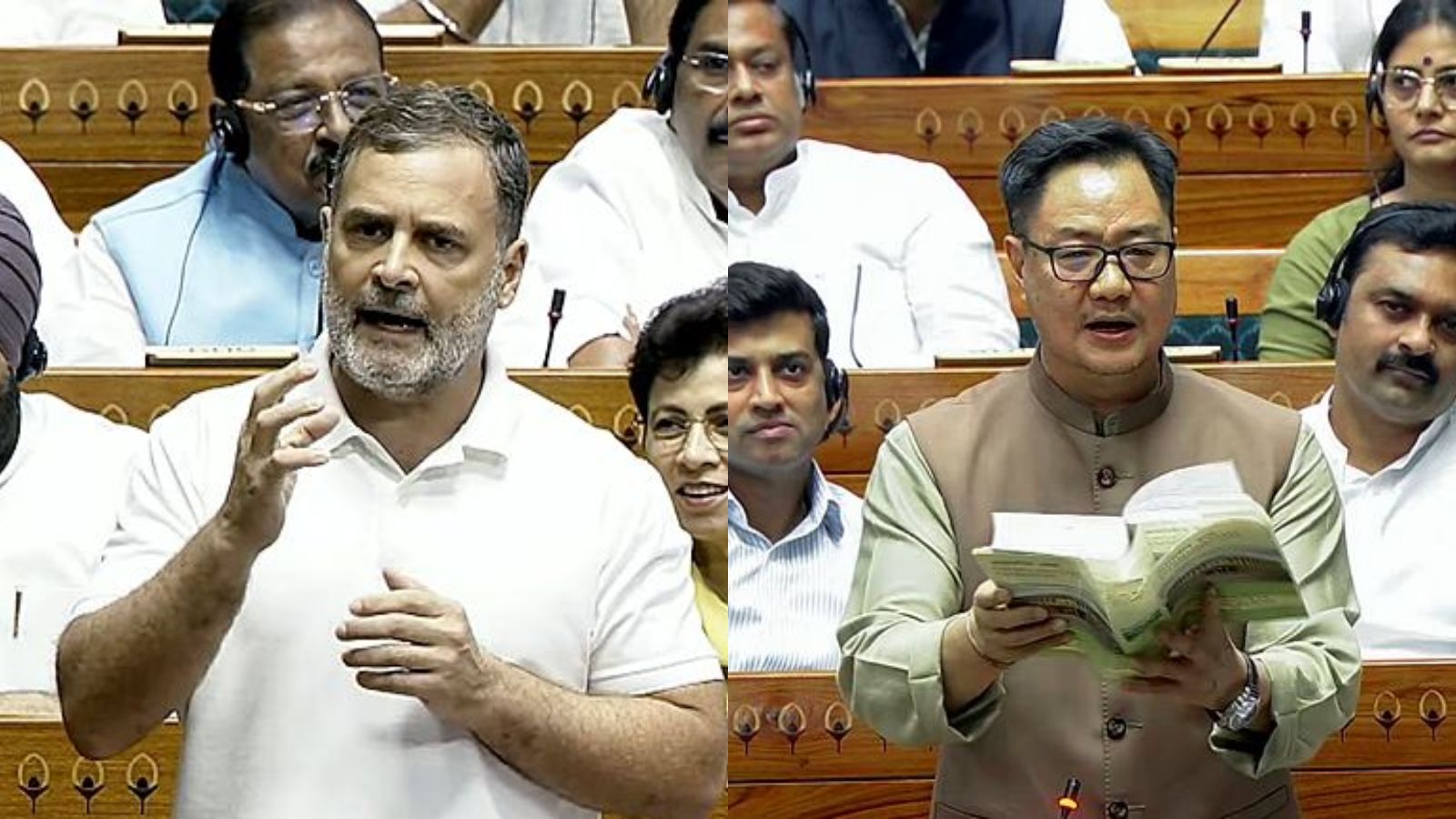
Objecting to the remarks, Union Parliamentary Affairs Minister Kiren Rijiju demanded that Gandhi substantiate his allegations and apologise to the House.
“You are the Leader of the Opposition. Speak with seriousness. On what basis did you make this statement? How can he say that someone ordered firing? It is a breach of his own position and privilege,” Rijiju said.
Speaker Om Birla also intervened, urging Gandhi to make statements based on facts and maintain the dignity of the House. Birla also said that some of Gandhi’s remarks will be expunged from House records.
Speaking to reporters outside the House, Gandhi said there can be just “two options”, one that the Home Minister “gave the orders” (for action against students), and second that the “Home Minister didn’t know that firing will happen”. He also asked why Shah had not been coming to the House.
When the treasury benches demanded that Gandhi apologise, Opposition members rallied behind him, saying “Rahul ji ko bolne do (let Rahul speak)”, leading to noisy scenes in the House.
Gandhi said the protesting students had shown courage. “The students of the country are saying we will not become andhbhakts (blind followers). This is a beautiful expression. Their parents perhaps did not have the courage to face the BJP and the RSS. Yet these children, brave, imaginative and powerful, stood there and faced whatever you threw at them,” he said.
Targeting Dharmendra Pradhan who resigned as Education Minister, Gandhi said, “Rajnath Singhji said we are not the UPA and our ministers never resign. He is right. The resignation of Pradhan is superficial because he never ran the education system. The Education Ministry is run by the RSS. The man who runs it is the OSD sitting in the minister’s office.”
Jitendra Singh, while replying to the debate on the Bill, also spoke of the “unparliamentary language” used by Gandhi. “I am surprised that the LoP doesn’t know the basic parliamentary norms,” he said.
Singh said the LoP did not seem to know that any order to fire a gun is given by a magistrate. “It has been clarified that shots were never fired, tear gas was used. When the gun was not fired, the question of who gave the order does not arise,” he said.
He said the amendments would further strengthen the legal framework to prevent unfair means in public examinations and safeguard the interests of students and youth. The government, he said, remained committed to ensuring the integrity, transparency and credibility of the public examination system.
Highlighting the key provisions of the Bill, Singh said the punishment for persons resorting to unfair means has been enhanced from imprisonment of three to five years to five to ten years, while the maximum fine has been increased from Rs 10 lakh to Rs 50 lakh.
For service providers involved in such offences, the maximum fine has been enhanced from Rs 1 crore to Rs 5 crore and the period of debarment from conducting public examinations has been increased from four years to eight years. The Bill further enhances punishment for organised crime from five to ten years’ imprisonment to seven to ten years and increases the maximum fine from Rs 1 crore to Rs 10 crore.
Singh said the Bill provides for the establishment of special fast-track courts for offences relating to public examinations and envisages completion of investigation within two months and completion of trial within three months from the date of filing of the charge sheet.
Referring to the implementation of the 2024 Act, he said that 52 FIRs have already been registered under its provisions.