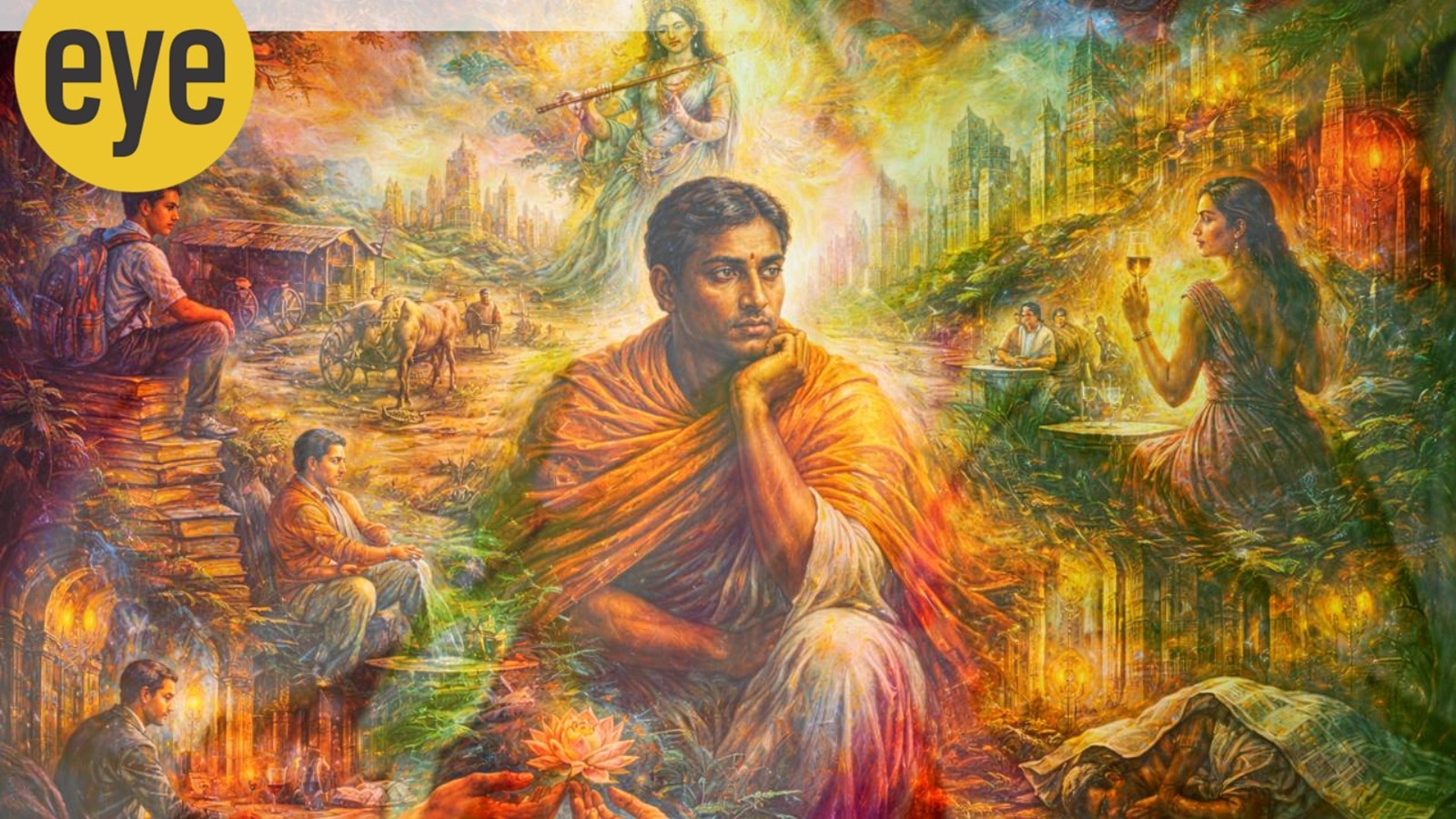
I went to Modern School in Delhi — an extraordinary experiment in education for its time. It was not merely a school; it was a philosophy in brick and banyan. We were taught not only grammar and geography but generosity. Secularism was not a slogan; it was syllabus. Syncreticism was not theory; it was timetable. We read Tagore and Faiz, Shakespeare and Subramania Bharati. We debated democracy in classrooms that smelled of chalk and possibility. We were given room to breathe.
That was a privilege.
But inside that privilege, we were also the not-so-privileged among the privileged. My siblings and I — children of a bureaucrat father and a mother who managed life with meticulous modesty — were not the ones stepping out of chauffeur-driven cars. We were not the ones flying first-class to foreign holidays. We watched classmates born to generational wealth glide through adolescence with ease. We learned early that comparison corrodes, that envy exhausts, that dignity is quieter than display.
My friend Megha Joshi — now a celebrated sculptor — grew up in intellectual circles, her mother a professor at JNU. Our privileges were different. Ours was not opulence; it was orientation. We were given education that insisted on ethics. We were raised in homes where poetry mattered more than pedigree. We did not inherit empires; we inherited inquiry.
Privilege, then, was not money. It was mindset.
And sometimes, it was permission.
In ninth grade, my art teacher, Sabiha Hashmi, gave me something I did not even know to ask for: serigraphy. Screen printing. The slow, sensual process of pulling ink across mesh, of layering colour over intention, of watching an image emerge not by accident but by attention. I was a science student. That was my stream, my supposed direction. But Hashmi saw something restless in me — something reaching beyond reaction formulas and lab reports.
She let me try.
In eleventh and twelfth, I took printmaking formally — the first science student in my school to take art as a sixth subject. As if that were not indulgent enough, I added Senior Hindustani Classical Music as a seventh subject. And Senior Hindi as an eighth.
It sounds absurd now. Overloaded. Overindulged. A privilege-brat move, one might say.
But what was I doing, really?
I was educating myself. And my school — that audacious, expansive institution — was allowing it.
Story continues below this ad
Privilege is not always gold; sometimes it is grace. The grace of a timetable that bends. The grace of a teacher who says yes. The grace of a system that does not punish curiosity.
Sabiha Hashmi was a single mother of two children, navigating her own constraints, her own complexities. Her children had it even tougher than my siblings and I. And yet, she carved out space for art in a system that could easily have sidelined it. She carved out space for a boy in a science stream to smear ink across silk screens and call it scholarship.
And she taught me something else.
She taught me Faiz Ahmed Faiz.
“Bol, bol ke lab azaad hain tere,
Bol, zubaan ab tak teri hai.”
Speak, for your lips are free.
Speak, for your tongue is still yours.
Story continues below this ad
In that classroom, amid ink and inquiry, I learned that voice is vocation. That art is argument. That expression is not excess but essence.
Years later, when I was invited onto the Today Show — the most revered morning television platform in America — my father, Guru Saran, listened to my excitement with characteristic calm. Then he said: “Do not speak about your book. Do not speak about your restaurant. Speak about twenty issues nobody is talking about. Let those five minutes be five minutes for people who do not have a voice.”
That was privilege.
The echo of Faiz in a father’s advice. The arc from Sabiha Hashmi’s classroom to national television. The throughline of conscience.
Privilege, in this form, was not inheritance of wealth but inheritance of witness.
Story continues below this ad
My mother, Sunita, and my grandfather, Chaman Lal Bhardwaj, were devoted readers of the Bhagavad Gita. My grandmother, Kamla Bhatnagar PO, gathered elderly women every month — women from varying means, from different neighbourhoods — to read the Gita in song for four and a half hours. I sat among them as a boy, absorbing cadence and clarity, meter and meaning. I learned to listen to language as devotion. I learned that wisdom was not wealth-dependent.
There were women in those gatherings who were affluent and women who were not. In that room, hierarchy dissolved into harmony. Privilege bowed before participation.
I grew hungry for those verses. For Krishna’s insistence that identity is layered, that life is lila — divine play — and that we are more than the costumes we are handed.
Perhaps that is why the modern debate around privilege feels so reductive. It flattens complexity into category. It collapses biography into binary. You are privileged. Or you are not.
But human life resists such neat partition.
Story continues below this ad
I was born into stability in a nation still stabilizing.
I studied in a school that celebrated plurality.
I was raised in a home that prized poetry over prestige.
I was taught by a single mother who gave me art instead of admonition.
These are privileges.
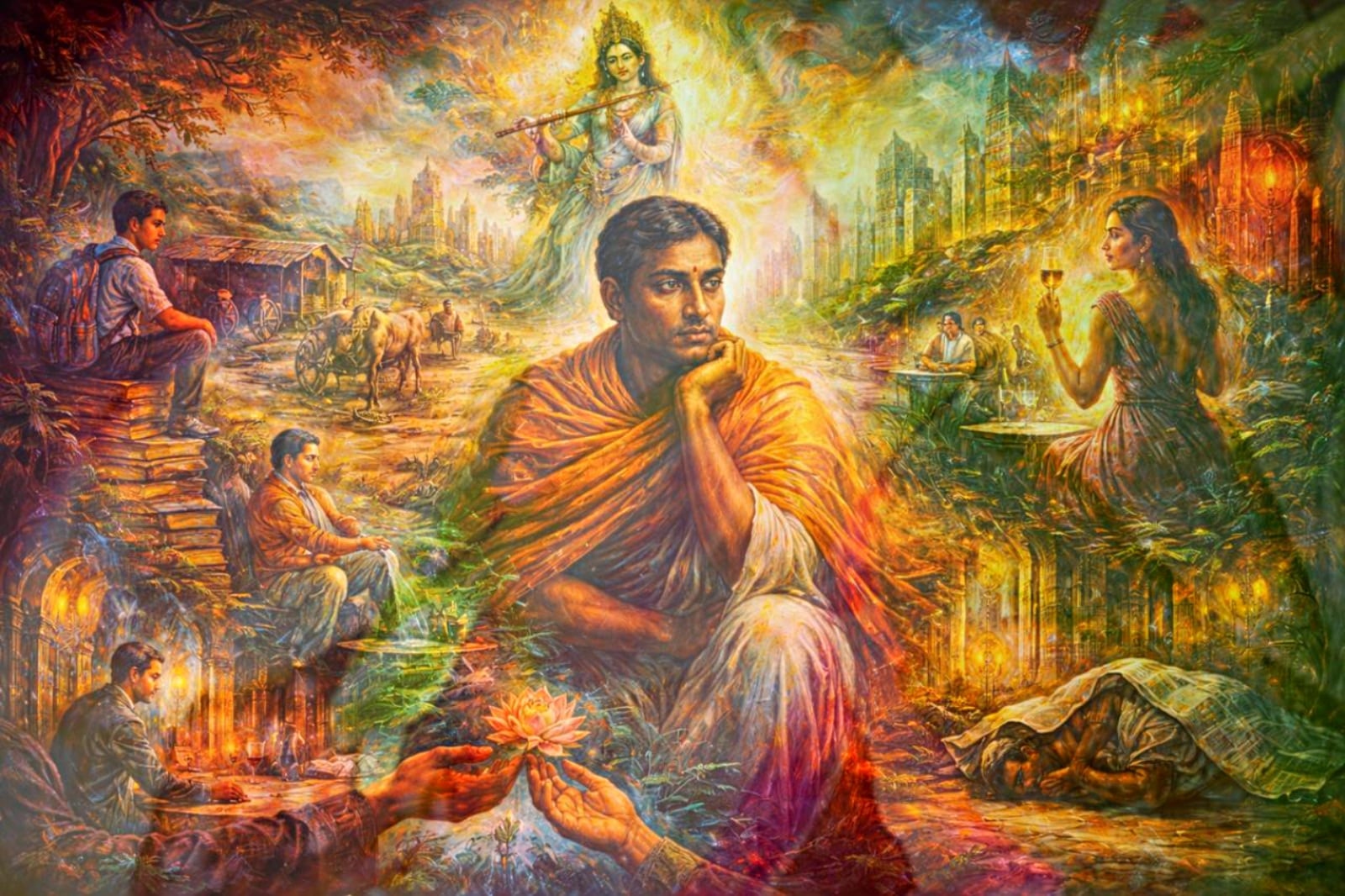 Illustration by Suvir Saran
I also navigated prejudice in a country that misread my skin.
I wrestled with sexuality in a world that rendered it suspect.
I laboured in jobs that required resilience more than glamour.
These are realities.
The Gita does not ask us to deny either. It asks us to act with awareness.
“Samatvam yoga uchyate” — equanimity is yoga.
To acknowledge one’s advantage without arrogance.
To admit one’s adversity without theatrics.
To hold both without hierarchy.
Story continues below this ad
Privilege is not a moral medal nor a mark of shame. It is context. It is the room we begin in. But rooms change. Doors open and close. Windows widen and narrow.
What matters is how we move within them.
There is a modern appetite to audit suffering. To rank pain. To measure memoir against metrics of misery. But grief does not consult income brackets before arriving. Loneliness does not check bank balances before settling in. Shame does not inquire into school pedigrees before seeping into the soul.
Emotional truth is not annulled by educational advantage.
When I write about queerness, about isolation, about ambition, about doubt, I do not pretend to have emerged from deprivation. I emerged from discipline. From discourse. From dinner tables where disagreement was allowed. From classrooms where teachers insisted that plurality was strength.
Such education is privilege. And I remain grateful for it.
But gratitude is not guilt.
Story continues below this ad
The Gita cautions against attachment to labels. We are not merely our birth. Not merely our biography. Not merely our bank statements. We are consciousness navigating context.
To reduce a life to its visible advantages is to mistake scaffolding for structure.
Privilege can cushion. It can create margin. Margin matters. It allows risk. It allows recovery. It allows reflection.
But margin is not merit.
Merit lies in how margin is used.
Does one hoard opportunity? Or does one extend it?
Does one wield platform for self-promotion? Or for shared purpose?
Does one deny inherited ease? Or does one deploy it with discernment?
Story continues below this ad
My father’s counsel before the Today Show was not incidental. It was inheritance refined into instruction. Use your moment for more than yourself.
That is how privilege becomes practice.
In America, I was at once outsider and achiever. I was celebrated despite suspicion. That paradox taught me that privilege is rarely absolute. It is situational. In some rooms I was advantaged. In others I was alien.
We all inhabit such contradictions.
The danger lies not in acknowledging privilege but in absolutizing it. In allowing it to become the sole lens through which a life is interpreted.
The Gita’s genius is in its refusal to flatten existence. Krishna does not reduce Arjuna to prince or pawn. He addresses him as participant. “Karmanye vadhikaraste” — your right is to action.
We cannot choose our starting line. We can choose our stride.
We cannot edit our origin. We can examine our obligation.
And obligation, in this age of amplified voices, includes introspection. If I have been given education, I must question. If I have been given access, I must advocate. If I have been given space, I must share it.
Privilege without purpose is vanity.
But purpose without humility is hubris.
The meditation, then, is not defensive but deliberate.
I was born into a country becoming itself.
I was schooled in plurality.
I was raised among readers of scripture.
I was mentored to use voice for others.
These are blessings.
I was also misunderstood in foreign lands.
I was misread by strangers.
I was measured by skin before substance.
These are burdens.
Neither cancels the other.
Life is not black and white; it is braid and blur. Privilege threads through adversity. Adversity tempers privilege.
The Gita teaches that wisdom lies in balance — not denial, not defensiveness, not display.
To say, “Yes, I was given much,” without apology.
To say, “Yes, I struggled too,” without spectacle.
To say, “Both are true,” without comparison.
That is adulthood. That is equanimity.
Privilege is not arrival. It is awareness.
And awareness, if nurtured with gratitude and governed by dharma, becomes service.
In the end, the question is not whether we were privileged. It is whether we were present. Present to our advantages. Present to our blind spots. Present to our obligations.
We are all, in some measure, beneficiaries of something we did not build.
The task is not to disown it.
The task is to deepen it.
To turn margin into mercy.
To turn platform into passage.
To turn inheritance into intention.
And perhaps that is what Krishna whispers across centuries: act with clarity. Live with conscience. Let privilege be not pedestal but practice.
Everything else is noise.