The sharpness of the big issue in this West Bengal election is blunted on the state’s uneven and fractured ground. At stake in the Election Commission’s controversial Special Intensive Revision (SIR) of electoral rolls is a non-negotiable right and a fundamental promise — the right to vote that lies at the heart of the democratic compact, the promise of a free and fair election. But even on the SIR, the dividing lines lose their straightness in West Bengal. The possibilities of empathies and solidarities in the current moment are interrupted by fraught backstories.
On the SIR, the dispiriting story so far: It has raised genuine fears of large-scale voter disenfranchisement and targeted exclusions. After the first round of deletions of about 58 lakh voters from the draft rolls, a second set of 60 lakh names were placed “under adjudication” (about 5 lakh more were deleted in between). Twenty-seven lakh of those under adjudication were deleted, the highest numbers in Muslim-dominated constituencies. Nineteen appellate tribunals got off to an inexplicably slow and late start, restoring the voting rights of only 139 individuals by the first date of polling on April 23.

An exercise such as this one, which shifts the burden of proving their innocence, or citizenship, on the vulnerable voter, and which has made the Bengal voter navigate more bureaucratic hurdles than those in any other state, is a matter of overriding democratic concern. Certainly, its effects will be read into the final scoreboard on May 4. But for now, among the electorate, it plays out in a manner that does not appear univocal or uniform.
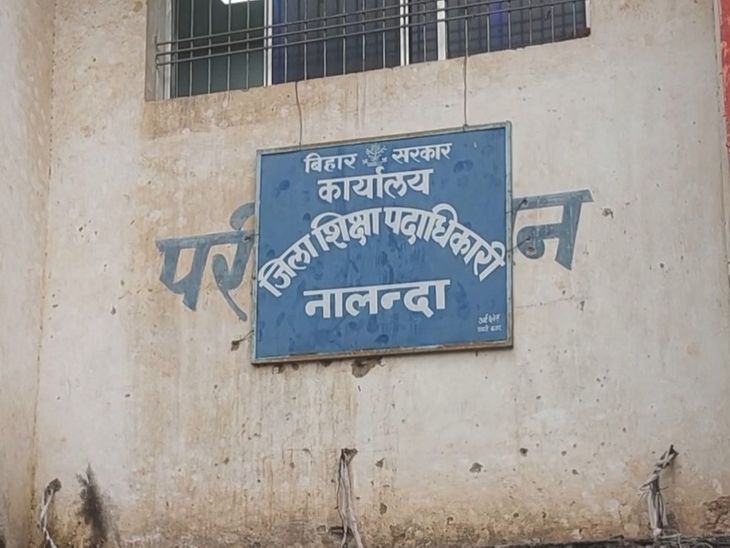
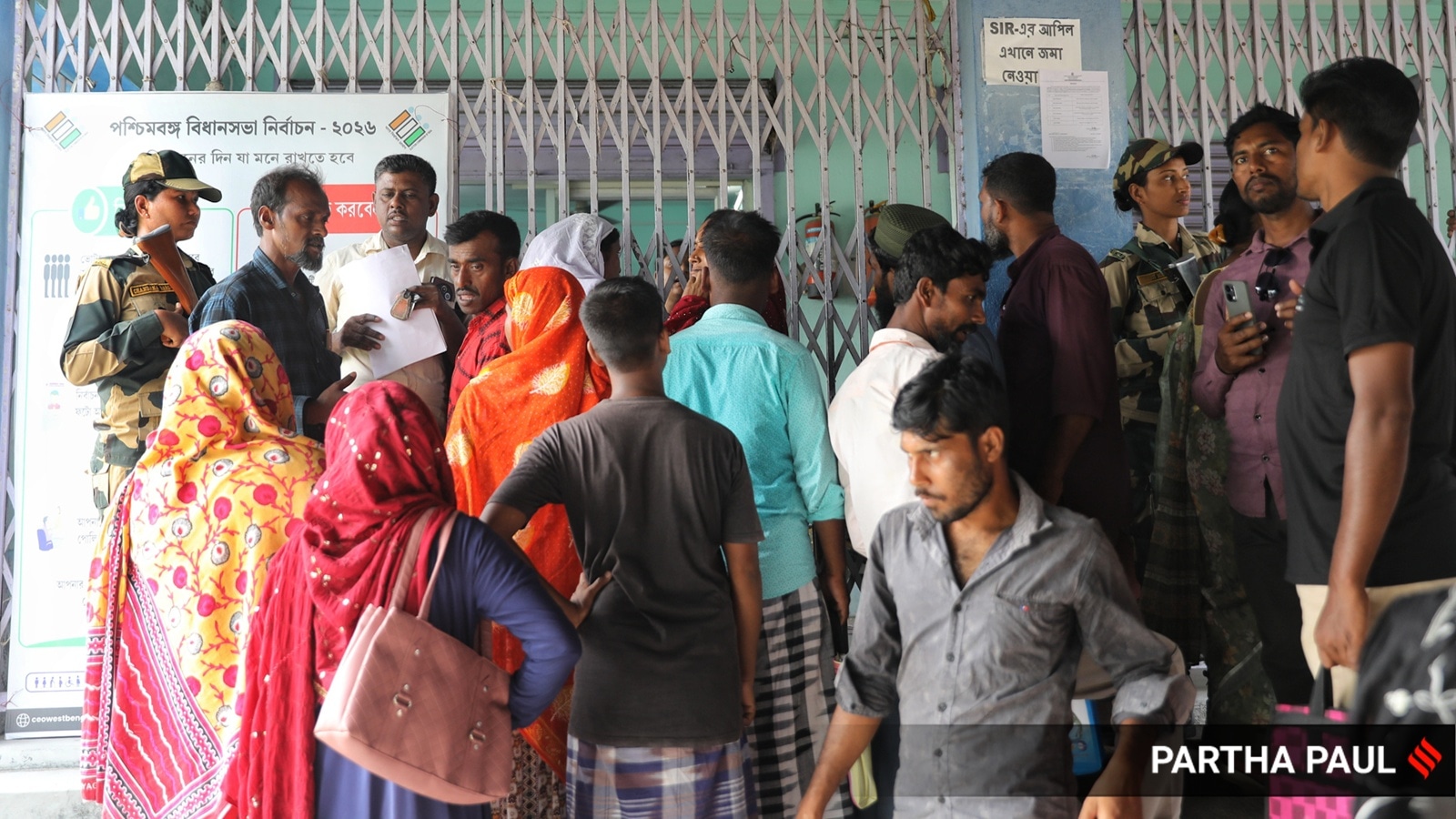
On Kolkata’s southern outskirts, at Joka, outside the blue-grey building complex of the Dr Syama Prasad Mookerjee National Institute of Water and Sanitation, is an erratic trickle of the deleted. Inside the building, the 19 appellate tribunals sit, invisible and opaque, and the appellants can only go up to the police personnel outside gates that are barricaded. “About 30 to 40 people come daily, nobody is allowed in”, says Tathagata Basu, SP, Diamond Harbour police district, in which the tribunals fall.
On a hot noon in the city, Hasan Khan, 26, has come to Joka from his home in Purba Bardhaman. “I started at 4 am today, took the bus, the train, and the bus again.” In his family of six, three are missing from the voters’ list. “We don’t know why it said ‘under adjudication’. The police say I should go back, find out online, wait for a call. But hamaare andar dar hai, jo hawa chal raha hai, bol dega Bangladeshi hai (the way it is going, I fear someone will label me Bangladeshi). Will they let me remain in India if my name is not on the list? I gave all the documents the EC asked for… hum intezaar karenge, (I will wait)”, he trails off.
Across the city, Hasan’s anxieties are echoed by Feroz Khan, rajmistri (mason), in Dum Dum, on Kolkata’s northern fringe. “They called me for a hearing, I couldn’t come because I was working in Bangalore… If my name is deleted, my children’s lives will be blighted. We won’t get ration and other schemes.” A fear haunts him: “They will send us to camps, like they have done in Assam. I work in Hyderabad, Bangalore, Chennai… How will I protect my family?”
In Muslim localities, resentment and nervousness over the SIR may lead to a stronger consolidation of the minority vote for Mamata Banerjee. It may paper over the cracks that could have appeared because of the sheer weight of a 15-year incumbency, or because Didi is seen to have failed to keep her promise to stall this exercise and, before that, the Waqf bill. In village Hakola in Howrah, SK Nazrul says: “Ever since 2014, the poor and the minority are being made to line up, for one reason or another… Modi ji khali takleef bhej rahe hain (Modi is only sending us trouble). We will stand by the one who stands by us. Didi even went to court on SIR”.
But resentments against SIR also appear to be tamped down, poignantly, by the need the SIR has also touched off in an embattled minority — to assert belonging, a primal claim on home that cannot be taken away by the state or its bureaucracy. Many in the Muslim paras (neighbourhoods) say: “We have nothing to fear, we are of this country. Even we want outsiders to be weeded out”.
In the Hindu neighbourhood, many view the SIR as a necessary, if imperfect, clean-up exercise that the “ghuspaithiya” made necessary. In a declining economy, this speaks of precarity and insecurity. In Birampur village, Samar Shaw, owner of a small vest-making unit, says: “If I get one rupee from the government, I will get only 70 paise if the outsider comes in”. At a stall selling fresh coconut water in Kolkata’s Panihati area, Rajat Mukherjee, who works in a local club, says: “There are limited resources. If people come from outside, they eat into our business, they must go back”.
The SIR should be done correctly, says Mukherjee, and insiders and outsiders identified clearly, “but the problem is that the BLOs are partisan… TMC ka aadmi hai (they are allied with the TMC)”. This perception — that the election machinery, or at least part of it, is inside the ruling dispensation’s tent — is also a reason why, for many voters, the dividing line isn’t neat between Didi and BJP/EC.
At the Centre for Studies in Social Sciences, Calcutta, historian Tapati Guha-Thakurta sees the overhang of the “ghuspaithiya” spectre in this election as the result of a larger cultural shift and coarsening. “Bengal’s partition was not neat, movement has been continuous, the population fluid… West Bengal opened itself to a huge influx of refugees. From being the sharanarthi, deserving of shelter, the Bengali Muslim migrant labour, allegedly Bangladeshi, came under the category of the anuprobeshkari, someone who has entered illegally… Ghuspaithiya is not a Bengali term, and it is much more derogatory.” But perhaps, she says, the sense of us-and-them was always-already there, even as the two religious communities lived side by side, they lived together separately.
“Bengali asmita”, another term that has gained currency in this election, with the TMC holding it up to accuse the BJP of trespassing into Bengal, was also more spacious in the past. It straddled the two Bengals bound by culture and language. “What charmed a lot of us who grew up with the new-born Bangladesh was how much Rabindra Sangeet was cultivated there, and that they made Bengali their official language”, says Guha-Thakurta.
In this election, the BJP is running an all-Bengali campaign to counter Banerjee. From the writing on its manifesto, posters and publicity materials, to only-Bengali leaders on its stage, to Amit Shah’s assurance that the BJP CM would be someone who has studied in a Bengali-medium school — the party of Modi and Shah is making a conscious attempt to project Bengali-ness and appropriate it.
On the ground, however, the Bengali-non Bengali cleavage also seems smudged. At one end, the unstanched migration from Bengal makes it difficult to hold up the cultural barricades. At a tea shop in Santoshpur village, district Nadia, Jeevan Krishna Rai says: “My children go to Kerala to work, so how can I resent a different language? There is movement across states, it is one country”.
By an artificial lake in Patuli in Kolkata, one of Didi’s many city beautification projects in the city, Raktim Das, a writer, says: “What Bengali asmita? Didi does not even speak proper Bengali”. He gestures dismissively to the kitschy replica of the Dakshineswar Kali temple and the Durga statues that have come up along the sidewalk. “Kolkata is now the uncultured capital of India”.
At the other end of the class divide, then, the bhadralok, legatees of the upper caste and western-educated middle classes that emerged during the colonial period, and went on to shape cultural and intellectual capital under Left rule, view Banerjee’s populism, and the public architecture and iconography that embodies it, with aesthetic disdain. But even as they dispute her claims to custodianship of Bengali culture, the ground has been slipping from under their own feet. “This election is also a crisis of the bhadralok. Their ethos is threatened by the BJP, but it is also threatened by the TMC. And being Bengali has undergone a sea change, both socially and culturally”, says Guha-Thakurta.
Amid this churn, the BJP, having got a foot in with 77 seats in the 2021 assembly election, is looking to widen its opportunity. It does so by countering the wavering notion of “Bengali asmita” with Hindutva, and also with sub-ethnic appeals.
In a well-appointed office in Salt Lake, a senior BJP leader, who does not wish to be named, lists the assurance by the BJP-led Centre to give 8th Schedule status to Kamtapuri, spoken by the Rajbongshi community, and Kurmali spoken by the Mahato community, as part of its targeted outreach. The constitution by the Banerjee government of several new boards for the development of various castes on election-eve was a direct response to these efforts, he claims.
The challenge for Banerjee in countering the BJP also lies in the fact that she is seen to have opened the gates, after the collapse of the Left, for the free play of identity politics.
If Didi is accused of minority appeasement by the BJP, she is also seen, by her critics, to pander to Hindu religiosity — from announcing a state holiday for Chhat puja to Durgangan, a sprawling cultural and temple complex to be built in New Town; from the skywalk at the Dakshineswar Kali temple to the inauguration of the grand Jagannath dham in Digha, with Durga Puja an abiding public spectacle and theme.
As Didi takes on the BJP’s Dada, then, while confronting her own 15-year record, the two sides attempt to draw hard lines. But on the ground, they are more molten than they seem.