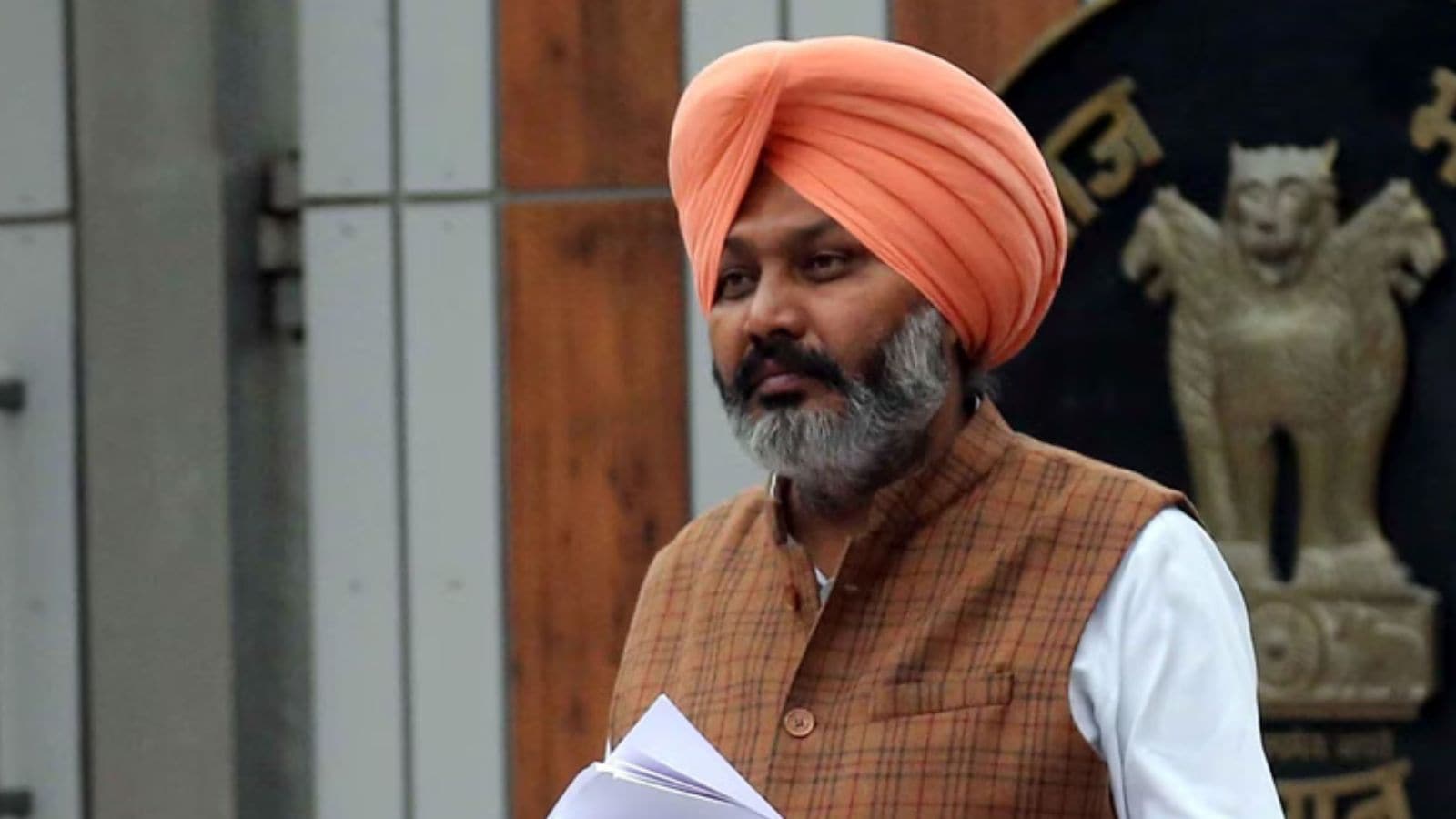
The Aam Aadmi Party government in Punjab has brought down the debt-to-GSDP ratio by four percentage points in four years and has put the state among the top three in the country in revenue growth, Cabinet Minister Harpal Singh Cheema Tuesday said.
Speaking to reporters on the achievements of his department as the AAP government completes four years in office on March 16, Cheema said when the party assumed power in 2022, the outstanding debt was Rs 3 lakh crore.
“By servicing that debt, we have returned 35 per cent of the principal amount and 50 per cent of interest. Of the borrowings we took, 85 per cent was spent on servicing the old debt,” Cheema said.
Less than 15 per cent of the borrowed funds are actually available for the AAP government to use for the state, he said, adding that even then the AAP government brought down the debt-to gross state domestic product (GSDP) to 44.47 per cent from 48.25 per cent in 2022.
Cheema also junked claims of opposition parties who have been targeting the AAP over the state debt and blamed previous SAD-BJP and the Congress governments for pushing the state into the “debt trap”.
The Finance, Excise and Taxation Minister further said that Punjab has emerged among the top-three states in the country for remarkable achievements in revenue growth. “The state’s financial performance over the past four years reflects structural reform, fiscal discipline and administrative transparency,” said Cheema.
He said Punjab’s own tax revenue has surged significantly, rising from Rs 37,327 crore (6.39 per cent of the GSDP) in 2021-22, to Rs 57,919 crore (7.15 per cent of the GSDP) in 2024-25.
Story continues below this ad
Cheema further said his department has raised the excise collection revenue by 86.77 per cent. During the five year tenures of SAD-BJP and the Congress governmnets, the excise revenue stood at Rs 20,545 crore and Rs 27,395 crore, respectively, he said. In comparison, the AAP dispensation has collected Rs 37,975 crore up to January 2026, with an annual average of Rs 9,907 crore, he said.
Excise revenue, which stood at Rs 6,157 crore in 2021-22, is projected to reach Rs 11,500 crore in 2025-26.
On goods and services tax (GST), he said the AAP government mopped up Rs 83,739 crore in the past four years (upto January 2026) while the previous Congress government could collect only Rs 61,286 crore in five years. State GST revenue, which was Rs 15,542 crore in 2021-22, is projected to cross Rs 26,500 crore mark in 2025-26, reflecting a 70.50 per cent growth, he added.
On land and property registrations, Cheema said revenue from stamp duty has also witnessed a historic rise. “The SAD-BJP government (2012-2017) collected a total of Rs 12,387 crore averaging Rs 2,477 crore annually, while the Congress (2017-2022) managed only Rs 12,469 crore averaging Rs 2,494 crore annually. Conversely, the AAP administration has generated Rs 19,515 crore by January 2026, with an annual average of Rs 5,091 crore. This indicates that in just four years, the AAP government collected 60 percent more stamp duty than the five-year terms of previous governments. At this accelerated pace, the revenue is expected to double the Congress era’s total by the 2026-27 financial year.”
Story continues below this ad
Highlighting capital expenditure, Cheema said the SAD-BJP government spent Rs 14,641 crore over five years and the Congress Rs 19,356 crore, while the present government proposes to spend Rs 31,630 crore.
Cheema said, “The AAP government has allocated Rs 7,000-8,000 crore for implementing the Pay Commission and clearing Rs 14,191 crore in arrears pending from 2016 to 2021. Further, Rs 2,566 crore was spent to bail out financially distressed state entities like Punsup, land mortgage bank, PSIDC, and the Mandi Board.”
He further said the government paid Rs 1,750 crore to clear arrears of central schemes left unpaid by the previous Congress government.
On fiscal safeguards, he said the AAP government has made investments in the Consolidated Sinking Fund and Guarantee Redemption Fund maintained with the RBI. “As of March 31, 2022, the state had only Rs 3,027 crore in the consolidated sinking fund and nothing in the Guarantee Redemption Fund. By December 2025, these reserves have swelled to Rs 10,738 crore in the consolidated sinking fund and Rs 982 crore in the guarantee redemption fund, bringing the total to Rs 11,720 crore.”
Story continues below this ad
Cheema also said central support had declined. Between 2017 and 2022, Punjab received Rs 17,740 crore in revenue deficit grants (RDG) and Rs 54,600 crore in GST compensation, totalling Rs 72,340 crore. In contrast, the present government has received Rs 15,887 crore in RDG and Rs 11,945 crore in GST compensation, totalling Rs 27,832 crore up to January 2026, he said, adding that such grants had now been discontinued.
He said the Finance Department had launched a Pension Seva Portal to digitise pension disbursal and introduced an e-Deposit Management System to strengthen treasury transparency, adding that the state had received over Rs 800 crore as an incentive for digitising schemes under the SNA-SPARSH initiative.