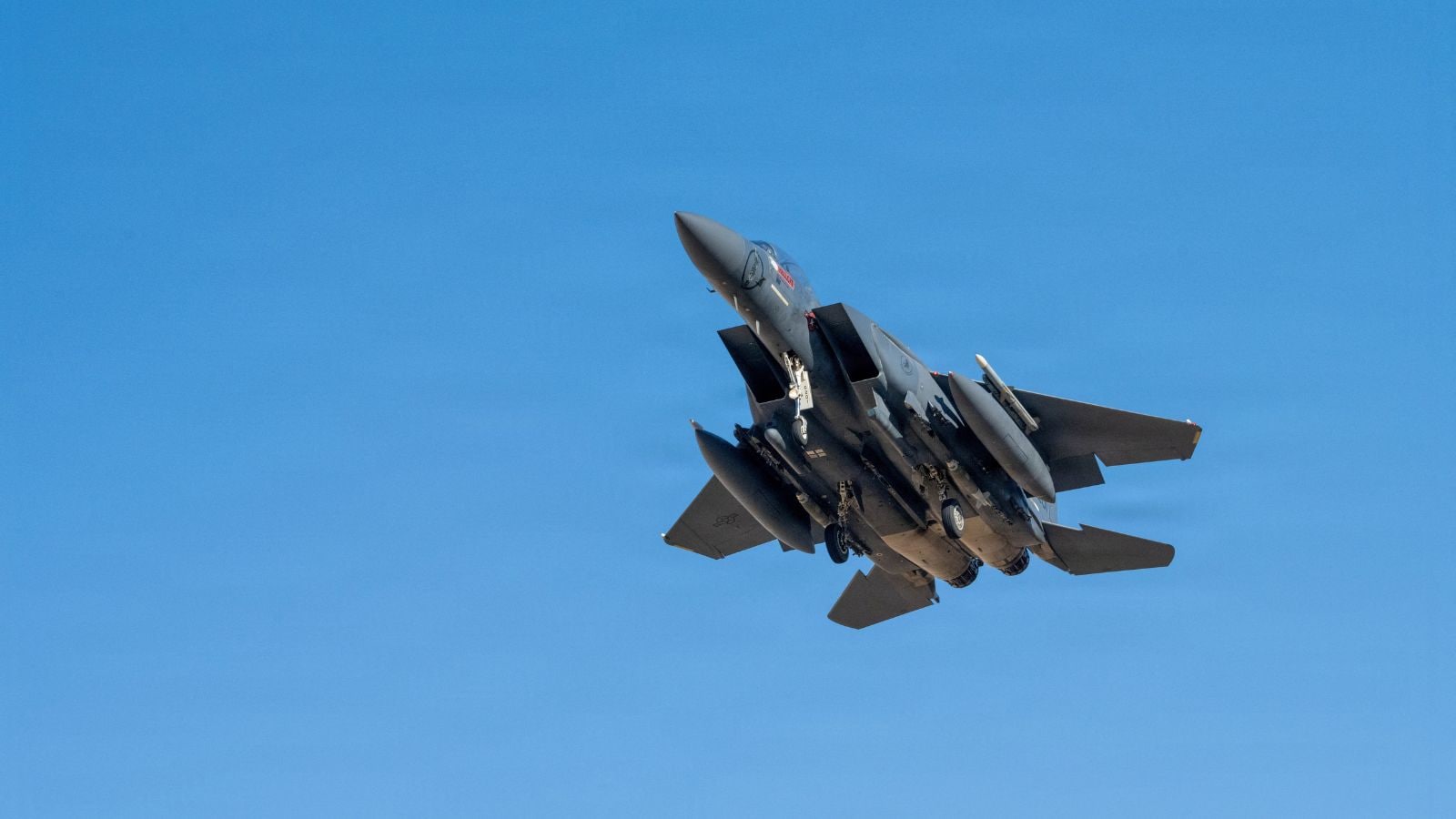
The overwhelming use of air power in the war in West Asia is not only a military instrument of choice for both the US and Israel, but also a necessity given Iran’s geographical distance and terrain. Ensuring air superiority over areas of operation is a national strategic imperative. For Israel, the use of offensive air power has been the preferred military instrument for its national security strategy from the early Arab-Israeli wars to the current conflicts.
To sustain Israel’s air power-led war against Iran, US air power support remains vital. The US Air Force (USAF), which has fought all its wars overseas, has air power as a dominant component of its military strategy, whether against terrorism, insurgency, or a conventional enemy. Thus, air superiority was an all-important operational necessity for the rollout of the US military and political strategy.

Operations Epic Fury and Roaring Lion have been underway for over a month and have systematically targeted Iran’s leadership, command and control, its military assets, defence industry, offensive capabilities of missiles and drones, energy facilities, strategic targets, and nuclear facilities. Tens of thousands of targets have been struck by US air power, including the USAF, the Navy, and the Marines, with over 30 types of combat aircraft and support platforms, unmanned aerial systems, long-range precision weapons, and surface and subsurface assets.
The Israeli Air Force itself has flown over 10,000 airstrikes, striking over a wide range of targets in Iran and other combat zones, including Lebanon. Considering that each airstrike is an intricately orchestrated mission comprising bombers, fighters, electronic support aircraft, jammers, airborne early warning and command aircraft, aerial refuellers, and unmanned platforms, intended to take out targets at long distances against Iran’s air defence (which remains operational and capable), their operational effects have been devastating.
The recent spate of losses of US aircraft raises the question of air superiority, and of air power from a larger perspective of military employment of force in contemporary warfare. First, control of the air was an absolute necessity for the US and Israel, which was conducted over a month of high-intensity long-range warfare. Operationally and tactically, the US-Israel air campaign has been very effective, especially for its scale and attritional effects.
They had destroyed the remnants of a practically defunct Iranian air force but could not take out its extensive air defence. Consequently, despite the absence of any air opposition, there were US combat losses, both on the ground and in the air. But losses are par for the course in warfighting, and even if they are heavy due to hostile airspace, they are acceptable if they produce the desired military and broader national outcomes. A complex combat search-and-rescue to safely extricate a downed aircrew was vital for morale and reflected the credo of warriors: Leave no one behind.
The loss of several aircraft, invaluable sensors, and ground infrastructure to missile and drone attacks underscores the threat posed by ground-based enemy air defence. Even without an enemy air threat, there will be losses, manned and unmanned. Manned platforms provide critical mass and enormous mission flexibility and are used in increasing coordination with unmanned offensive platforms and long-range precision vectors, and will continue to do so to produce the desired air power effects. The absence of a credible air force severely diminished Iran’s capability to defend itself and has led to severe destruction, which will impact it for years to come. However, its asymmetric strategies of reliance on missiles and drones are hurting its adversary as well, giving it cause to fight on.
From a practitioner’s perspective, air power delivered on its military strategy but failed to bring about the expected regime change. It would be incorrect to lay the blame on air power, as it did its part in taking out the leadership, but to expect that mere decapitation and a “popular uprising” would lead to an overthrow of a repressive regime was a strategic mistake. When political leadership in its hubris fails to understand the limits of the use of force in statecraft, hesitates in committing ground forces and chooses to use only one instrument of the military, woven in a flawed strategy with shifting political aims and military goalposts, conflict termination no longer remains in its control.
The end of the war will now depend on Iran’s resilience, will, capacity to absorb punishment, and capability to fight. For the US and Israel, it may well end as a military defeat at the hands of an enemy who refuses to lose.
The writer is a retired Indian Air Force Air Marshal