

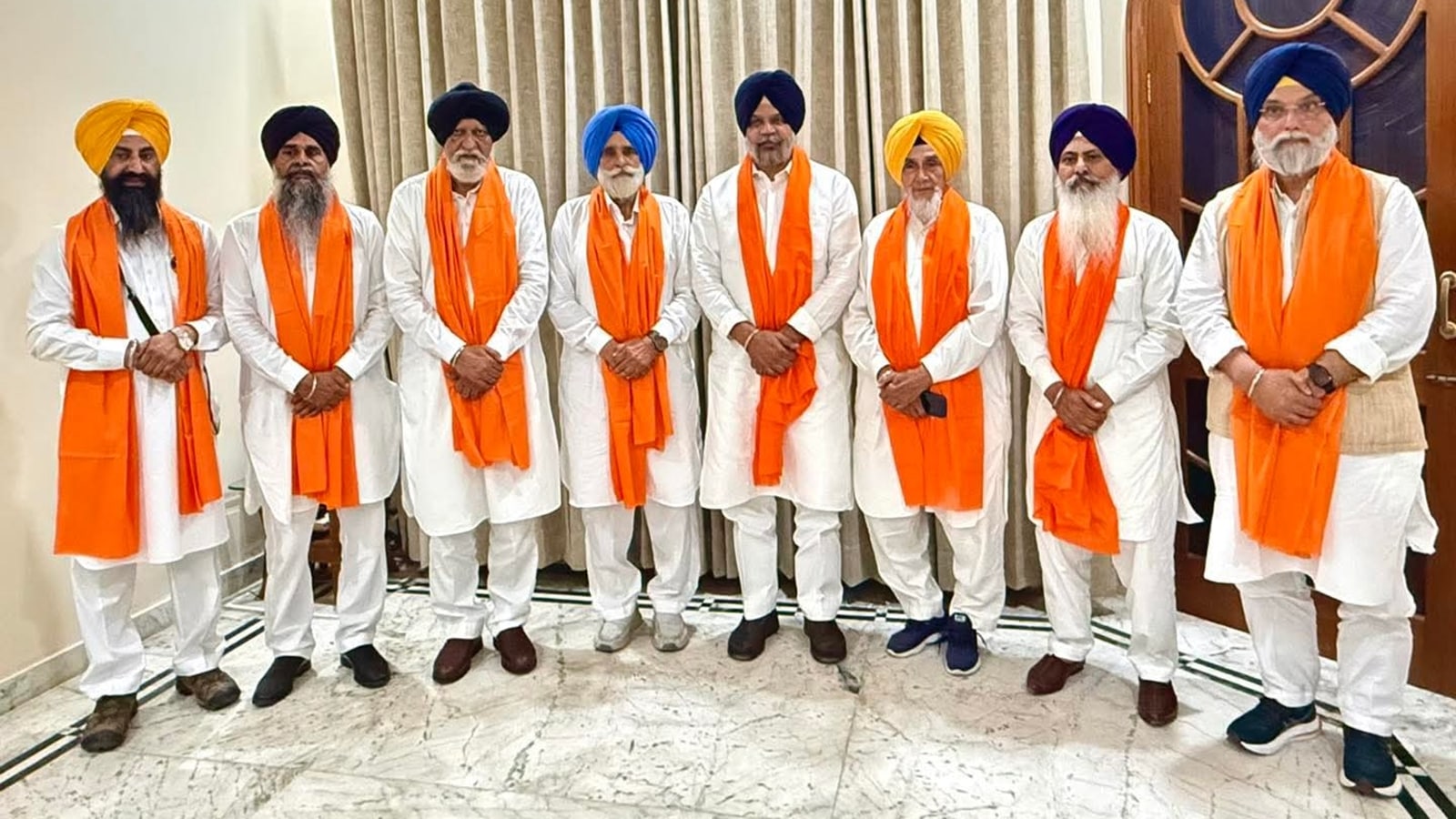
In the ever-evolving terrain of Akali politics, the Shiromani Akali Dal (SAD)–Punar Surjit led by rebel leaders and the Akali Dal Waris Punjab De (WPD) floated by the father of jailed Khadoor Sahib MP Amritpal Singh have formally announced an alliance to consolidate “panthic unity” with the 2027 Assembly polls in mind.
The decision was taken on April 18 after a meeting in Jalandhar and soon afterwards, a “Panthic Ekta Coordination Committee” was constituted, with Dakha MLA Manpreet Singh Ayali unanimously appointed as its convenor.

“The alliance will contest elections on a seat-sharing arrangement while retaining their individual party symbols, once allotted,” Ayali told The Indian Express. “As of now, our focus is on panthic unity. Elections are still months away, but this is the first step towards bringing all like-minded forces together.”
Ayali won the 2022 Assembly elections on a ticket of the SAD led by the Badals amid an AAP wave but rebelled against the party leadership soon afterwards, demanding structural changes and leadership change. He later joined the SAD Sudhar Lehar in July 2022, which subsequently evolved into SAD–Punarsurjit in August, 2025. He is now spearheading efforts to unify splinter Akali factions.
The Akali Dal WPD was formed on January 14, 2025, during the Maghi Mela conference in Muktsar by Faridkot MP Sarabjeet Singh Khalsa and Tarsem Singh, the father of Amritpal Singh. Both parties have not yet been formally registered with the Election Commission and are awaiting a symbol. However, the Akali Dal WPD tested its electoral strength in the Tarn Taran bypoll held in November 2025, which is part of the Khadoor Sahib Lok Sabha constituency. Its candidate, Mandeep Singh, secured around 19,000 votes and finished third, while the AAP’s Harmeet Singh Sandhu won the bypoll, defeating the SAD nominee by around 12,000 votes. WPD leaders had then claimed that their party had split the traditional Akali vote and that Akali unity would have helped keep the AAP at bay.
The SAD Puna Surjit, formed in August 2025 with former Akal Takht and Takht Damdama Sahib Jathedar Giani Harpreet Singh as its president, has already witnessed internal churn. Several leaders recently returned to the SAD or joined the BJP. Among them was Makhan Brar, the son of former minister Tota Singh, who joined hands with the Badals last week, alleging that rebel factions were weakening the party.
At the meeting last Saturday of the new alliance’s coordination committee, Giani Harpreet Singh was not present, raising questions about internal cohesion in the rebel camp.
Ayali, meanwhile, remains confident that the alliance will expand. “Our larger focus is to unite all Akali factions. Eventually, all leaders and workers will come onto one platform. At that stage, Sukhbir Singh Badal will have no option but to step down. The core issue is leadership change,” he said.
The alliance also appears open to broader political alignments. Ayali welcomed support from like-minded groups, including Navjot Kaur Sidhu who recently launched the Bharatiya Rashtravadi Party and extended support to Amritpal Singh. “Anyone committed to strengthening Punjab and its regional identity is welcome,” he said.
The push for unity comes in the backdrop of a call for panthic consolidation issued on December 2, 2024, on the directions of then Akal Takht Jathedar Giani Raghbir Singh. Ayali said Saturday’s development was the “first concrete step” in that direction, and urged religious, social, and farmer organisations to join them.
The SAD led by the Badals, currently busy with its “Punjab Bachao” outreach, has not responded to the formation of the new alliance. In the past, Badal has dismissed breakaway factions, accusing such groups of compromising Punjab’s interests and emphasising that panthic principles and Punjab’s welfare remain paramount.
With less than a year still left for the Assembly polls, the success of this alliance may very well depend on whether it can translate the unity rhetoric into a cohesive organisational structure capable of challenging established players. For the moment, the new alliance remains a bit player on the ground, with internal divisions and limited electoral strength as its main hurdles.


