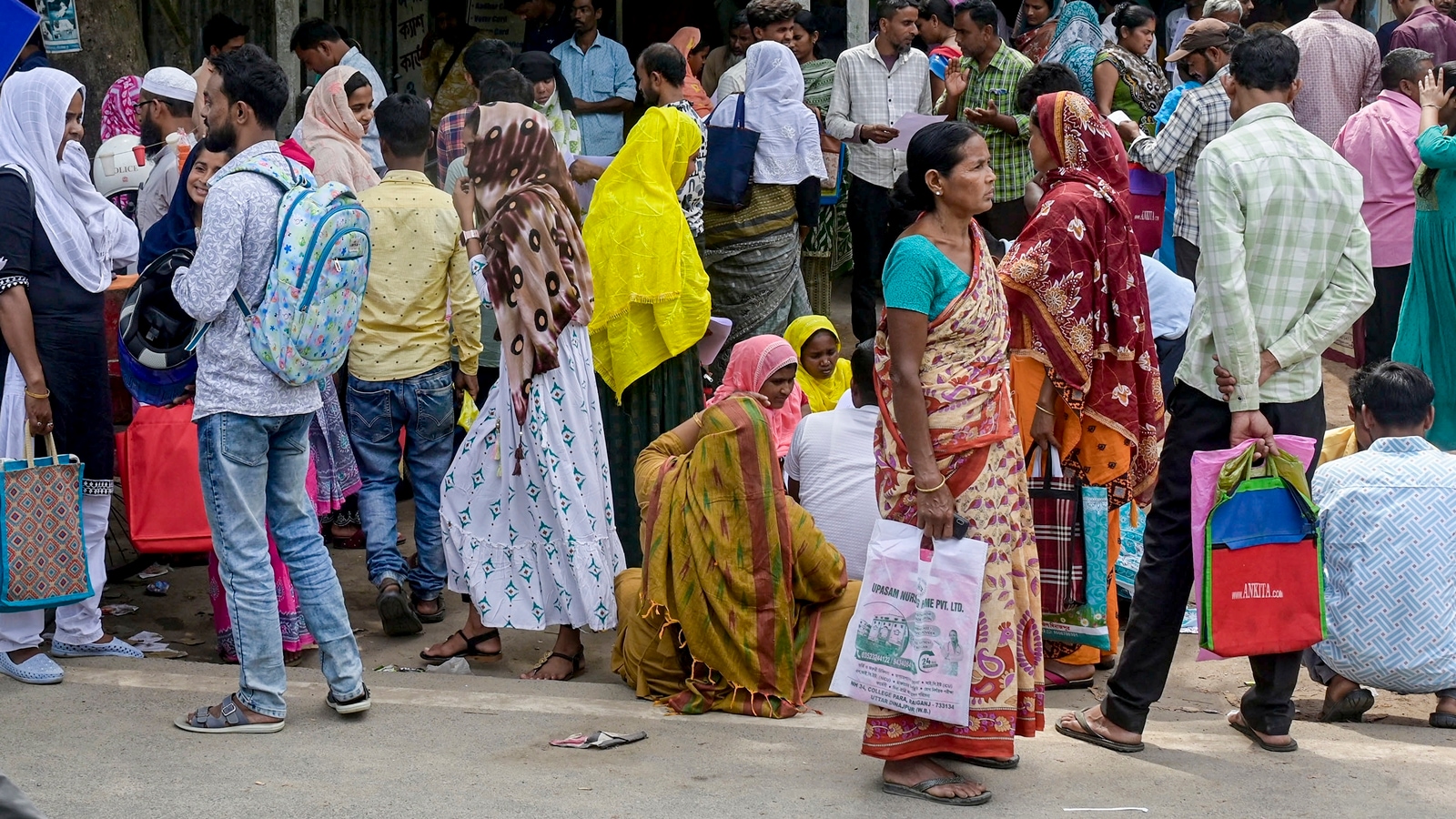
Over 27 lakh West Bengal voters, whose names were struck off electoral rolls due to “logical discrepancies” in the Special Intensive Revision, watched polling day pass them by Wednesday unable to vote, uncertain about their appeals, and with no clear answer on whether additional documents proving their identity can even be submitted.
As booths across the state closed, fewer than 2,000 of the 34 lakh-odd pending appeals had been cleared by the 19 Appellate Tribunals appointed on Supreme Court orders in March. The appeals are against exclusions and inclusions carried out by around 700 Judicial Officers appointed by the court in February.

The procedure followed so far has raised two key questions: whether appellants can submit fresh documents; and whether the tribunals can accept documents beyond the 13 identified by the EC in its SIR instructions.
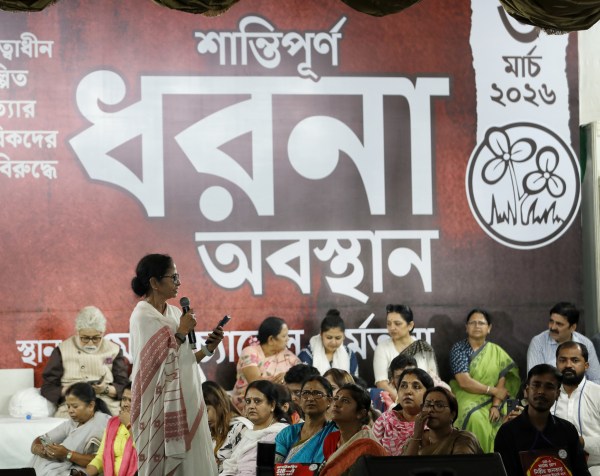 West Bengal Chief Minister Mamata Banerjee at the SIR dharna in Kolkata’s Esplanade.
The EC’s centralised portal for filing appeals, ECINET, does not give users the option of uploading any document. Polls over, shadow lengthens on those deleted: unclear if tribunals can accept fresh records
The portal, as accessed by The Indian Express Wednesday evening, provides the applicant space to give “Brief facts of the appeal” in 1,000 characters and “Reliefs sought” in 500 characters.
Since the “logical discrepancies”, like spelling mismatch, were detected by the EC’s algorithm on the basis of the documents submitted by electors during the hearing stage from the SIR in December-January, the ability to provide other documents that could address the issue is key. Ironically, this has been highlighted in an order of the appellate tribunal itself.
On April 5, the tribunal of former Calcutta High Court Chief Justice T S Sivagnanam accepted the appeal of Congress candidate Motab Shaikh after the Supreme Court asked the tribunal to give him an out-of-turn hearing since he was to file his nomination.
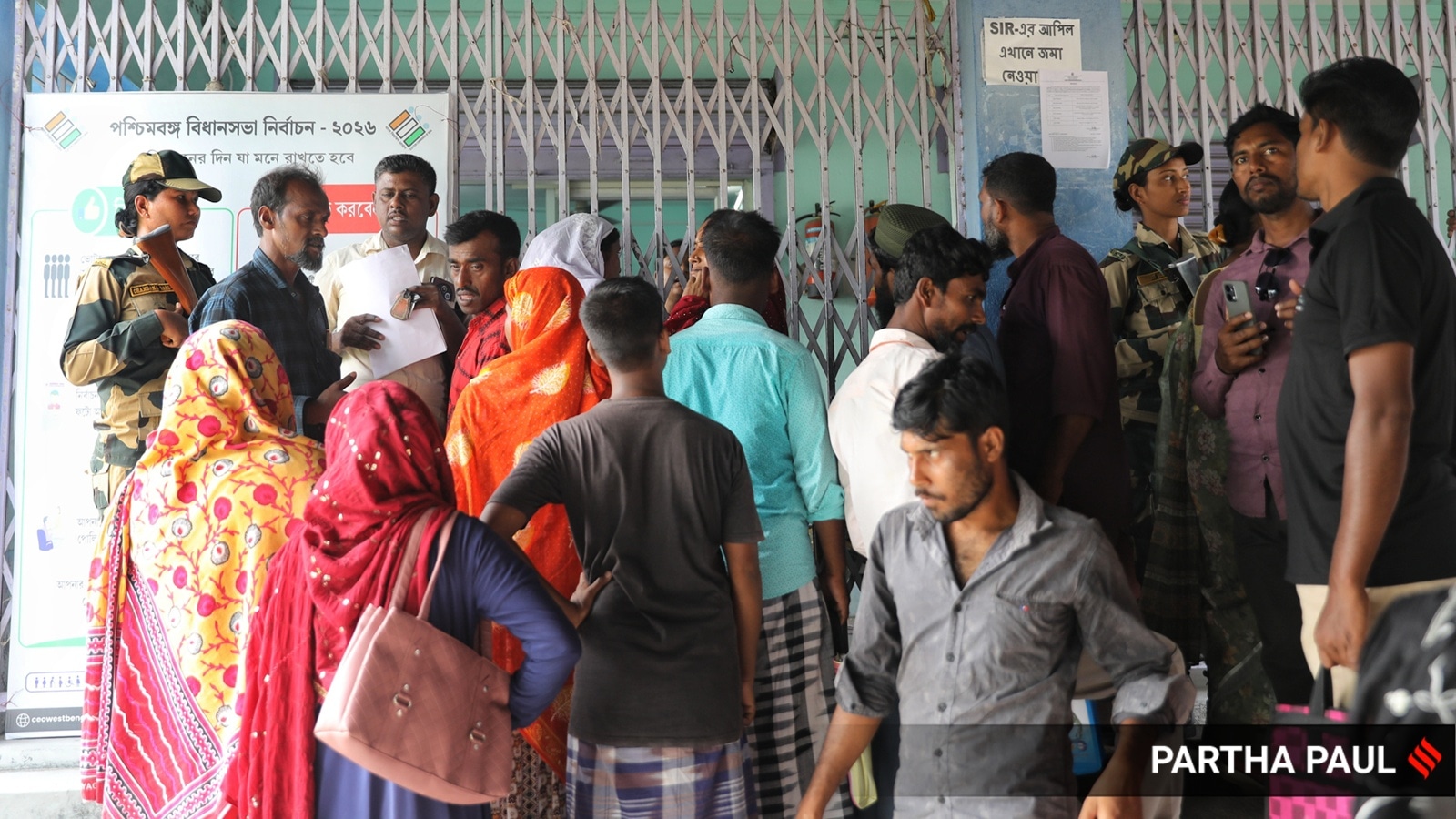 The appeals are against exclusions and inclusions carried out by around 700 Judicial Officers appointed by the court in February.
The tribunal’s order noted that due to “technical reasons,” the Election Commission was not able to provide the reason why the Adjudicating Judicial Officer had deleted his name from the rolls. The order says that there was a name mismatch in the current electoral roll and the 2002 electoral roll, which was submitted as proof during the SIR. However, Shaikh had filed an affidavit to correct the name in April 2002 itself and possessed Aadhaar, driving licence and Voter ID with the correct name. “The above records appears to have not been taken note of during the adjudication process,” the order noted.
The Shaikh case underlines the importance of appellants being able to provide fresh documents.
One appellant who was restored to the rolls Monday, just in time to vote Wednesday, Niaz Ahmed, said he took all his documents — passport, Aadhaar, PAN and Voter ID — when called for a hearing in January for a spelling mismatch with the 2002 roll.
“But the BLO told us that only one document is required, which was not correct.”
Ahmed, along with four other family members who were deleted, was added back to the rolls by the tribunal after they got orders from the High Court Monday “requesting the Appellate Tribunal to consider the appeal”. His advocate, Tarique Quasimuddin, said: “The copies of the petitions along with the documents were forwarded to the ECI, which in turn forwarded them to the tribunals. After that, the orders have been passed and the five electors have been included in the supplementary list.”
These decisions show that additional documents can be relied upon but both these decisions came after orders from the SC and HC. However, for lakhs of appellants awaiting a decision based on the appeals filed on the EC’s portal, the mechanism for doing so is not clear.
After their appointment was notified by the Election Commission on March 20, the tribunals were ordered by the Supreme Court on April 1 to “revisit the full records, including the reasons assigned by the Judicial Officers while adjudicating the objections.” The court added that the “Appellate Tribunals are free to evolve their own procedures in accordance with the principles of natural justice.” A standard operating procedure (SOP) has been circulated among the 19 former judges, as was ordered by the court with the deadline of April 7, but has not been published.
Multiple sources with knowledge of the functioning of the tribunals told The Indian Express that the appellants’ documents, as uploaded during the SIR itself, are being considered. In cases where the tribunals find prima facie that the appeal should be allowed, the final order can be passed without asking the appellant for a personal appearance, it is learnt. In case the tribunal finds prima facie that an appeal should be rejected, then the appellant is being given a hearing.
Regarding which documents to consider, the tribunals are learnt to have decided to refer to the Supreme Court’s orders, including the Election Commission’s notifications within them. The EC had identified 13 documents that electors could submit during the SIR, which did not include the most widely held Aadhaar, ration card, PAN and its own Electors’ Photo Identity Card (EPIC). In addition, while hearing the challenge to the SIR, the Supreme Court had ordered that the Madhyamik examination admit card along with pass certificate be accepted in Bengal.
Last year, while hearing petitions challenging the SIR in Bihar, the Supreme Court had ordered the EC to accept Aadhaar as a proof of identity, though Aadhaar could not be used as a proof of citizenship or residence.
Emails sent to the Election Commission and Registrar-General of Calcutta High Court regarding the SOP and the acceptance of fresh documents did not elicit any response.
A West Bengal Congress Committee office-bearer Sk. Anwar Ali had petitioned the Calcutta High Court for the SOP to be made public. The High Court dismissed the petition on April 22, asking him to move the Supreme Court. Advocate Jhuma Sen, who represented Anwar Ali, told The Indian Express that: “No one knows how the appellate tribunals are functioning as there is no transparency…The appellants are not able to upload any documents…The appellate process is discouraging me from providing additional documents.”
So far, EC sources say, 1,607 of the 27.10 lakh deleted electors have been added back to the rolls and 15 appeals rejected.