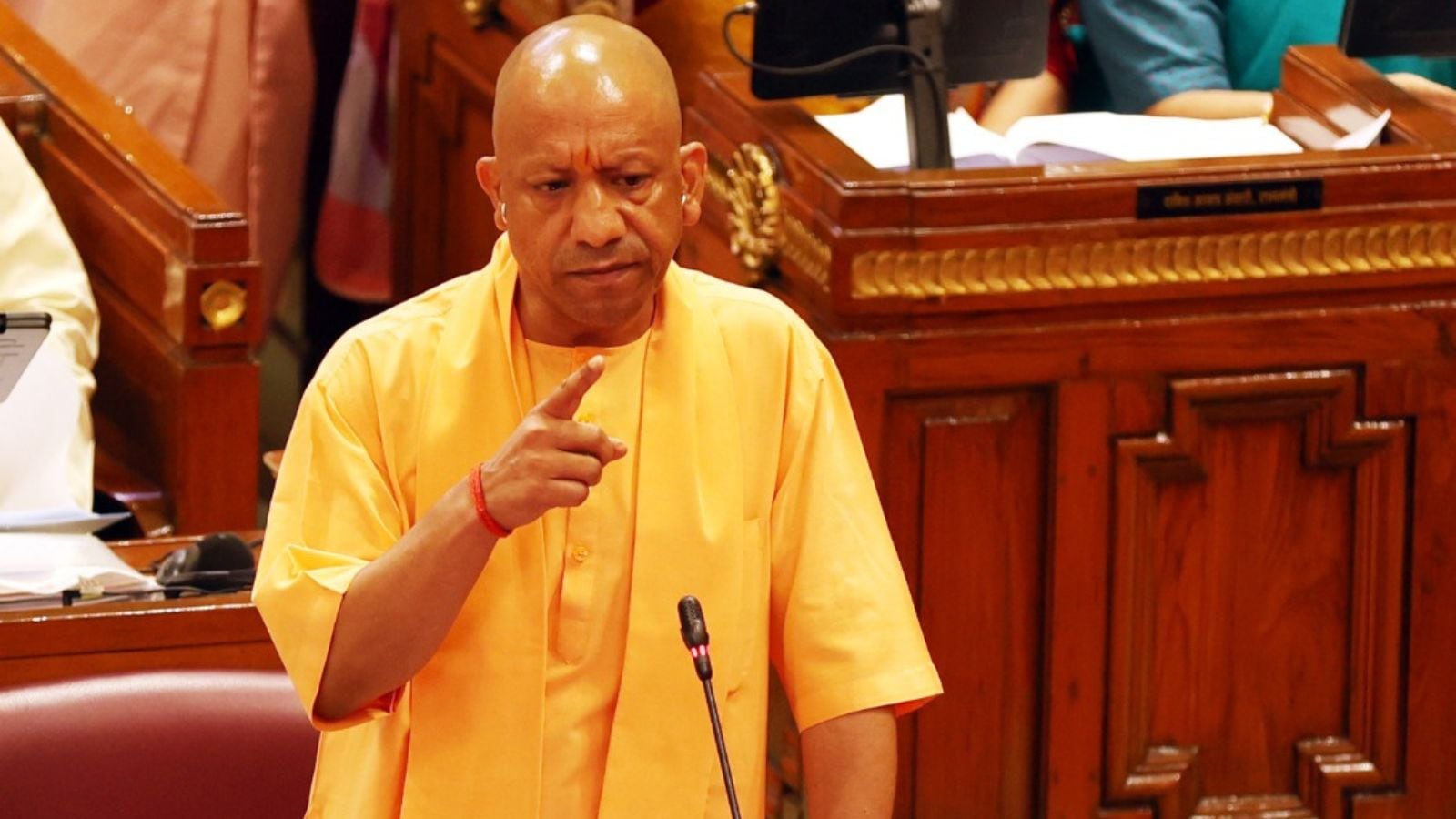
Chief Minister Yogi Adityanath Thursday tabled a resolution in the Uttar Pradesh Assembly seeking a five-hour discussion on women’s empowerment while flagging “hurdles” in the path of women’s reservation, triggering sharp exchanges between the Treasury and Opposition benches during the one-day special session as both referred to each other as “anti-women”.
The Uttar Pradesh Assembly took up the resolution on women’s empowerment, calling for a discussion to identify and address hurdles to ensure adequate representation of women in line with constitutional ideals.
Moved under Rule 103, the resolution states that while the Constitution guarantees gender equality, women have yet to achieve their due place as envisaged by its spirit, despite increased participation across sectors during the NDA government’s tenure.
It emphasised the need for greater decision-making powers for women in political and social spheres, noting that despite the passage of the Nari Shakti Vandan Adhiniyam, 2023, obstacles remain in fully realising its intent.
The resolution called for these barriers to be identified and resolved through the five-hour debate on women’s empowerment.
Mayawati, Shah Bano
Reminding the Samajwadi Party of the 1995 guest house incident and invoking the Shah Bano case to target the Congress, Adityanath said, “Everyone remembers the 1995 guest house incident when the state’s first Dalit woman chief minister was mistreated… this reflects the true conduct of the SP”.
He was referring to the incident when the Bahujan Samaj Party leader Mayawati was attacked and held hostage by Samajwadi Party workers.
Story continues below this ad
“At that time, the BJP supported her to ensure dignity for a Dalit daughter. Late Brahma Dutt Dwivedi ensured her safety without caring for his own life, and the BJP went on to support the BSP government to provide stability,” he added.
Challenging the Opposition to join the debate, the Chief Minister said, “If the SP and Congress have the moral courage, they should participate in the discussion and clarify why they opposed the Nari Shakti Adhiniyam. If they believe they were wrong, they should apologise or clarify their position through a motion of censure”.
Outlining the rationale for the resolution, Adityanath said, “Between 2014 and 2023, several key initiatives were undertaken under Prime Minister Narendra Modi’s leadership for women’s safety and self-reliance… women should also have an effective role in policymaking and law-making.”
He noted that women’s representation remains low. “Even today, women constitute around 15 per cent of Parliament, while in Uttar Pradesh it is limited to about 11–12 per cent. This must be increased to 33 per cent.
SP cites procedural grounds, Speaker shows the rulebook
Story continues below this ad
As the House convened, Parliamentary Affairs Minister Suresh Khanna tabled the Business Advisory Committee’s recommendations, listing the resolution under Rule 103 and proposing a five-hour discussion on women’s empowerment, while referencing hurdles to women’s reservation.
Leader of Opposition Mata Prasad Pandey objected to the move, citing procedural grounds. He argued that under Rule 103, subjects taken up should not be “argumentative, speculative, sarcastic or defamatory”, and said the issue of women’s reservation falls under the jurisdiction of Parliament, not the state legislature.
“This is not a state issue. It should not be discussed and voted upon,” he said.
Responding to Pandey, Minister Khanna said the resolution was centred on women’s empowerment, not reservation per se. “We want to discuss women empowerment… the context of reservation is a different matter,” he said, expressing “grief” over objections to discussing such an issue.
Story continues below this ad
Pandey clarified that the SP was not opposed to reservation, but objected to references in the resolution to the Nari Shakti Vandan Adhiniyam and “hurdles”.
Speaker Satish Mahana overruled the objection, stating that under Rule 103, a resolution can be admitted with the Speaker’s consent and that there was no bar on discussing women’s empowerment. He added that the Assembly is competent to regulate its own procedure and that the Speaker’s decision is final.
Mahana also cited precedents, recalling that a similar resolution was passed on December 20, 2006, during the SP regime when Pandey himself was Speaker. He read out portions of the earlier resolution that had urged the Centre to amend provisions related to the Scheduled Castes to extend benefits irrespective of religion.
“India’s democracy is progressive… social issues cannot be set aside on technical grounds,” Mahana said.
Story continues below this ad
Later, as the debate began, Samajwadi Party MLA Sangram Yadav, countering the BJP, argued that the legislation in question was more closely linked to delimitation than to the immediate implementation of women’s reservation. He also referred to the past treatment of Phoolan Devi, alleging that she had faced oppression and that it was the Samajwadi Party which gave her the opportunity to enter electoral politics.
Replying to him, Deputy Chief Minister Brajesh Pathak alleged that Phoolan Devi became a “dacoit” because of the Samajwadi Party, leading to hooting and sloganeering from the Opposition benches. He also talked about the guest house incident and the “anti-women” statements given by its leaders.
BJP MLA Manju Shiwach also targeted the SP on the guest house incident and alleged mistreatment of Mayawati. “Even a powerful woman like Mayawati ji did not have safety and security,” he said.
In a rare sight before the session began, members of the ruling party and the Opposition MLAs arrived with placards and slogans earlier in the day.
Story continues below this ad
While BJP legislators targeted the Opposition—particularly the SP—over alleged opposition to women’s reservation, shouting slogans such as “Jab Jab Chunao Aata Hai, Vipaksha Burkhe Mein Chhup Jata Hai (Whenever elections near, Opposition hides behind burqas)” and “Kalyug ke Kaurvon ne Kiya Nari Shakti Vandan ka Virodh (Kauravas of Kaliyuga opposed Nari Shakti Vandan)”.
SP MLAs countered with placards reading “33 per cent Mahila Arakshan Lagu Karo,” accusing the government of misleading the public and delaying implementation.