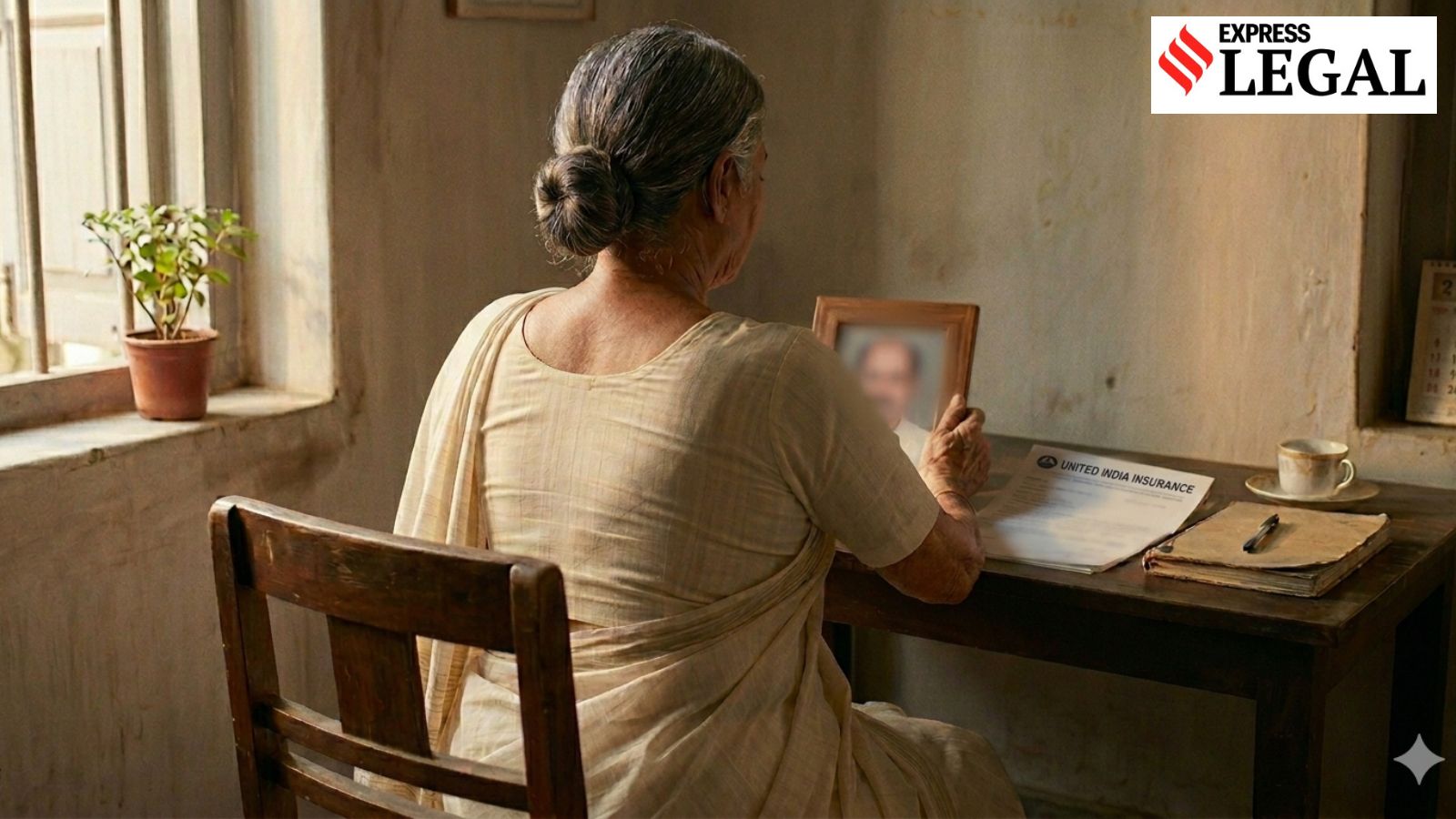
Consumer news: Nearly three decades after a Jaipur businessman died in a road accident, the National Consumer Disputes Redressal Commission (NCDRC) has reaffirmed its earlier direction, awarding Rs 10 crore with 9 per cent annual interest to his family, holding that the insurer failed to justify the rejection of a high-value personal accident insurance claim.
The national consumer commission declared the insurer’s rejection letter “untenable” and held that the company could not substantiate allegations of suppression of material facts because it failed to produce the original proposal forms forming the basis of the dispute.
A bench of Justice A P Shahi, President and Bharat Kumar Pandya, Member, was hearing two connected complaints filed by a widow, one Asha Garg and her family, against United India Insurance, over the rejection of personal accident insurance policies issued to the deceased businessman.
“We are therefore in agreement with the ultimate conclusion drawn by this Commission in the previous decision dated 24.11.2005,” the national consumer commission said on May 15 affirming its own order.
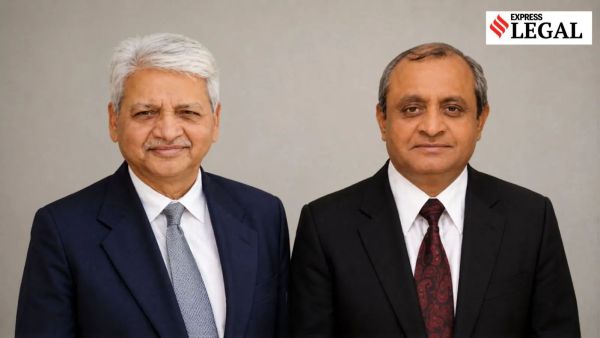 Justice A P Shahi, President and Bharat Kumar Pandya, Member noted that despite repeated directions, the insurers could not trace the original proposal forms. (Image enhanced using AI)
Accident led to Rs 15 crore insurance dispute
Kishori Lal Sharan Garg died on March 27, 1997 when his car collided head-on with a truck while he was travelling from Jaipur to Delhi.
At the time of the accident, Garg was covered under two personal accident insurance policies, a Rs 10-crore policy issued by United India Insurance for the period February 11, 1997 to February 10, 1998, and a separate Rs 5 crore policy issued by National Insurance for the period January 31, 1997 to January 30, 1998.
Following the accident, both insurers initiated extensive investigations through surveyors, investigators and detective agencies.
Story continues below this ad
The insurers later repudiated the claims alleging concealment of material information, particularly regarding previous insurance proposals and the insured’s financial background.
United India Insurance rejected the claim on June 16, 2000, while National Insurance rejected the separate claim on September 29, 2000.
Original NCDRC order was passed in 2005
The litigation first culminated in a November 24, 2005 judgment by the NCDRC itself.
In that decision, the national consumer commission allowed the complaint against United India Insurance and directed payment of Rs 10 crore with 9 per cent interest from July 1, 1997.
Story continues below this ad
“The United India Insurance Co. Ltd. is directed to pay the complainants a sum of Rs.10,00,00,000/- with interest at the rate of 9% p.a.,” the operative portion of the 2005 order stated.
However, the national commission had dismissed the separate complaint against National Insurance concerning the Rs 5 crore policy.
Supreme Court ordered fresh adjudication
Both sides challenged the 2005 order before the Supreme Court.
In January 2017, the apex court set aside the NCDRC’s earlier ruling and remanded the matter back to the national consumer commission for fresh adjudication after observing that oral evidence ought to have been recorded because serious disputes existed regarding the proposal forms and alleged concealment.
Story continues below this ad
The Supreme Court directed the commission to summon records from divisional, regional and head offices of both insurance companies, including dispatch registers and internal correspondence.
“We are of the opinion that this is an appropriate case in which the National Consumer Disputes Redressal Commission ought to have recorded evidence instead of deciding the case only on the basis of the affidavits,” the top court had observed.
Missing proposal forms became core issue
During the rehearing, the complainants repeatedly argued that the insurers had failed to produce the original proposal forms allegedly containing suppression or misrepresentation.
The national consumer commission noted that despite repeated directions, the insurers could not trace the original proposal forms or dispatch registers.
Story continues below this ad
The complainants contended that the policy documents themselves referred to written proposals dated February 11, 1997, but the insurers only produced undated photocopies carrying overwriting, inconsistencies and mismatched premium calculations.
Senior Advocate Joy Basu, appearing for the complainants, argued that the insurers failed to discharge the burden of proving suppression because the alleged proposal forms were neither original documents nor properly authenticated.
He also highlighted contradictions in the testimony of insurance officials regarding seals, endorsements and nominee details.
The national consumer commission eventually accepted the complainants’ contention that the insurer had failed to substantiate the allegations forming the basis of repudiation.
Story continues below this ad
Commission rejects fresh grounds during hearing
- The national commission also reiterated that insurance companies cannot expand the grounds for repudiation during final arguments.
- Relying on Supreme Court precedents, the NCDRC held that insurers were barred from introducing fresh allegations beyond those contained in the rejection letters.
- “Canvassing supplementary arguments during the hearing, beyond those in the insurer’s repudiation letter, is explicitly prohibited,” the national consumer commission observed.
Rs 10 crore plus interest reaffirmed
- After reconsidering the matter on remand, the national consumer commission reaffirmed the complainants’ entitlement to Rs 10 crore with 9 per cent interest under the United India Insurance policy.
- The national consumer commission also noted that the amount had already been withdrawn by the complainants pursuant to interim directions passed during the pendency of the appeals before the Supreme Court, subject to final adjudication.
- It directed that any remaining amount, including interest payable under the earlier order, should now be released accordingly.
- However, the commission did not grant relief in the separate Rs 5-crore claim against National Insurance, maintaining dismissal of that complaint.
- The decision brings to a close one of the longest-running insurance disputes before India’s consumer fora, with proceedings stretching from the 1997 accident to the final adjudication in 2026.