3 min readNew DelhiMay 26, 2026 12:00 AM IST
“Why does Gen Z often seem detached or unserious about things older generations treated as important?” is a question that often gets asked on Reddit’s popular sub r/GenZ, which explores behavioural patterns the generation is widely known for. Further down, a particular comment captured the spirit of the thread: “What is there to be attached to? Economy sucks, we’re looking at a new war, cost of living is exponentially higher than even 10 years ago….job market is terrible, cost of education is crazy, people are generally ruder”.
Then we found an Instagram post by Her Circle that gave this behaviour a name: ‘micro detachment’.

Simply put, micro-detachment is the practice of being so unbothered that nothing matters anymore. “One day, someone who once felt essential starts feeling optional, and you can’t even pinpoint when it happened. It is terrifying because nothing dramatic actually happens. People think disconnection arrives loudly. Most of the time, it arrives through accumulation,” the caption read.
What is micro detaching, and why does it happen?
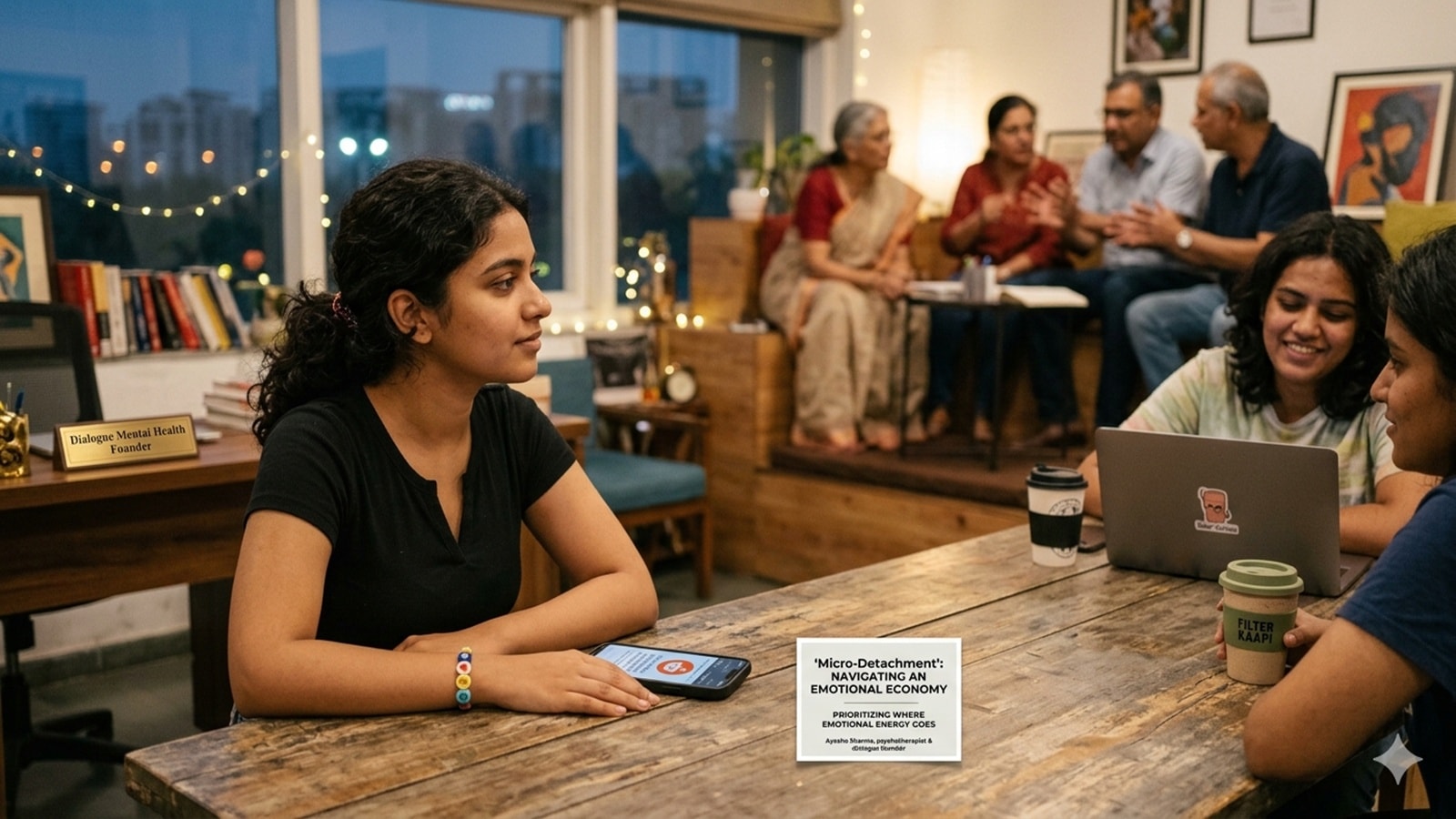
Ayesha Sharma, psychotherapist and founder of Dialogue Mental Health, says that while this is not a new phenomenon, the presence of a word makes what has always existed more visible. Simply put, micro detachment is a way to navigate an unequal emotional economy.
“Over time, when one person notices tension, starts hard conversations, remembers the small things, holds the big feelings, and the other stays a passive participant, there’s an emotional imbalance that leads to resentment. That’s when people check out and get detached,” she tells indianexpress.com.
Gen Z has realised that emotional investment can lead to disappointment when loyalty is conditional.
 Emotional imbalance can drive a wedge between bonds. (Magific)
Is detachment always bad?
Delhi-based psychologist Dr Riya Singh tells indianexpress.com that emotional detachment is often misunderstood. It doesn’t mean someone is cold or uncaring. In high-pressure situations, detachment is often looked at as a coping mechanism. It allows individuals to maintain focus, protect their mental health, and avoid being manipulated or hurt by transient relationships.”
Story continues below this ad
Emotional detachment can not just empower individuals to make objective decisions, free from the influence of office politics, favouritism, or personal biases, it also helps people learn early to separate personal feelings from interactions. The result? A tendency to experience less burnout and fewer interpersonal conflicts. “This doesn’t mean they are incapable of meaningful relationships — it means they prioritise where their emotional energy goes,” says Singh.
According to her, learning to manage emotional attachment is part of emotional intelligence. It allows people to respond strategically rather than react impulsively. Interestingly, Singh says detachment doesn’t necessarily mean isolation. “What you need is to cultivate supportive networks outside of transactional environments — such as family, friends, and mentors — while maintaining composure in highly competitive arenas,” she concludes.
DISCLAIMER: This article is based on information from the public domain and/or the experts we spoke to.