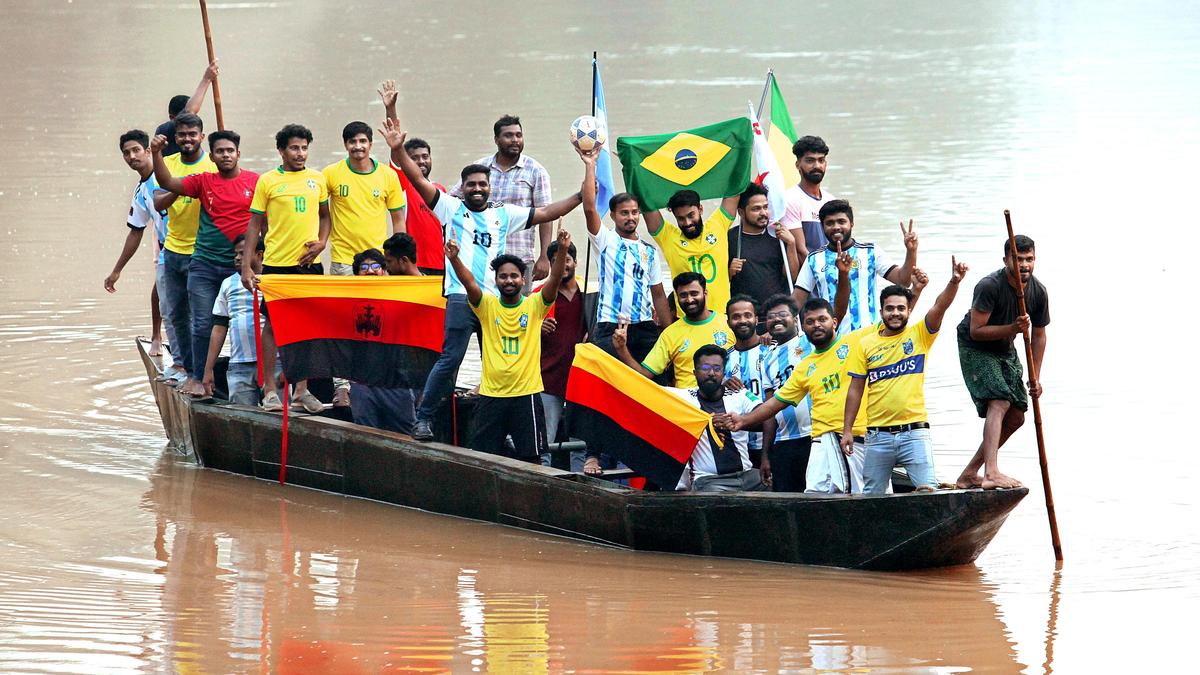
In late-90s Kerala, a young girl is jolted awake at night by the sound of the television. She finds her father watching football, a cup of tea in hand to stay awake. Soon, the cups become two as the World Cup turns into a way for her to connect with him. She watches a usually composed man move through a gamut of emotions — from euphoria to dejection. Around that time, she nails the Argentina flag to the mast.
Around the same period, a few hundred kilometres north, a young boy grows up playing pseudo shoot-outs with his father, who invokes the names of Diego Maradona, Gabriel Batistuta and co. before every kick. Despite the prevalent Latin American flavour around him, the boy chooses England after Michael Owen’s solo goal in the 1998 World Cup. It becomes one of his earliest football memories; soon he begins following English football and its clubs.
Over the years, he also reads books about football culture in Argentina and becomes enamoured by the manic love, passion, mysticism and folklore surrounding the game, as well as its inspirational and mercurial footballers.

Years later, when the girl and boy meet and get married, their first point of agreement is their love for Argentine midfielder Juan Román Riquelme. When Argentina wins the World Cup, the girl — now a woman — refuses to watch the shootout because, as any true fan will tell you, watching is precisely what brings bad luck. Ángel Di María, Emiliano Martínez, Lionel Messi et al. will never know of her — and countless others’ — sacrifices.
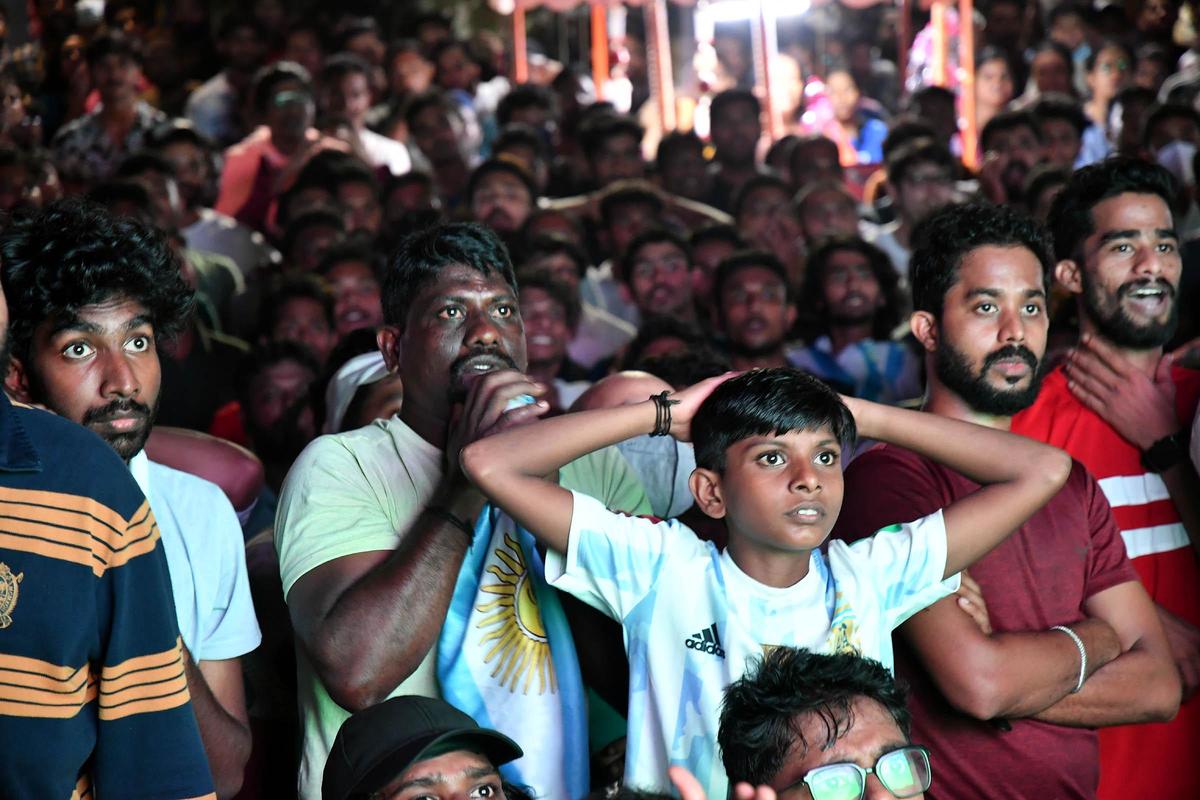
Anxious fans watching the 2022 FIFA World Cup final on a wide screen put up at Shankumugham Beach in Kerala’s Thiruvananthapuram, December 19, 2022..
| Photo Credit:
Mahinsha S.
This is the story of my family. It is also just one among many in Kerala and other football-crazy regions of India: couples who met on Reddit football threads; parents and children, siblings and friends for whom the quadrennial FIFA World Cup becomes a month-long ritual of bonding; dormant WhatsApp groups reigniting the fading embers of friendship, briefly revived through football amid the exhaustion of everyday life.
With the tournament set to kick off on June 11, the celebratory wheels are slowly grinding into motion in Kerala. It is slightly delayed this time, knackered by the intense political wave that swept through the State during the recent Assembly elections. Ongoing geopolitical tensions in many parts of the world, along with the World Cup’s placement in a less-than-ideal time zone (the tournament is spread across the U.S., Canada and Mexico) have also been raised as reasons by followers and fan clubs for the delayed build-up in the State.

For the record
For the first time, 48 teams will compete instead of 32, making this edition of the FIFA World Cup the biggest ever
The tournament is being co-hosted by the United States, Canada and Mexico — the first World Cup hosted by three nations
Mexico will become the first country ever to host the men’s World Cup three times (1970, 1986 and 2026)
The Messi economy
Perhaps it is just the new normal; in an age of information overload, instant gratification, content saturation, and a relentless barrage of sporting events, it is unreasonable to expect a month-long build-up in news media or otherwise.
“The World Cup fever will kick in, there is no doubt, but just a bit closer to the event,” a worker at a sporting goods shop in Kozhikode confirms. Across the State, stores are stocking up on jerseys, flags, boots and balls in anticipation of the World Cup. Messi is the most in-demand shirt, it would seem, though Ronaldo is not far behind. The wait is on for the Messi economy — an unofficial, unaccountable financial outlay — to get underway.
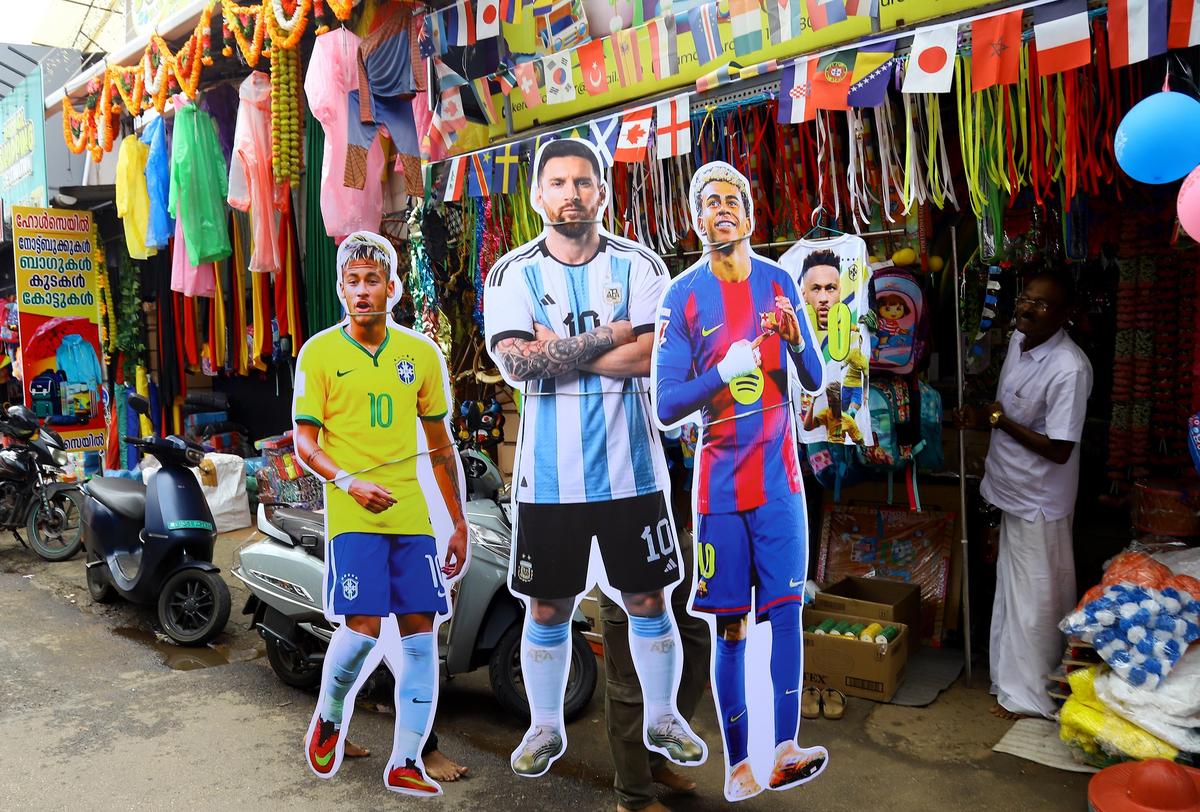
Cutouts of football stars welcome shoppers in Thrissur, Kerala, May 2026.
| Photo Credit:
K.K. Najeeb
Over the next few weeks, jersey replicas priced between ₹250 and ₹400 will fly off the racks, along with flags and other merchandise. Electronics stores are bracing for swarms of customers looking to upgrade their TV sets, while satellite television subscriptions are expected to see a bump. Fan groups, from Kasaragod to Thiruvananthapuram, will organise celebratory bike rallies and, in the process, boost the business of local — often small — restaurants and cafes.
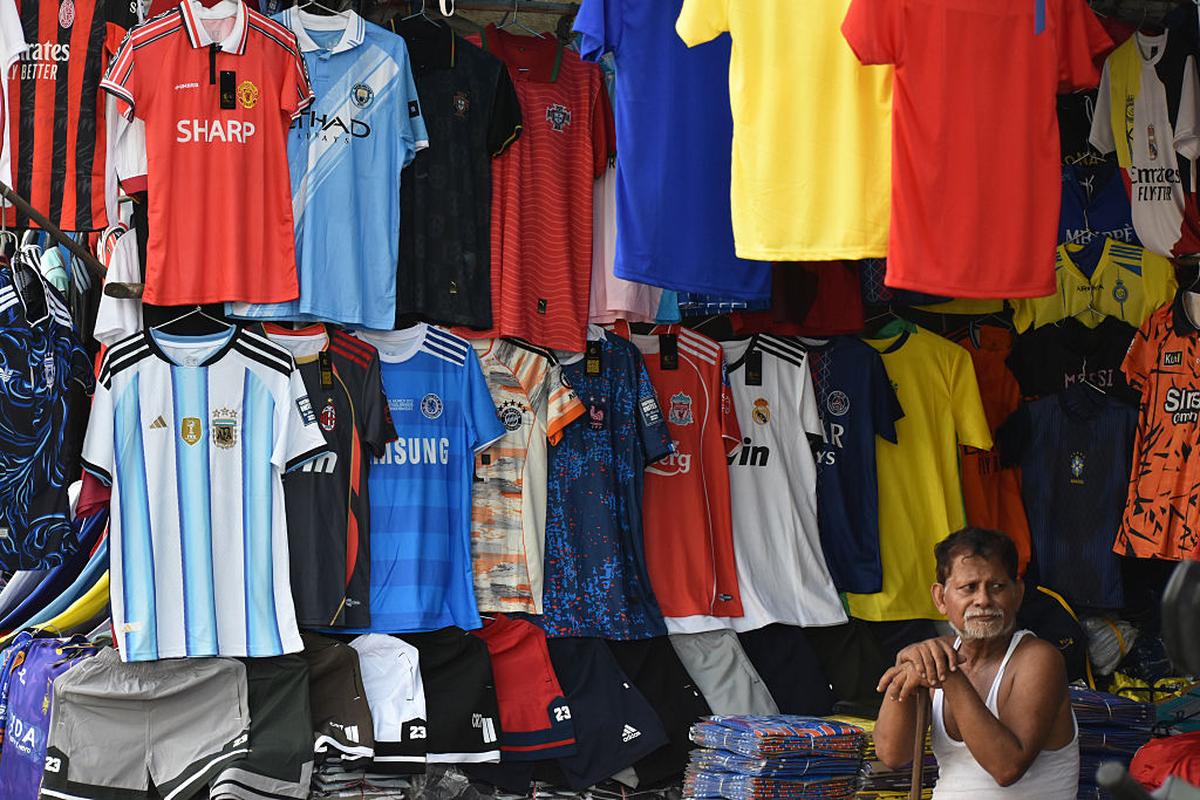
A street vendor sells jersey replicas ahead of the FIFA World Cup 2026, in Kolkata.
| Photo Credit:
Getty Images
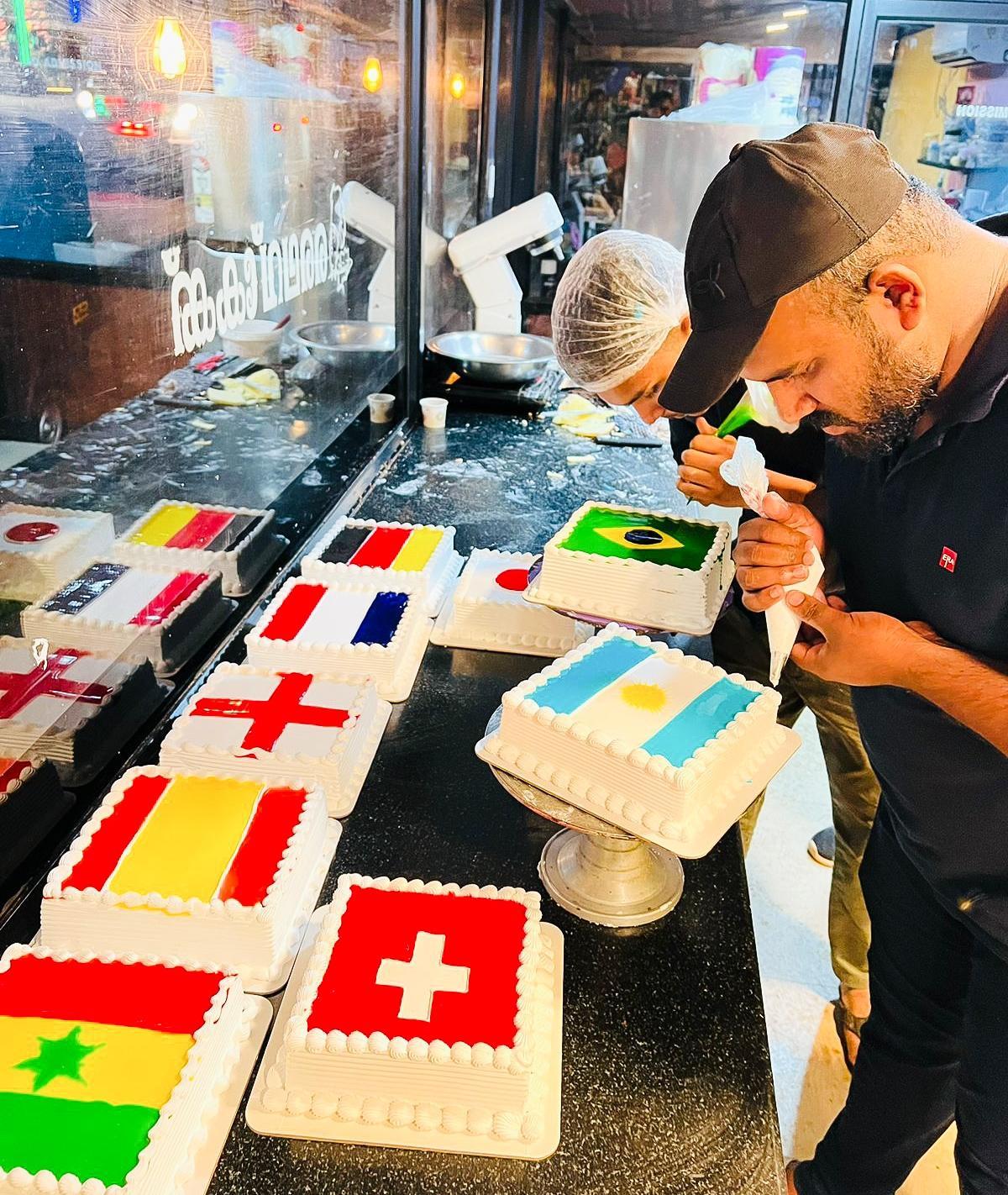
Football fever at a local bakery near Malappuram, Kerala, during the FIFA World Cup 2022.
| Photo Credit:
Sakeer Hussain
Massive cutouts of Messi and other footballing gods will loom over commuters on highways, in local marketplaces and street corners, even riverfronts. Maybe a size war will ensue, as it did in a tiny hamlet in Kozhikode back in 2022. Houses and compound walls will be painted in the colours of Brazil, Argentina and other footballing nations; vehicles too will be painted, only to be repainted once the World Cup ends.
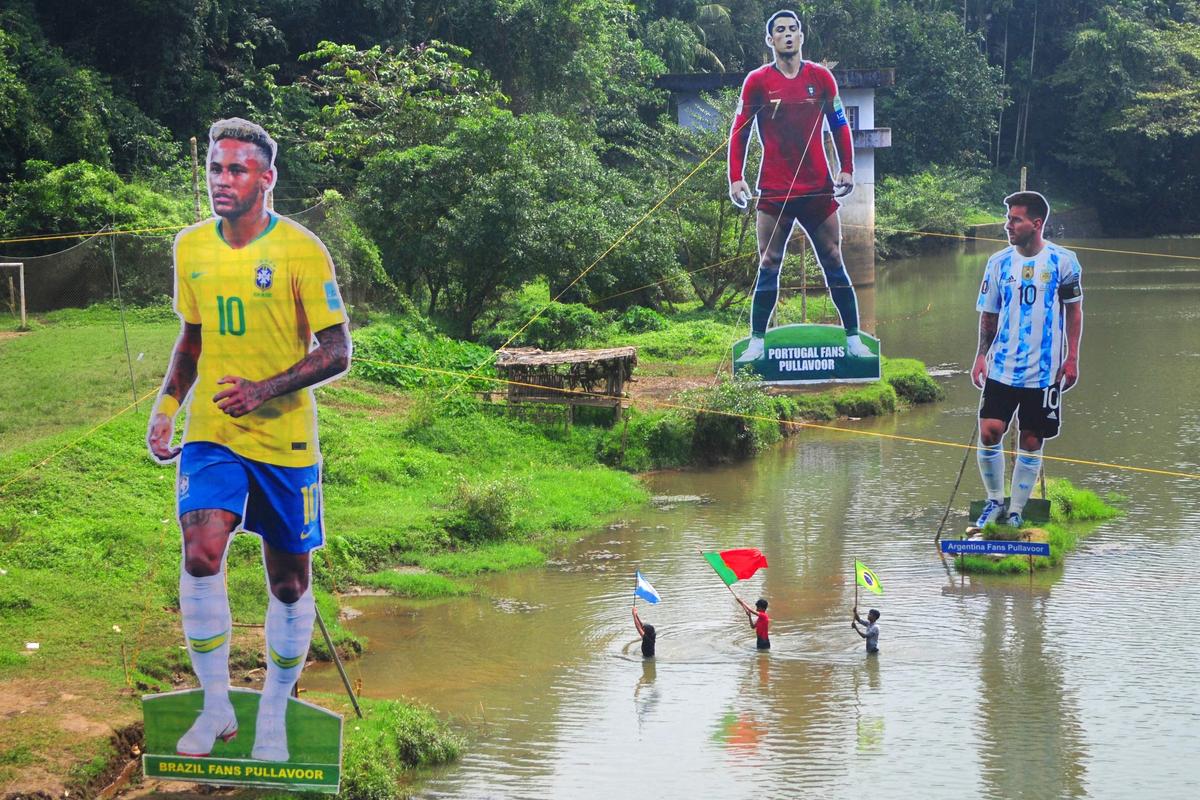
Giant cutouts of football stars Neymar, Ronaldo and Messi in Kozhikode during the FIFA World Cup 2022.
| Photo Credit:
AFP
Hair salons will bustle with requests for superstar hairstyles. “I became a Brazil fan around the 1998-2002 World Cups,” says Thrissur native and former Indian international defender Rino Anto. “Ronaldo was the star, and my friends sported his hairstyle — bald except for a patch in front. Hairstyles were always copied from the World Cup: [Roberto] Baggio, Ronaldo, [Paolo] Maldini, [Carlos] Tevez, and others. For the current generation, it’s mostly Cristiano [Ronaldo].”
Across towns and cities, World Cup screenings will be organised and temporary audience galleries erected; eateries will spring up to cater to hungry fans. Nearly 84 million people in India watched the last edition of the World Cup on television. The final alone drew 32 million viewers on the erstwhile JioCinema platform. That figure, surely, does not account for the mass screenings organised across the country.
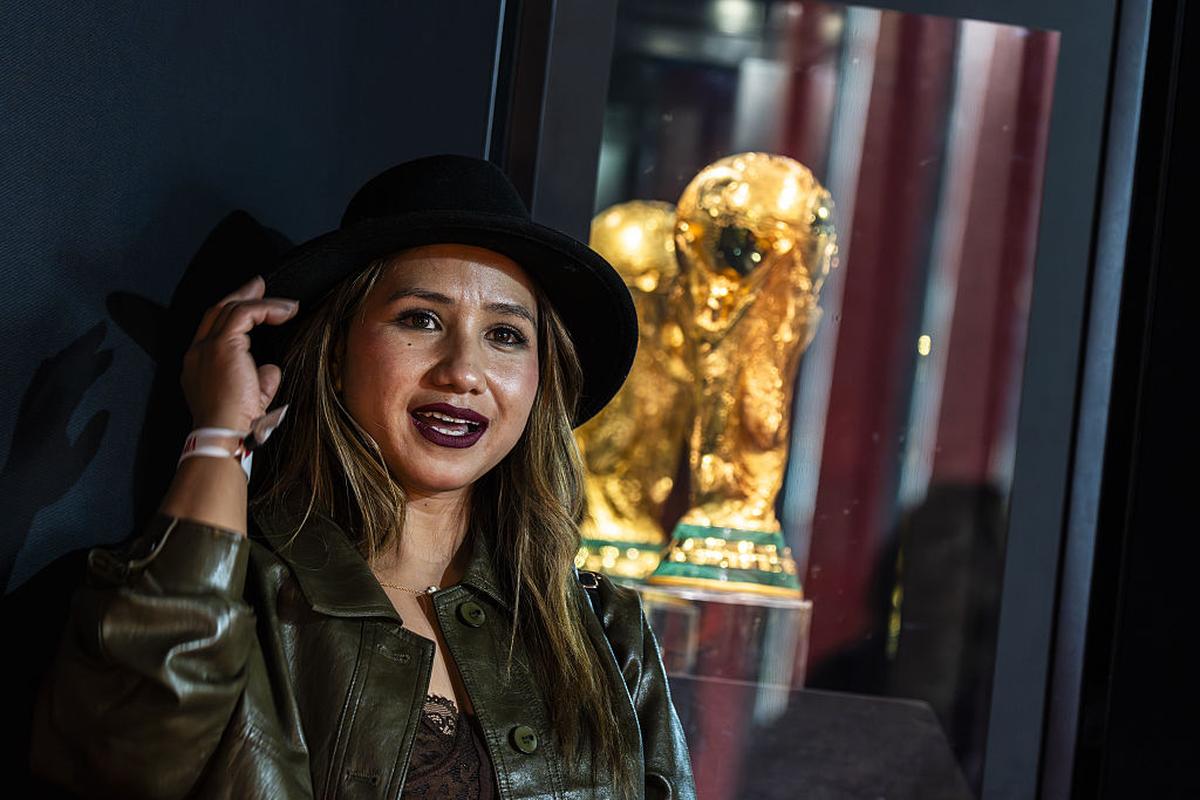
A fan poses with the FIFA World Cup Trophy during the Special Trophy Tour in Guwahati, Assam, January 13, 2026.
| Photo Credit:
Getty Images
Despite ongoing uncertainty over the telecast — India’s broadcast rights for the World Cup were awaiting final confirmation at the time of going to press — preparations are moving ahead, buoyed by optimism that everything will eventually fall into place. Meanwhile, less optimistic fans remain confident in their ability to find unofficial online streams to watch the matches.
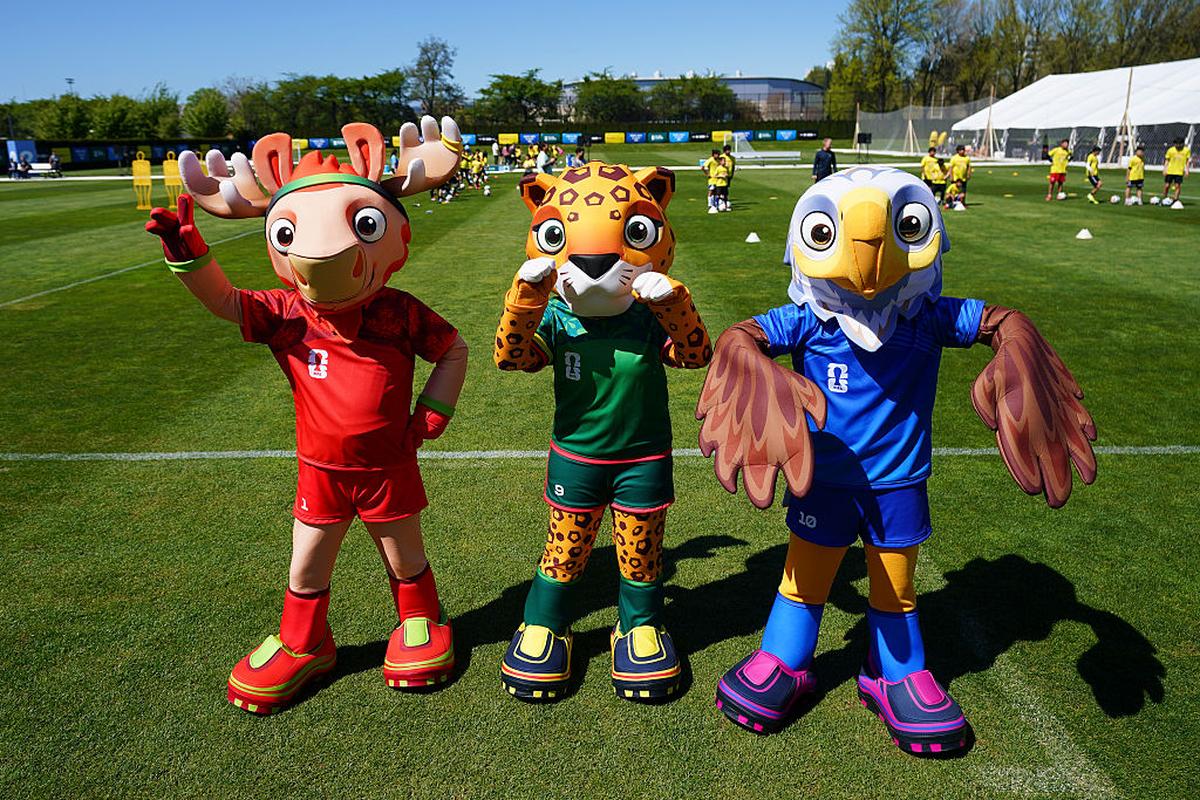
FIFA World Cup 2026 mascots — Maple the moose, Zayu the jaguar, and Clutch the bald eagle.
| Photo Credit:
Getty Images
FIFA five
The tournament has mascots representing each host country: Maple the moose (Canada); Zayu the jaguar (Mexico); Clutch the bald eagle (U.S.)
Italy will miss the World Cup for the third consecutive time after failing to qualify. An entire generation has not watched the four-time champions play the World Cup
The World Cup final will feature a Super Bowl-style half-time show, a departure from the traditional 15-minute half-time break
Experts have warned that some matches may be played in dangerous summer heat conditions, especially in cities like Miami and Kansas City
Since the tournament spans all of North America, some teams could travel thousands of kilometres between matches, raising questions about how travel and heat could affect player fitness
A social revolution
The social impact of the FIFA World Cup in Kerala over the decades is perhaps even more significant. For many, especially in the past when access to information and higher education was far more limited, the tournament became a window to the wider world. Kerala’s enduring affection for Brazil and Argentina — the former, in particular, having a longer legacy in the state — emerged partly from political and cultural narratives shaped by Left-leaning, anti-imperial and anti-establishment sentiments, however romanticised or historically imprecise some of those associations may have been over time.
People came to know the Netherlands through Johan Cruyff and the tactical beauty of ‘Total Football’, a style of play in which players constantly switched positions and attacked as a unit. Germany arrived through the dominance of Gerd Müller and Franz Beckenbauer. Italy, Croatia and other European nations too slowly entered the Malayali imagination through football, long before globalisation and the Internet collapsed distances between worlds.
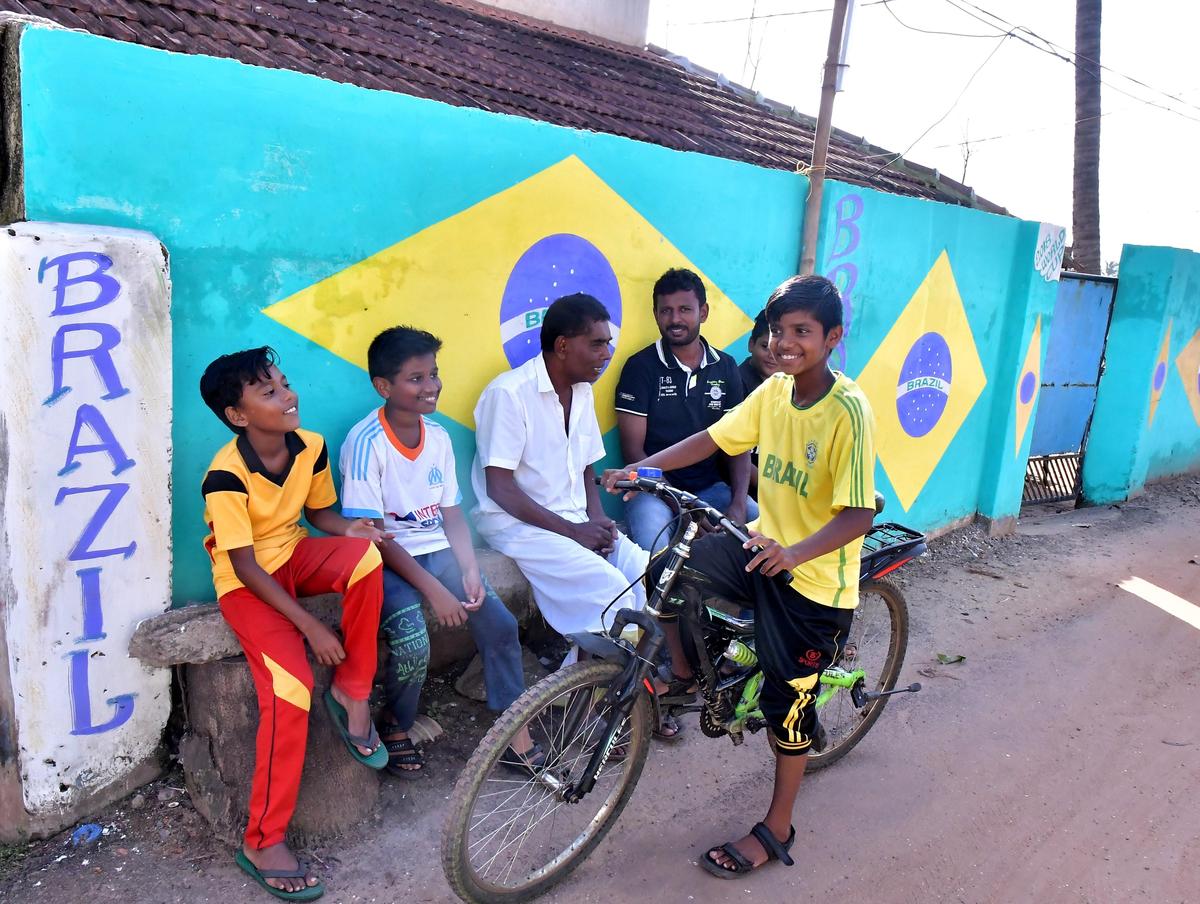
Fans gather in front of a wall painted in Brazil’s colours in Kozhikode during the FIFA World Cup 2018.
| Photo Credit:
S. Ramesh Kurup
“Everyone, even those without formal education, knows about countries and flags from around the world through football,” says K.M. Narendran, author and journalist, formerly with All India Radio. “People wear jerseys, get to know the players and learn about the history and culture of these countries through the stories and reports published around the World Cup. It is an education that arrives every four years.”
With the evolution of broadcasting, a fan culture once heavily skewed towards Latin American teams has gradually expanded to embrace European sides as well, though the former still command the largest following. Fan clubs for European teams began to flourish around the turn of the millennium, driven by their World Cup dominance, the proliferation of televised league matches, and the rise of football video games on computers and consoles.
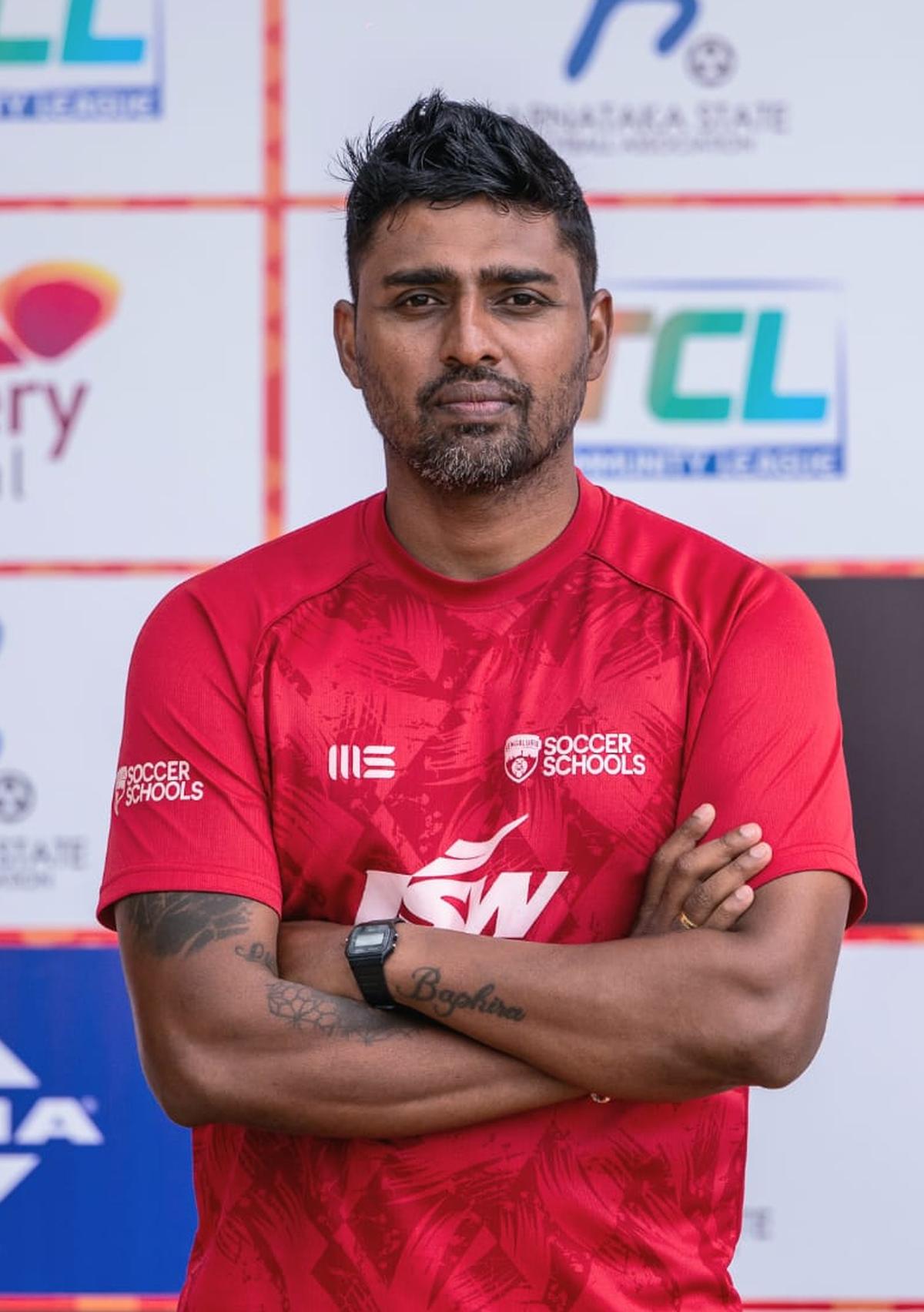

“I became a Brazil fan around the 1998-2002 World Cups. Ronaldo was the star, and my friends sported his hairstyle — bald except for a patch in front. Hairstyles were always copied from the World Cup: Baggio, Ronaldo, Maldini, Tevez, and others. For the current generation, it’s mostly Cristiano [Ronaldo]”Rino AntoFormer Indian international defender
These fan clubs are secular beasts. During the World Cup, all differences are forgotten; political rivalry is set aside as people unite under the colours of their favourite teams. For the third consecutive World Cup, the Janakiya Samidhi, Puthiyapalam, a local collective in Kozhikode comprising members from across political parties, is building a screening gallery with a seating capacity of over 2,000, with support from the local community.
“There are no political or religious divisions here,” says Shiras Khan, one of the leaders of the collective. “It is very inclusive. We will also have cultural programmes, penalty shoot-out competitions, a food court and so on, because we want to ensure that women and children can also be part of the World Cup festivities.” Funds for the initiative have been raised through the sale of firecrackers during Vishu by one of the collective’s licensed members, as well as through calendars and chit funds.
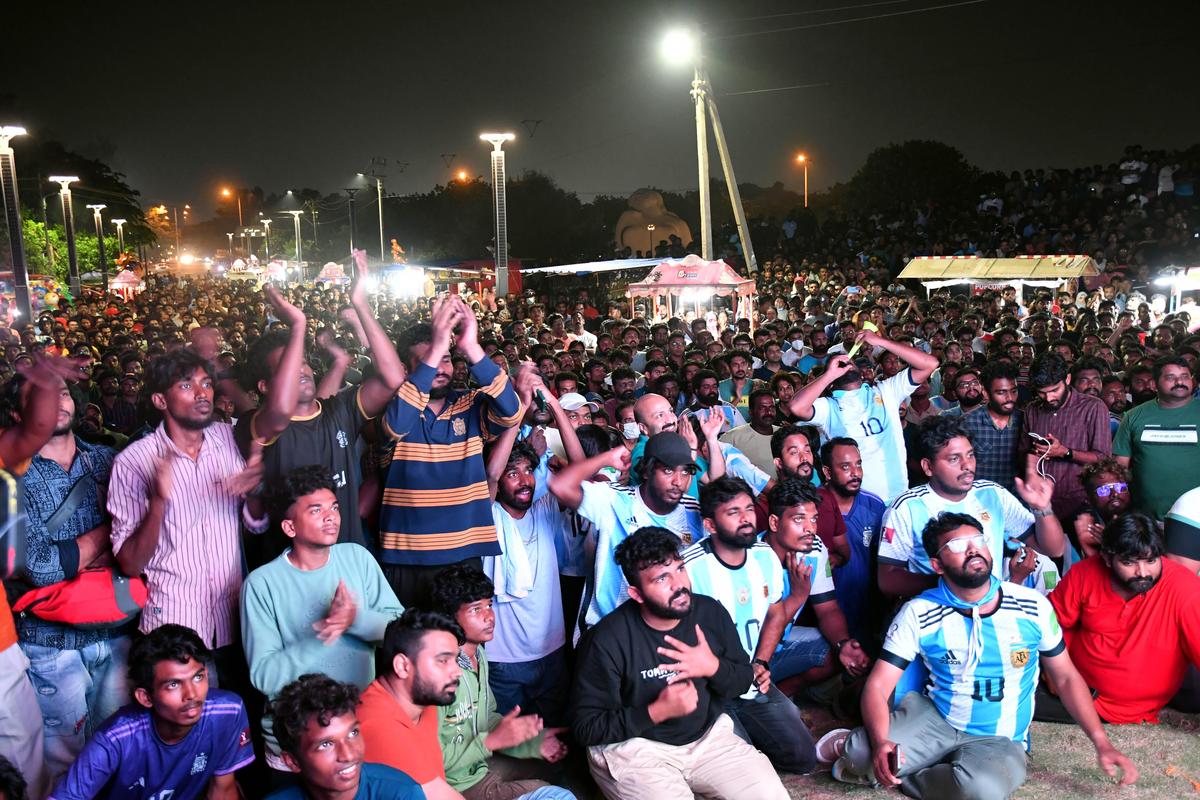
Fans watching the World Cup final match in Thiruvananthapuram, December 2022.
| Photo Credit:
Mahinsha S.
Bonding in the time of trauma
Even as Kerala gears up, the rest of the country too is slowly gathering momentum. Plans are underway for community screenings in Shillong, Kolkata, Goa and Bengaluru, among other cities. In Mizoram, stores have stocked up on jerseys as the tournament draws near. “The interest is now starting to grow,” says a local football club administrator in Aizawl.
Meanwhile, Kolkata — still reeling from the violence that followed last month’s West Bengal Assembly Election results — is gradually preparing to welcome the World Cup. “The flags at the moment are still those of political parties, but they will soon give way to those of Brazil, Argentina and others,” says actor Durbar Sharma, who hails from Ganguly Bagan in South Kolkata.
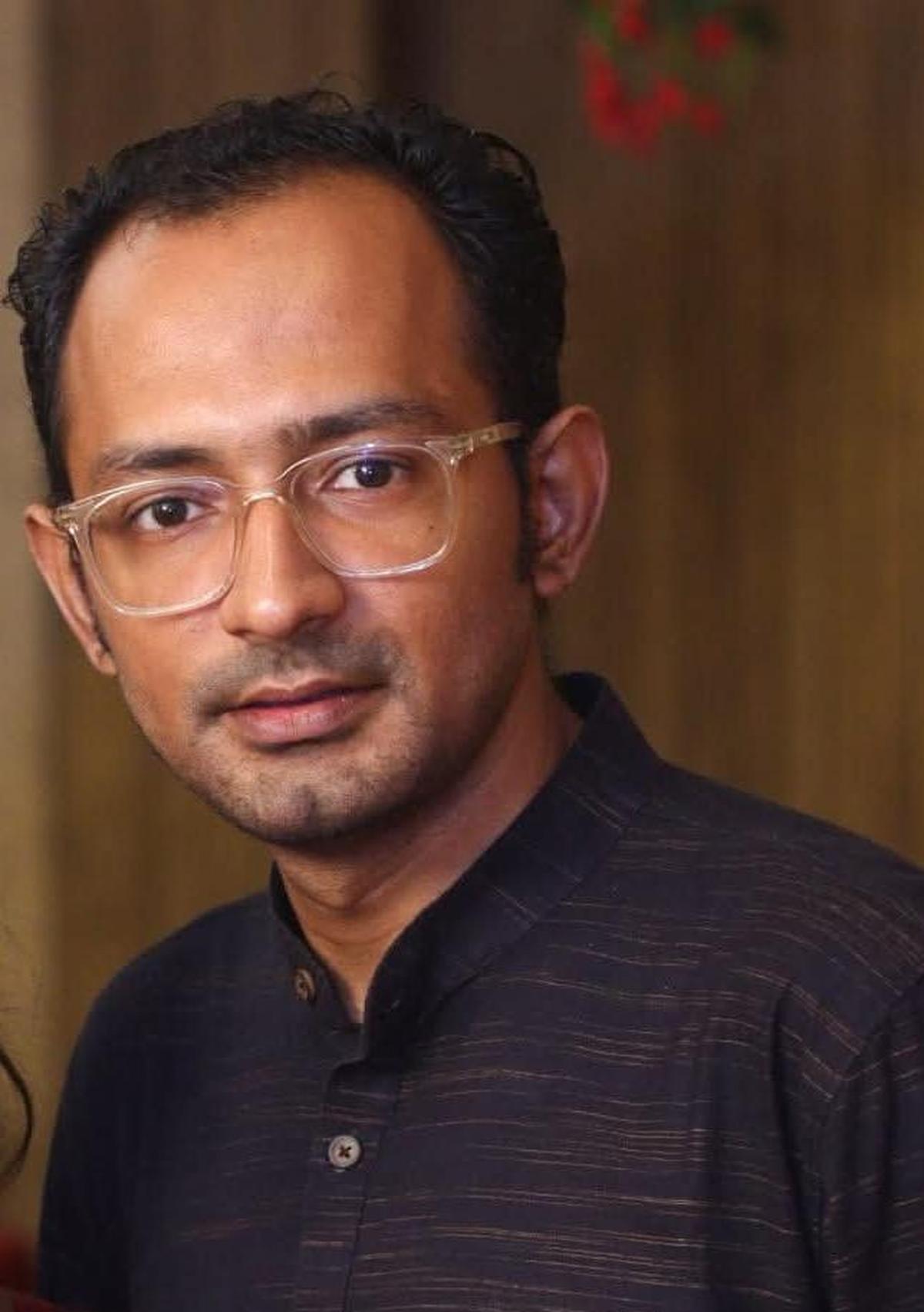
“Argentina’s 2022 World Cup win was just fantastic. It came after so many years of disappointment, of being mocked by friends. I even had an argument with my grandfather, who was rooting for France. That night, many food delivery agents turned off their apps and stopped working just to watch the game and celebrate with us.”Durbar SharmaActor
Four years ago, Sharma spent the night of Argentina’s World Cup victory dancing in the streets with fellow fans. “It was just fantastic. It came after so many years of disappointment, of being mocked by friends. I even had an argument with my grandfather, who was rooting for France. That night, many Zomato and Swiggy delivery agents turned off their apps and stopped working just to watch the game and celebrate with us.”
The World Cup, as always, arrives as both spectacle and temporary escape. In Manipur, where ethnic violence and political uncertainty have disrupted everyday life for the past few years, football continues to offer one of the few shared spaces of collective emotion and release. “People are crazy for football in Manipur,” says former Indian midfielder Renedy Singh. “Even though tensions remain high, people will still turn up for screenings.” Renedy, who enjoyed a strong stint as head coach of Bengaluru FC last season, says he will be following Japan closely at the World Cup.
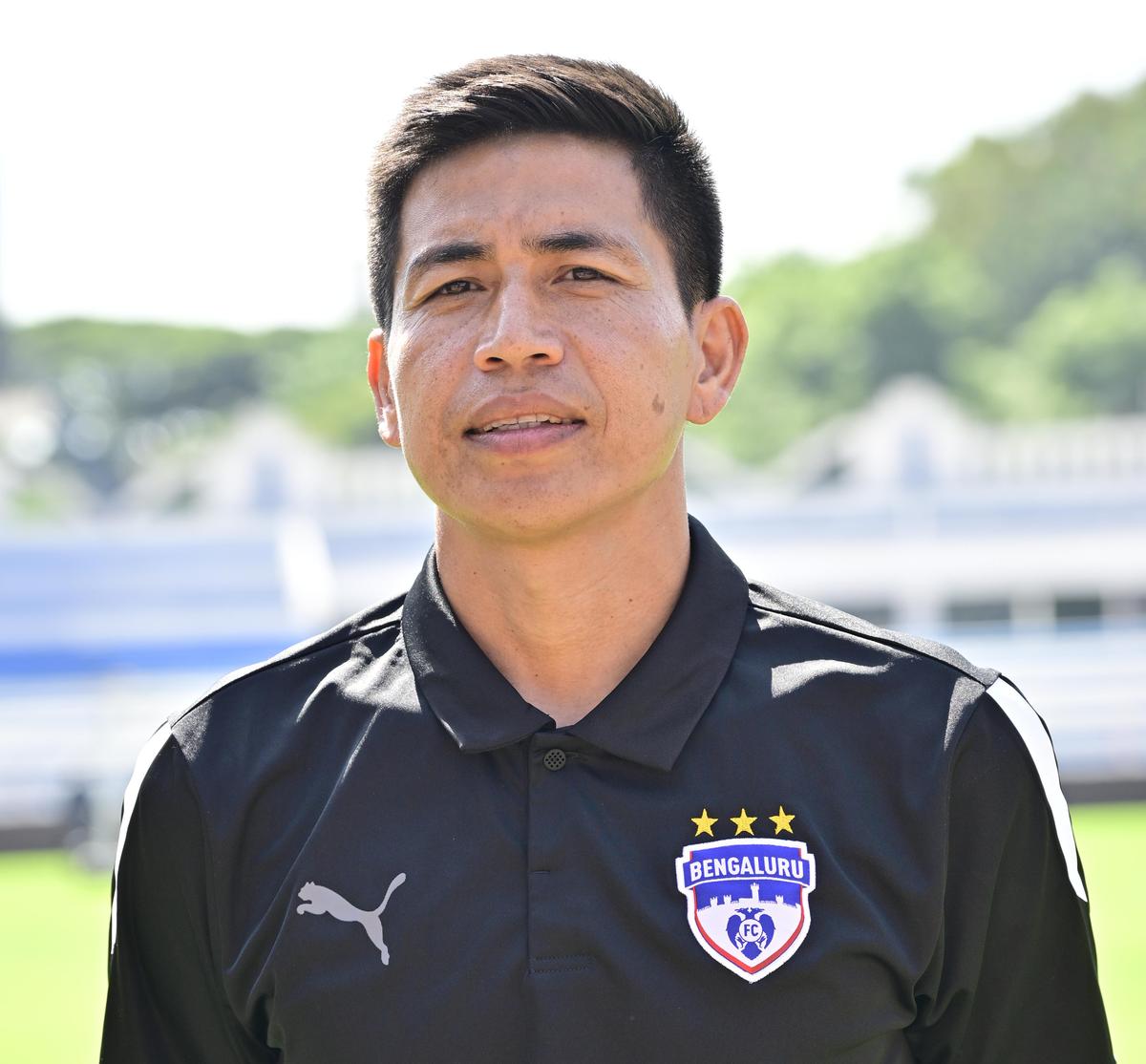
“People are crazy for football in Manipur. Even though tensions remain high [in the State], people will still turn up for match screenings.”Renedy SinghFormer Indian midfielder
To ensure that shared viewing experiences remain central to the tournament, several companies and groups are working towards professionally organised screenings of the matches. Vibhor Dhamija, founder of Whathefootball, a fan engagement platform, says his company — which has hosted live watch parties of Premier League and Champions League fixtures — is planning similar events across 25 venues in 15 cities around the country.
Screening every match, however, may be out of the question because of the time difference (between 12.30 a.m. and 6.30 a.m. in India) and the varying relevance of fixtures, which, unlike club football, do not always come with devoted fan bases. There are also practical restrictions for venues such as cafés and pubs when it comes to late-night games.

“We are showing only matches that start before 3 a.m. Maybe we can think about the very late or early-morning games during weekends,” says Dhamija. “Later, we will try booking separate venues for these matches because late hours are not commercially viable for cafes and bars.” Dhamija and other groups are in talks with multiple sponsors and potential partners for jersey giveaways, pop-ups, and experience events aimed at enhancing the fan experience.
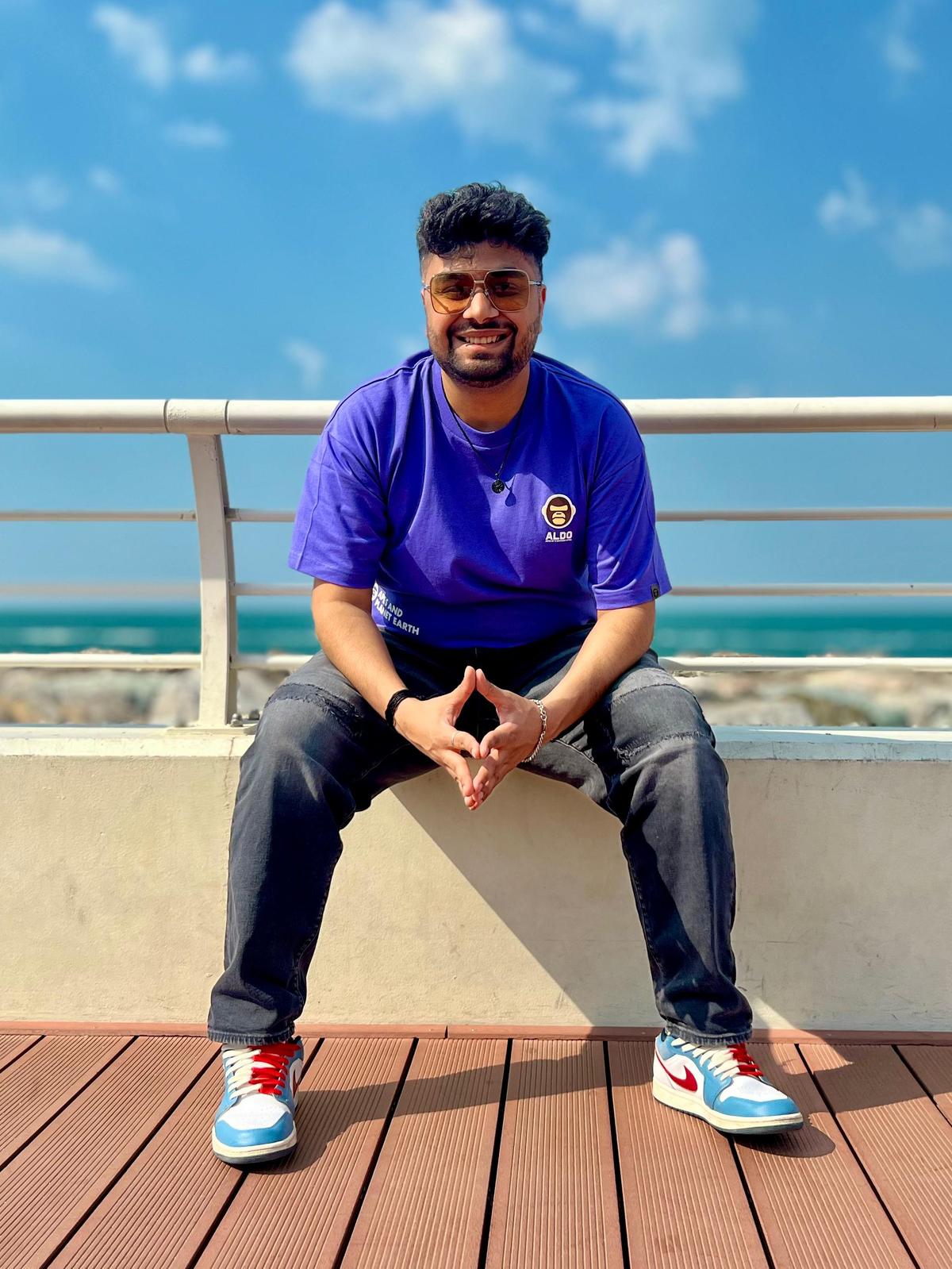
“We are screening only matches that start before 3 a.m. Maybe we can think about the very late or early-morning games during weekends. Later, we will try booking separate venues for these matches because late hours are not commercially viable for cafes and bars.”Vibhor DhamijaFounder, Whathefootball
The AI juggernaut
A major shift this time around is the ubiquity of artificial intelligence. AI is set to be integrated into both match technology and broadcast production. Fan groups and companies are already using it to generate creatives and designs — a development that has disrupted smaller design studios — while a parallel trend has emerged of mass-producing viral World Cup-themed songs. Adidas’ latest World Cup advertisement has even digitally revived past superstars, depicting them in their prime.
All of this raises questions about how AI may reshape fandom itself. “The use of AI by fans, in generating songs and creatives, is an attempt to contribute towards the culture in ways they perhaps couldn’t before. If you want to put Messi in a mundu, this is helpful and easy,” says Ashwin Gopinath, programme manager at a software firm in Bengaluru. “Once the game starts, we all participate in the same way as we always did, with passion and emotion.”
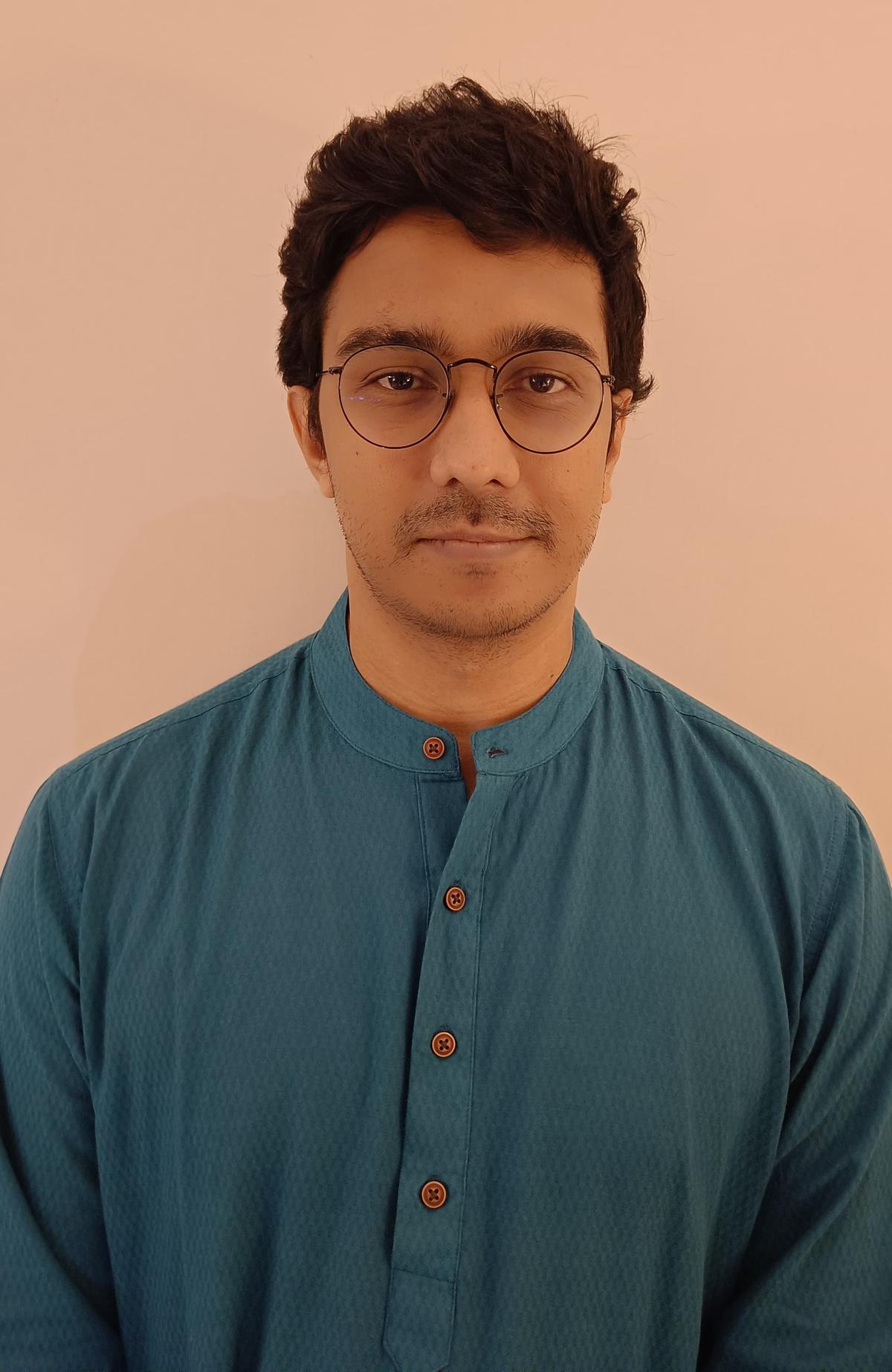
“The use of AI by fans, in generating songs and creatives, is an attempt to contribute towards the culture in ways they perhaps couldn’t before. If you want to put Messi in a mundu, this is helpful and easy.”Ashwin GopinathProgramme manager at a software firm in Bengaluru
Adidas itself had previously run a similar campaign in 2006, featuring Franz Beckenbauer and Michel Platini reimagined using the technology of the time. “Football needs an emotional touch. AI alone won’t create that. Perhaps it can enhance it, but it needs storytelling. That Adidas advert worked because it had a narrative,” says Paul R., a sports consultant in Bengaluru.
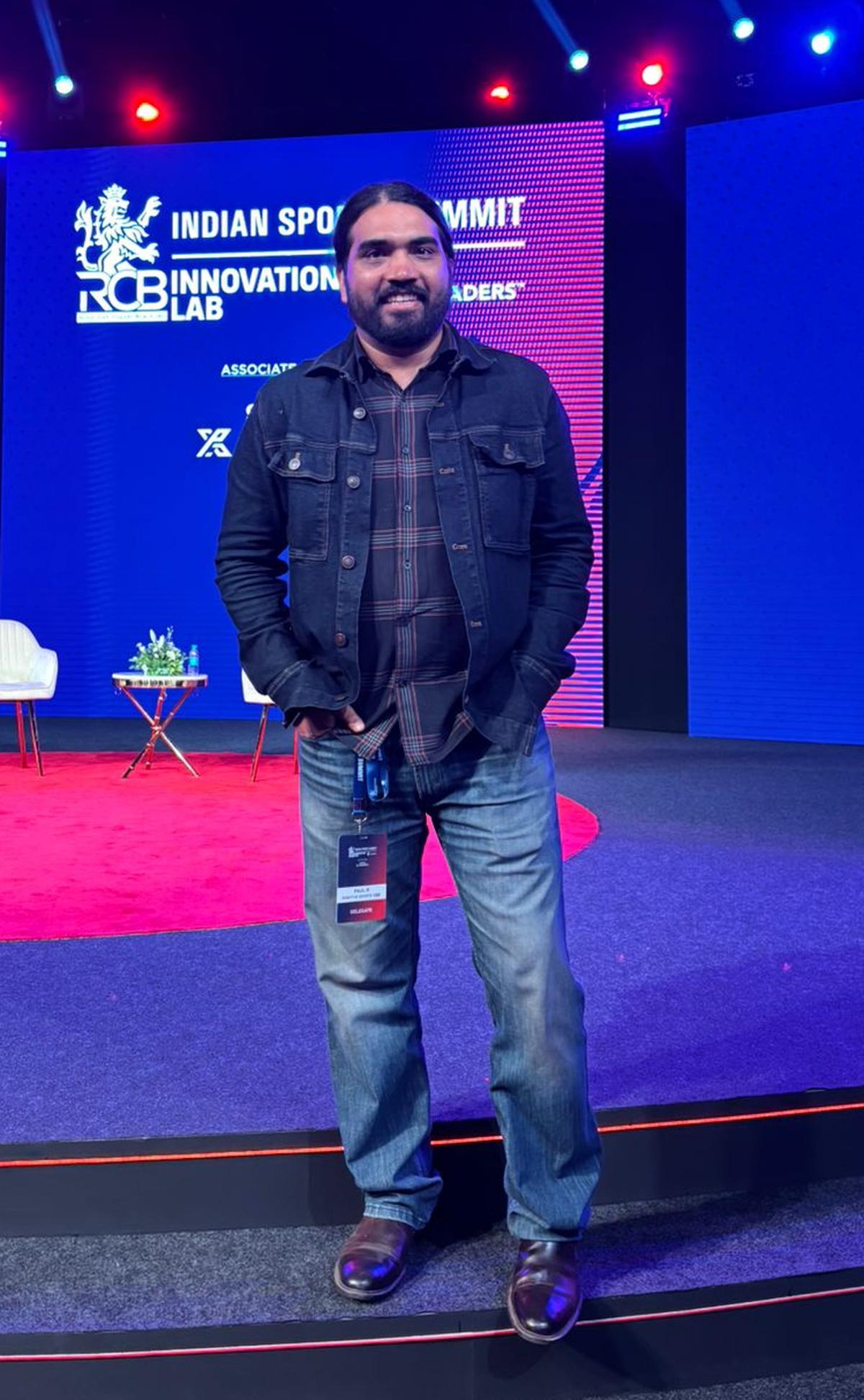
“Football needs an emotional touch. AI alone won’t create that. Perhaps it can enhance it, but it needs storytelling.”Paul R.Sports consultant, Bengaluru
With the pursuit of football’s greatest prize set to begin in a couple of weeks, India is gearing up slowly but surely. All this fervour unfolds in a country with no direct stake in the World Cup — a reminder of its unusual emotional geography. It prompts a quiet question: what would it mean if India ever did reach the world stage? For now, that remains a pipe dream, and fans will continue to wear the colours, celebrate, and grieve the fortunes of their adopted nations.
The writer is a sports journalist and author, most recently of Sacred Grounds: A Journey Through People’s Football in India.