5 min readJun 2, 2026 04:03 PM IST
First published on: Jun 2, 2026 at 04:03 PM IST
The promulgation of the Supreme Court (Number of Judges) Amendment Ordinance 2026 has predictably triggered a familiar set of debates. Is expanding the Court’s strength the rightful remedy to address its mounting caseload, now exceeding 93,000 pending matters? Who should be appointed to these seats? What does the timing tell us about the government’s intentions and its relationship with the judiciary? These are legitimate questions, each worthy of sustained inquiry. But there is a prior, and much more structural, question that must not get crowded out in the urgency of the moment. What does the routine resort to the ordinance route tell us about the position of our Parliament? What are the costs when constitutional reform of this kind proceeds by executive fiat rather than legislative deliberation?
Article 123 of the Constitution empowers the President to promulgate ordinances only when Parliament is not in session and circumstances require immediate action. The provision was designed as an emergency valve, not a legislative shortcut. In this instance, the government had already approved the proposal as a Bill on May 5. Eleven days later, with Parliament still not in session, the ordinance route was taken without any convincing explanation. The ordinance will be ratified when Parliament meets next, a process that will likely take minutes. This reflects how, on account of the assumed majority with the government, we have normalised the bypassing of Parliament. Ordinances are treated merely as a minor procedural concession, and in this process, Parliament’s capacity to inform wider public debate is completely dismissed. This highlights a deeper problem.

India is a parliamentary democracy. The foundational logic of such a system is that Parliament is the primary site of democratic deliberation, where elected representatives, accountable to the people, meet to reason, contest, and persuade. Legislation is supposed to emerge from that process with its legitimacy derived, at least in part, from the quality of engagement it received. This constitutes the core premise on which the architecture of the Indian state was designed. Dismissing it as mere romantic constitutional theory would mean defeating the logic of parliamentary government itself.
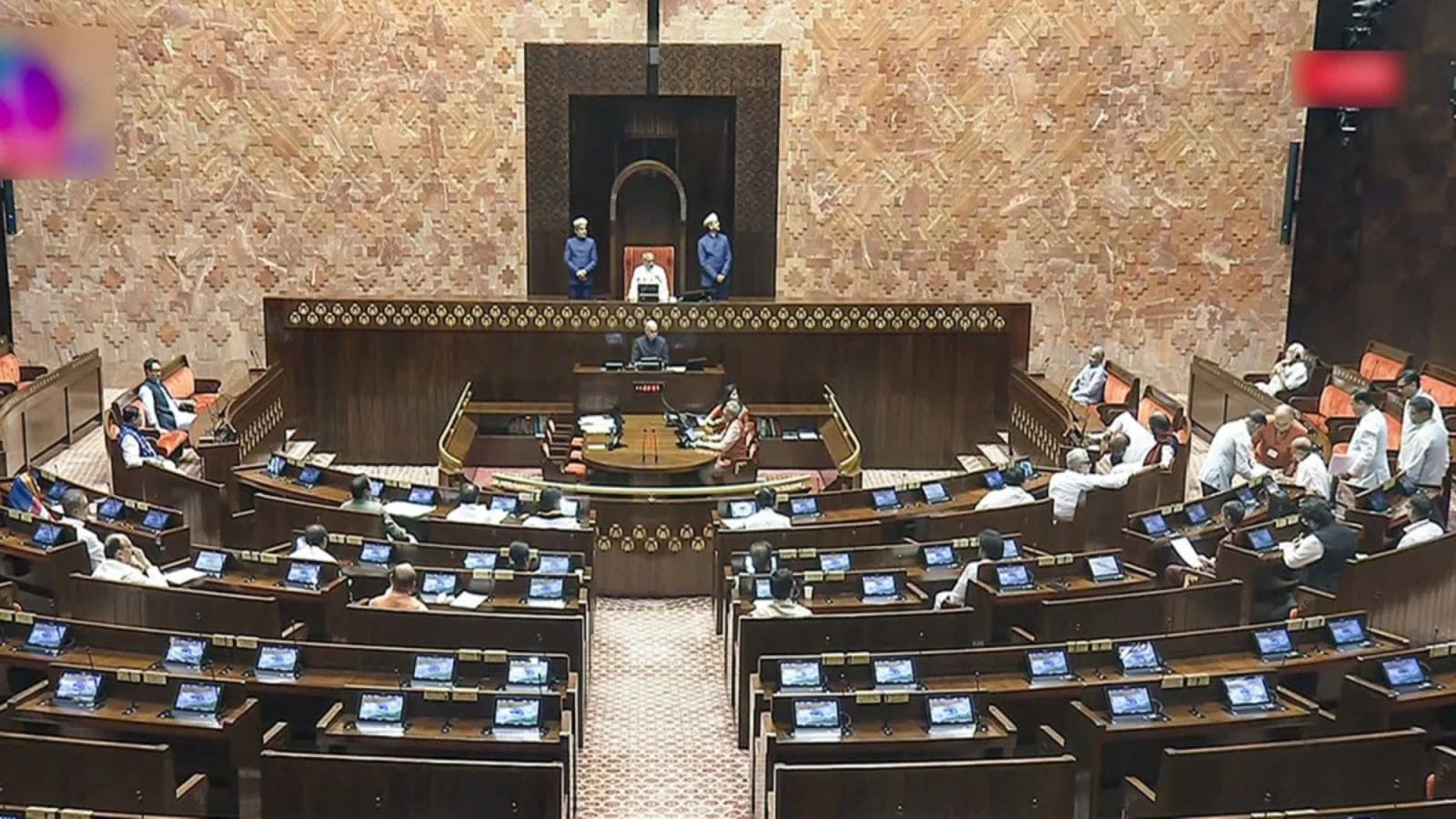
Yet the post-colonial history of Indian parliamentarism has been one of steady displacement. The real debates have occurred elsewhere — in party headquarters, coalition negotiations, and at times the Prime Minister’s office — while Parliament has been left to ratify outcomes already decided. This has held across governments of varying ideological persuasions and political majorities, including the Constituent Assembly. When the ruling party commands a majority, the floor becomes a venue for managed spectacle and a show of strength. When it does not, it becomes a venue for managed chaos, as we witnessed during the debate on the defeated delimitation bill. What it rarely becomes, in either case, is a genuine arena of deliberation where arguments might actually shift outcomes.
Comparative scholars of constitutional democracy have documented this pattern with increasing precision. The decline of legislative deliberation is not unique to India; it is a widely observed feature of parliamentary systems globally, particularly where executive dominance has intensified, and party discipline has hardened. What is notable about the Indian case is the extent to which this decline has been normalised by being absorbed into the operating assumptions of political actors, journalists, and even constitutional scholars, who treat parliamentary formality as the thing to scrutinise rather than parliamentary substance.
The indicators are clearly visible in the data. The frequency of ordinance promulgation has risen across multiple governments. The proportion of Bills referred to standing committees has declined sharply. When Bills are introduced, the time available for debate is frequently compressed. The sanctity of Question Hour, once the primary mechanism of executive accountability, has been progressively eroded.
Amidst this normalisation of institutional decay, we must remind ourselves that one of the major planks of our independence movement was the replacement of a power that operated by fiat with a domestic government that promised to operate through persuasion generated in a discursive space. If genuine parliamentary deliberations are regularly bypassed and the institution reduced to a constitutional formality, we not only undo the foundations of our political independence, but we also write off Parliament’s capacity to be a persuasive space and a torchbearer of the governance system we call democracy. Bereft of Parliament, we re-enter a pre-constitutional system of rule by fiat, now with an elected domestic overlord.
This ordinance conveys, beyond the question of the Supreme Court, how urgent it is to reform our Parliament as well. It is unhelpful to seek ways to make Parliament operate without political overtones. It will, and must, remain a political institution. Nevertheless, structural changes that support civility in debate, equality of voice, and space for genuine discussion must be introduced. The literature offers several directions, including stronger committee systems with cross-party membership; reformed procedures for time-allocation that protect minority voices; clearer norms around the use of ordinances; and investment in the research infrastructure that legislators need to engage meaningfully with complex Bills. None of these is sufficient on its own, and none is politically costless. But if we are serious about preserving democracy, a start needs to be made somewhere.
The writer is an Honorary Senior Fellow at Melbourne Law School