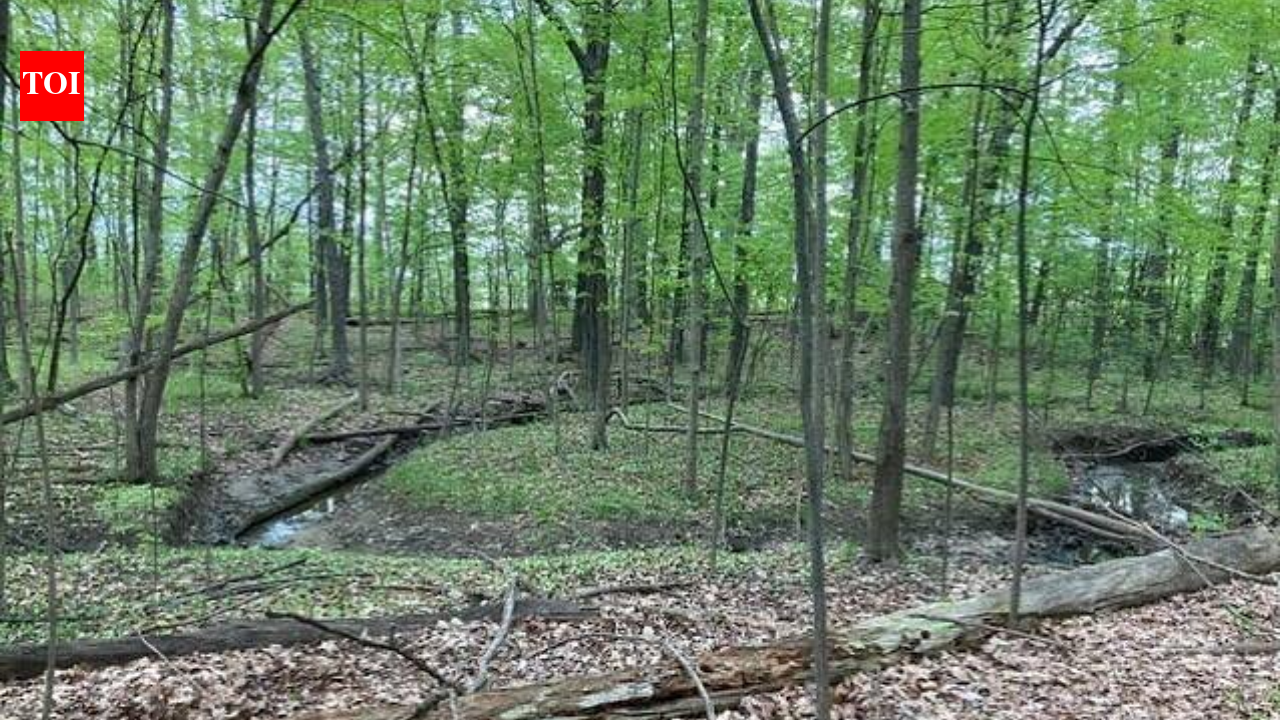
A Michigan woman who owns 19 acres of wooded land between two planned luxury housing developments has filed a lawsuit against homebuilder Toll Brothers. The dispute centers on her property access rights and plans to build a private wastewater treatment facility near her land.Susan Miller filed the lawsuit in Washtenaw County Trial Court against Toll Brothers Inc., its subsidiary Toll Northeast V Corp, and former developer Red Equities LLC. Her undeveloped property in Lodi Township lies between the planned Arbor Preserve-North and Arbor Preserve-South communities, where developers want to build 107 luxury homes along with two private wastewater treatment plants.According to court documents, Miller says the developers ignored her property rights and local environmental rules. She claims detention ponds and one of the treatment plants will release treated wastewater just 10 feet from her property line, changing the natural flow of water into a creek on her land that connects to the Rouse Drain and the Saline River.“Toll’s plan for a large luxury housing development claims to address housing needs, but instead destroys a natural landscape and ignores Lodi Township’s environmental protections,” Miller said in a statement.Her attorney, Sam Estenson, said the developers have “surrounded and besieged” Miller after she refused to sell her land.“At meeting after meeting, local residents raised concerns about environmental damage and violations of township rules, but Toll showed little interest in those concerns,” Miller added.
Fight over property access
One of the main issues in the lawsuit is the only road that provides access to Miller’s property from Waters Road.According to the lawsuit, Miller signed a conditional agreement with Red Equities in 2021 to end her original private road easement in exchange for a new access road through Arbor Preserve-South. The agreement required the new road to be completed by December 31, 2025. If it was not built by then, the agreement would automatically expire.Miller says that although the new road was never built, the developers recorded both the termination of her original easement and the replacement access agreement with the Washtenaw County Register of Deeds in 2023 without informing her.Estenson said the developers pressured Miller by warning that she could be forced to pay more than $1 million toward the cost of building an access road if her original easement remained in place.Miller is asking the court to restore her original access easement, cancel the recorded replacement agreement, and overturn the final site plan approved by Lodi Township officials.She is also seeking more than $25,000 in damages, along with legal fees and court costs.
Developers reject the claims
Toll Brothers declined to comment directly on the lawsuit because the case is still before the court.In court filings, the defense denied the allegations, calling the lawsuit a “frivolous attempt” to delay the Arbor Preserve project and cause financial harm to Toll Northeast.Alan Greene, a lawyer representing Toll Brothers, argued that Toll Brothers Inc. does not legally own the property. He said Toll Northeast V Corp is a separate company that owns the land and signed the local development agreements.The defense has asked the court to remove Toll Brothers Inc. from the lawsuit. It also argues that Miller’s claims about the easement should be dismissed because they were filed after the legal time limit had expired.
Long history of the development
The development plans are linked to a court-approved agreement dating back to 2007. At that time, the previous developer, Peters-Summit LLC, sued Lodi Township after officials rejected an earlier proposal for the site.Although township zoning rules normally ban private wastewater treatment plants, the 2007 court agreement created an exception allowing them on this property.In 2020, Red Equities proposed building more than 400 multi-family housing units. After residents objected to the high density, the company revised the plan in 2023, reducing it to 107 single-family homes. The court agreement was then amended to match the new proposal.Toll Northeast V Corp bought the property in 2024 to move forward with the updated development.Estenson said Miller wants to keep her land in its natural state and hopes to donate it in the future for environmental conservation.Washtenaw County Trial Court Judge Julia Owdziej is expected to hear Miller’s request for a preliminary injunction on Wednesday, August 5. A separate hearing on Toll Brothers’ request to partially dismiss the lawsuit is scheduled for Wednesday, September 16.
Why easement disputes matter
Property access disputes often become some of the most complicated issues in land development because an easement can determine whether land remains usable. In many cases, a property owner may legally own land but still depend on an easement across a neighboring parcel to reach a public road. If that access is restricted or replaced, the property’s value and future use can be significantly affected. Courts generally examine the exact wording of easement agreements, whether any replacement access provides the same practical benefits, and whether all legal procedures were properly followed when changes were recorded.The Arbor Preserve project has drawn attention beyond Miller’s lawsuit because it has faced years of public debate over environmental impacts, wastewater management, and compliance with local planning rules. Earlier versions of the proposal called for more than 400 housing units before the project was redesigned into a 107-home development. Even after those changes, residents continued raising concerns about water resources, private wastewater treatment plants, and the long-term effects on nearby properties during public meetings.