3 min readChennaiJul 22, 2026 01:05 PM IST
As protests against irregularities in conducting NEET intensified in New Delhi, Tamil Nadu Chief Minister Vijay’s Tamilaga Vettri Kazhagam (TVK) demanded not only the abolition of the centralised medical entrance exam, but also the transfer of education to the State List or an interim Special Concurrent List.
The Dravida Munnetra Kazhagam (DMK), meanwhile, reiterated its long-standing call to scrap NEET, saying only its complete abolition can end recurring controversies.

On Wednesday, former chief minister and DMK leader M K Stalin said the protests in the national capital had elevated Tamil Nadu’s long-held position into a nationwide demand. Reiterating that the DMK had opposed NEET from its inception, Stalin said his party had consistently warned that the examination was structurally prone to large-scale irregularities. He argued that the agitation should ultimately focus on one objective, the complete abolition of NEET, describing its removal as the only durable solution to recurring controversies surrounding the examination.
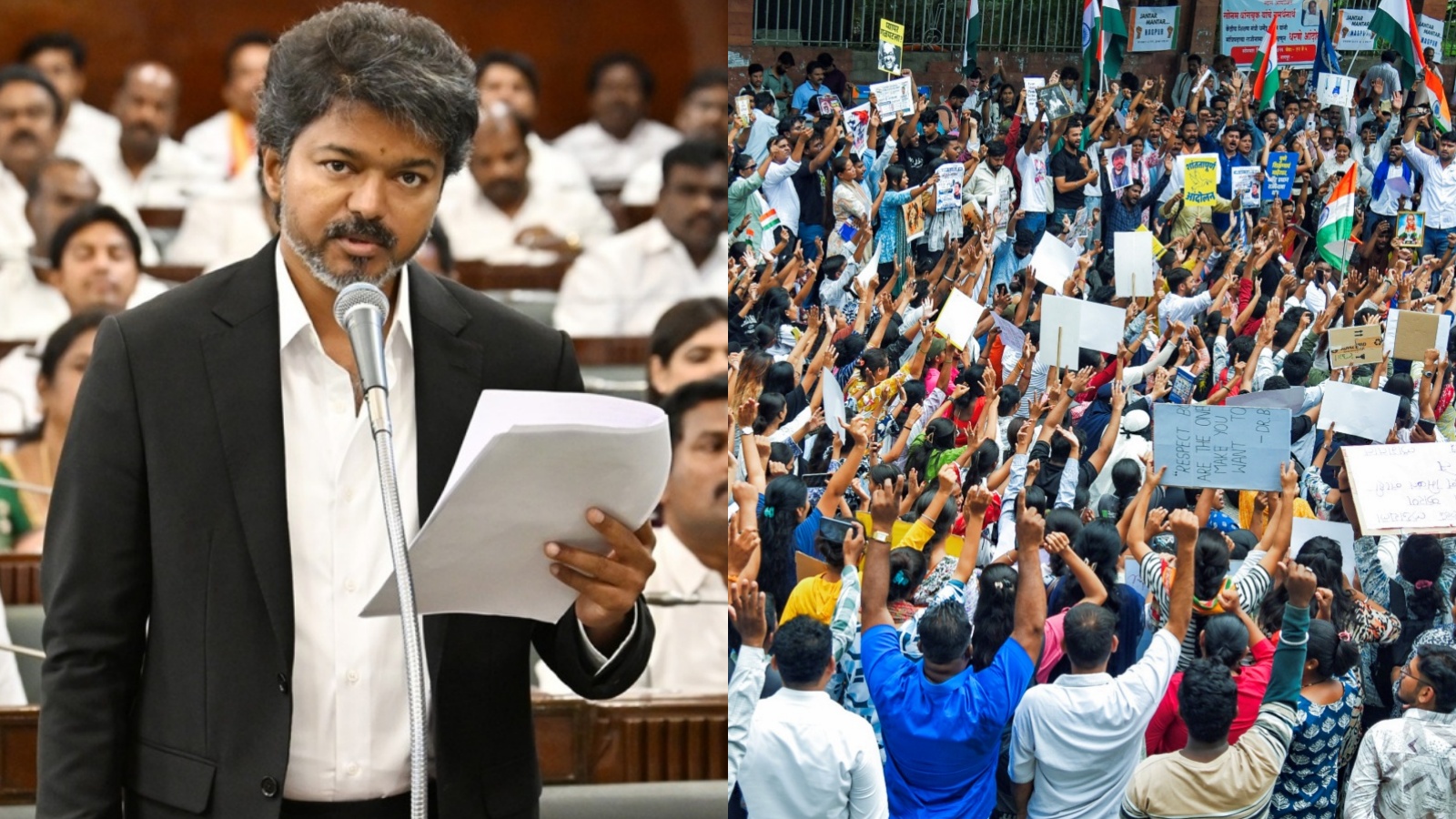
The statement came as protests in Delhi expanded beyond allegations of examination irregularities into a broader political confrontation over educational governance, transparency and accountability. Student groups, Opposition leaders and civil society organisations have intensified demonstrations, arguing that repeated controversies have eroded public confidence in the national entrance examination system.
TVK goes further
The ruling TVK, while echoing the demand for abolishing NEET, used the moment to distinguish its position from both the Union government and its principal political rival in Tamil Nadu, the DMK.
The party asserted in a statement that it was not merely opposing alleged irregularities in the examination but rejecting the very existence of NEET, calling for the examination itself to be abolished, and, going further, demanding that education be restored to the State List, enabling states to exercise full legislative authority over education and medical admissions.
If constitutional or procedural hurdles delayed such a move, it suggested creating a Special Concurrent List as an interim arrangement to devolve powers over education to state governments until a permanent constitutional solution could be achieved.
Story continues below this ad
The proposal reflects TVK’s broader argument that recurring controversies surrounding national entrance examinations cannot be resolved merely through administrative reforms, but require a reworking of India’s federal distribution of powers in education.
However, the statement also carried an unmistakable political message aimed at the DMK.
Without naming the party in its opening remarks, TVK accused its rivals of engaging in “fraudulent politics” by promising to abolish NEET solely to secure electoral support. It maintained that the party would never mislead voters with promises it could not constitutionally fulfil.
The statement became more direct in its closing paragraphs, accusing the DMK of appropriating the ideas, labour and struggles of others while attempting to politically target TVK. It warned that if such attacks continued, the “history of political fraud” committed by DMK would itself come under public scrutiny.