5 min readUpdated: May 24, 2026 09:06 PM IST
Six games of feast; six games of famine. A last-ditch resurrection bid; prayers mumbled, chewed nails, split hairs and an agonising wait; few teams have suffered emotional extremities as Punjab Kings this season. From the golden favourites to shocking losers, they are both a cautionary tale as well as an example of the league’s vicissitudes.
Much of their fate was self-inflicted. Dropped catches would haunt them; they spilled 16 off 56 opportunities, which is a dramatic rate in a format with threadbare margins. Add missed stumpings, and Punjab would curse their leaden hands and betraying eyes.

Some of them proved costly (like those of Ishan Kishan and Heinrich Klaasen in Hyderabad), but even the non-expensive ones generated a negative fatalistic vibe, killed momentum and sowed doubts in fielders. Coach Ricky Ponting, one of the finest all-round fielders of all time, likened it to a virus that spread throughout their camp. Skipper Shreyas Iyer termed it the “biggest setback of the season.”
The culprit was not just one fielder, though Shashank Singh would feel the guiltiest. He let five rather straightforward catches slip through his palms. So did Cooper Connolly and Lockie Ferguson, among others. It was not always technical flaws, which at this level coaches would easily identify and address. It was not always the lighting patterns in a particular stadium, for they dropped catches in different matches. It was not always the wind and the elements. It remained a mystery, or a spooking. Ponting struggled for an answer. “I don’t know why, the boys have worked exceptionally hard.”
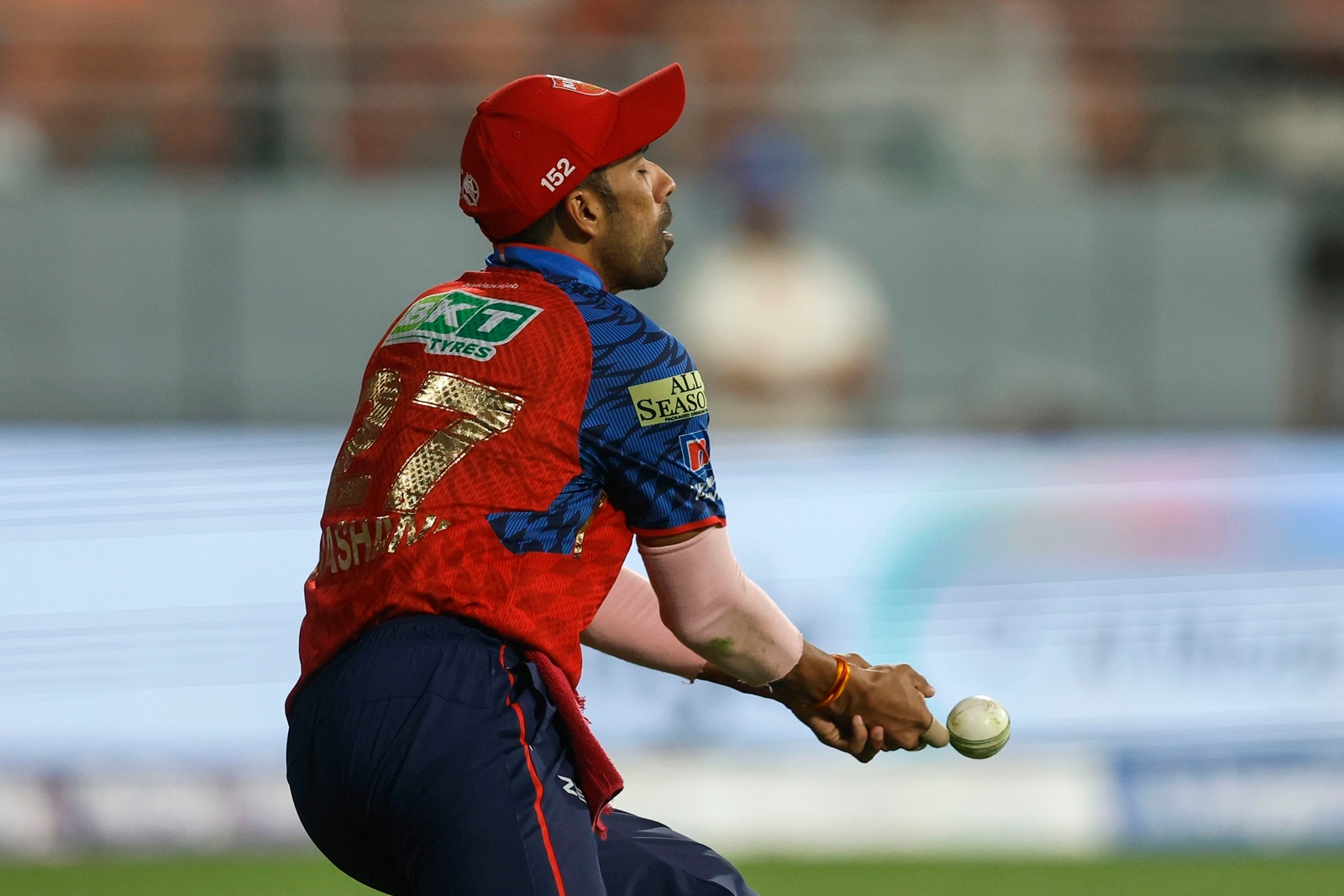 The culprit was not just one fielder, though Shashank Singh would feel the guiltiest. (BCCI/Creimas Photo)
He empathised with Shashank. “You know, poor old Shashank there. It just looks like the ball is following him around everywhere he goes.”
It was perhaps a combination of misfortune, clumsiness, and nervousness.
But catching was not the only factor either. Punjab Kings had the deeper fundamental flaw of an imbalanced bowling group. Pinning the hopes on a lone spinner, Yuzvendra Chahal – even if he is the highest wicket-taker in IPL history – was myopic. Chahal was a diminished force, losing his once-immaculate control of drop, a yard or two of pace that made him unpredictable, and the laser-guided precision that induced mistakes from batsmen. He mustered only 12 wickets in 14 games, and bowled less than three overs on an average.
Story continues below this ad
Spinners, especially the leg-spinners, prosper when pampered. The management was cynical towards both Chahal as well as spinners in general. Chahal included, Punjab’s spinners bowled only 59 overs in the entire season, the fewest among all teams. On slow, dry surfaces, they missed a tweaker who could stifle and frustrate batsmen.
Lack of quality
The overwhelming trust on seamers turned counter-intuitive. Nor did they possess a high-class pack like Gujarat Titans either. Arshdeep Singh’s form tailed off towards the end; Marco Jansen and Vijayakumar Vyshak were erratic. Lockie Ferguson lost trust after early drubbings. The wickets chart made for despicable reading. No bowler took more than 14 wickets; only two reached double figures; nine of the 12 bowlers they employed bled more than 10 runs an over. The most economical, left-arm spinner Harpreet Brar (7.50), was limited to merely two games. Three times they failed to defend 200-plus totals. The scales of T20s might tilt towards the batsmen, but a team can’t invest all their capital on them. Serving up batting paradises benefited rival sides too.
 Marco Jansen and Vijayakumar Vyshak were erratic while Arshdeep Singh’s form tailed off towards the end. (BCCI/Creimas Photo)
Their batsmen touched or crossed 200 10 times, but there were days their most destructive game deserted them. The batting bubble burst at times, especially during their win-less phase. Like when chasing RCB’s 222 in Dharamshala, or folding up for 163/9 against Gujarat Titans.
The latter game would haunt them, as Marcus Stoinis failed to defend eight runs in the last over. Similarly against Rajasthan Royals, they couldn’t guard 35 runs in three overs. They lost three games in the last over, reflecting their inability to close out matches, a glitch stemming from their measly options of death-over experts.
Story continues below this ad
Sometimes, the margins were negligible yet significant. Ponting would summarise. “We’ve just been a little bit off and they’re small things. They’re one or two balls or they’re an over here and there. Quite conceivably, we could have won another three or four games, but we’ve only got ourselves to blame for that.”
Rest assured that Ponting and the coaching crew would scan for quality bowlers before the next season. Shifting the home base to Dharamshala for the crucial business end impeded their revival hopes. They lost all three games in the serene venue under the gaze of the Dhauladhar ranges.
But their capitulation also captures the transient nature of the format, the reality that all it would sometimes take is one bad day to change the season around, or one fundamental flaw to sully a season.