Barring once, when Jayalalithaa managed to buck the trend in 2016, Tamil Nadu has seen Dravidian majors DMK and AIADMK alternating in power for the last 37 years. The DMK, not even under M Karunanidhi, failed to stay in power for two consecutive terms all these years and is keen to rewrite history this time.
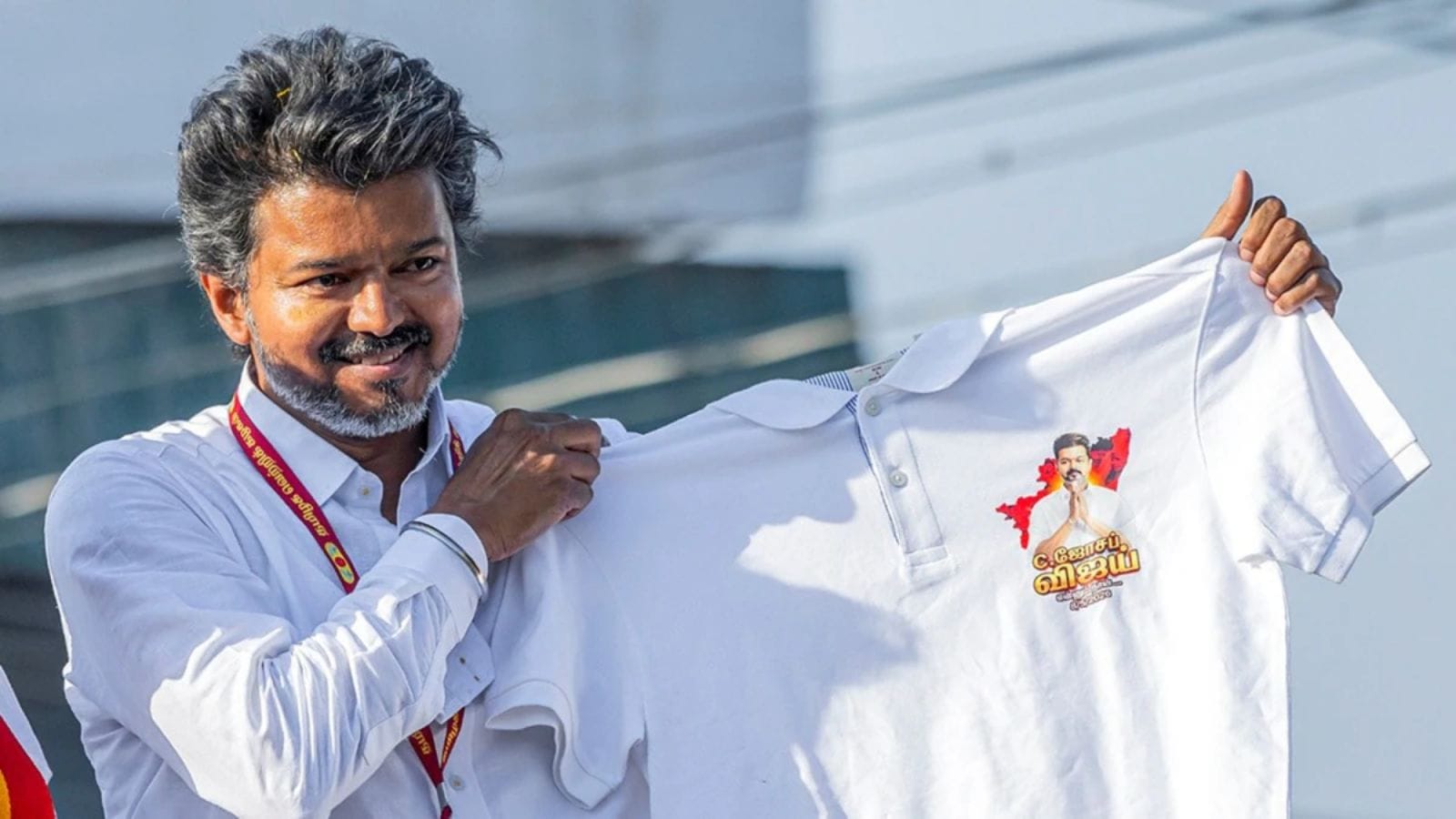
As the state with 234 Assembly constituencies goes to the polls on Wednesday, the big question is whether the political landscape marked by this duopoly for nearly four decades will change. Will actor-turned-politician Vijay’s TVK, banking on the narrative of change, emerge as a new pole? The election is in many ways seen as a contest between Vijay’s chemistry with the youth and DMK alliance‘s arithmetic.

By all indications, Vijay has gained considerable ground, drawing huge support from the youngsters and women. Having positioned himself as a challenger to M K Stalin and the DMK, often calling it an evil force, he has refrained from attacking the AIADMK vociferously, hoping to win over anti-DMK voters who have voted AIADMK in the past in the absence of an alternative. The question is whether he will divide the anti-DMK and anti-incumbency votes that will end up actually helping Stalin and damaging the AIADMK alliance. Many observers believe the DMK has an edge based on this assessment.
Vijay is banking on youngsters. And the youth vote bank is substantial. After the recent Special Intensive Revision of voter rolls, nearly 40% of the total electorate of 5.67 crore is under the age of 39. A little over 17% are in the 20-29 age group and some 20% are in the 30-39 bracket. “Even if he manages to get half of it, he will get a 20% vote share, which, I think, he will,” said a Congress leader.
Since 1991, no party other than the DMK and the AIADMK has managed to get a vote share in double digits. The DMDK, floated by another actor-turned-politician Vijayakanth in 2005, got 8.38% in its first political outing a year later but managed to win just a single seat. In 2011, the DMDK won 29 seats with a vote share of 7.88%, but the party fought that election in alliance with the AIADMK.
Both the DMK and the AIADMK have a 20%-plus captive support base: voters who have traditionally cast their votes for the “rising sun” and the “two leaves” symbols. Even at their worst, they have retained those votes, like in 1991 when the DMK was reduced to two seats with a vote share of 22.46% and in 1996 when the AIADMK was routed with four seats but with a 21.47% vote share. In 2011, the DMK suffered another major defeat when it slumped to 23 seats, but with a vote share of 22.39%.
This also means that even a 20% vote share, which some believe Vijay can get, can’t translate into a huge number of seats. But even that in itself, if it manages, will be historic for a party on its debut. The buzz on the ground is that the last-minute distribution of cash — which is an open secret in Tamil Nadu politics — will be the deciding factor. In fact, people on the ground say Vijay’s candidates will not distribute cash. That is also an attraction for some who despise the treatment of the voter as a purchasable commodity.
“Maatram”, or change, after all, has been a word frequently invoked by Vijay’s young supporters cutting across caste, gender, and community. The older voters, however, still prefer the two Dravidian parties. The minority vote is another factor. The Muslim community seems to have consolidated behind the DMK, given that the BJP is in the AIADMK camp. A section of the Christian youth could be voting for Vijay. As Tamil Nadu goes to the polls, it is clear that a conversation around “maatram” has begun among the youth.
Stakes for Dravidian majors
The stakes are high for the AIADMK, especially its general secretary Edappadi K Palaniswami, whose political future and leadership will depend on the outcome. The party, which suffered setbacks in the 2021 Assembly polls and 2024 Lok Sabha elections, cannot afford one more defeat as it may trigger a debilitating internal churn.
The elections are also seen as a huge test of Palaniswami’s ability to lead. After the expulsion of former CM O Panneerselvam, now in the DMK, V K Sasikala, who has tied up with S Ramadoss, and Sasikala’s nephew T T V Dhinakaran, Palaniswami is now in complete control of the party, with virtually no challengers. In a clever move, he managed to mend fences with Dhinakaran, whose party AMMK is now an ally of the AIADMK. Sasikala, who has launched a new party, has put up candidates in AIADMK strongholds, hoping to chip away at the votes of the Thevar community, damaging the party.
For the DMK, which has framed the election as a battle between Tamil Nadu and Delhi, the elections are critical. Stalin is 73 and his son Udhayanidhi is waiting in the wings. A victory, also hugely significant for the INDIA bloc, will be unprecedented in DMK history and create conditions for a smooth transition of leadership to his son at a time of his choosing. With Vijay and NTK’s Seeman managing to connect with the younger voters, Udhayanidhi is seen as the DMK’s counter.
TN polls in numbers
Total seats: 234 (44 SC and 2 ST)
Turnout in 2021: 73.63%
Total candidates: 4,023
Total electorate: 5.68 crore
First-time voters: 12.52 lakh
Polling booths: 75,032