For centuries, Lahore was the heart of Punjab — the seat of power under the Mughals, Maharaja Ranjit Singh and the British Raj. It was also northern India’s leading centre of higher learning, home to institutions such as Government College, Kinnaird College and the original Panjab University. Its cafés and literary circles nurtured writers including Amrita Pritam, Saadat Hasan Manto and Faiz Ahmad Faiz, making it the cultural capital of undivided Punjab.
The partition in 1947 changed everything. With Lahore becoming part of Pakistan, Indian Punjab suddenly found itself without a capital. The loss was not merely administrative; it was emotional and civilisational. Refugees streamed across the new border amid unprecedented violence and upheaval. Shimla became a temporary capital, while Amritsar, Jalandhar and Ludhiana were considered as alternatives. Yet each struggled with overcrowding, limited resources and the immense burden of rehabilitation.

Punjab needed a new beginning.
For Prime Minister Jawaharlal Nehru, the proposed city represented more than administrative necessity. He viewed architecture and urban planning as instruments of nation-building. Chandigarh would become a symbol of a modern, secular and forward-looking India, free from the constraints of its colonial past.
In March 1948, a committee headed by Chief Engineer Parmeshwari Lal Varma began searching for a suitable site. After extensive surveys, officials selected a 114 sq km tract at the foothills of the Shivaliks between the Sukhna Choe and Patiali-ki-Rao.
The location offered abundant water, a central position within East Punjab and a dramatic natural setting. Long before roads and buildings appeared, the landscape consisted of fertile farmland, seasonal ponds and groves of mango, peepal, banyan, jamun, kikar and sheesham trees. Yet it was not empty. At least 28 villages occupied the area and were displaced to make way for the new capital.
The origins of the city’s name remain debated. Popular belief links Chandigarh to the nearby Chandi Mandir, dedicated to Goddess Chandi. Another intriguing possibility comes from an old survey map referred to by architect and author Rajnish Wattas, which reportedly showed a small settlement called “Chandigarh”, complete with a railway station long before the city was planned.
In 1949, the government commissioned American planner Albert Mayer to prepare the master plan. Mayer, a respected urban planner associated with public housing reforms in the United States, invited Polish architect Maciej Nowicki to join him as chief architect.
Story continues below this ad
Together, they produced a vision strikingly different from the Chandigarh we know today.
The Mayer-Nowicki plan was fan-shaped rather than geometric, organised around curving roads and self-contained neighbourhood units. Influenced by the English Garden City movement and contemporary American planning ideas, it prioritised human-scale living, greenery and community interaction over monumental architecture.
The city was planned to accommodate around 150,000 residents in its first phase through low-density sectors spread across a generous landscape. At full development, it was expected to house about half a million people.
Nowicki added an even more imaginative dimension through what became known as the “leaf plan”. Superimposed on Mayer’s fan-shaped framework, it envisioned a city with both an “everyday” and a “holiday” function. Residential areas formed the body of the leaf, while a central linear spine acted as its stalk, housing shops, cafés, dispensaries and community facilities.
Story continues below this ad
Rather than separating people from amenities, the design brought them together within walkable neighbourhoods. Nowicki also sought to adapt modern architecture to Indian conditions through internal courtyards, shaded public spaces, chajjas and colourful façades inspired by local traditions. His aim was to blend modern planning principles with climate-sensitive and culturally rooted design.
Traces of that original vision survive even today. Sector 8, among Chandigarh’s earliest developed neighbourhoods, still reflects aspects of the superblock concept and neighbourhood-unit planning championed by Mayer and Nowicki.
The duo also identified the broad locations for what would later become the Capitol Complex, Sector 17 city centre and the university zone. Yet Nowicki remained far more interested in the daily lives of residents than in grand governmental monuments. He believed cities should be built around communities rather than symbols of power.
Their collaboration, however, was tragically brief.
On August 31, 1950, Nowicki was killed in an air crash while returning to the United States. Deeply affected by the loss, Mayer withdrew from the project, leaving Punjab’s ambitious new capital without its creators.
Story continues below this ad
The governments of Punjab and India moved swiftly to find a replacement. Their choice was Le Corbusier, the celebrated Swiss-French architect whose name would become inseparable from Chandigarh.
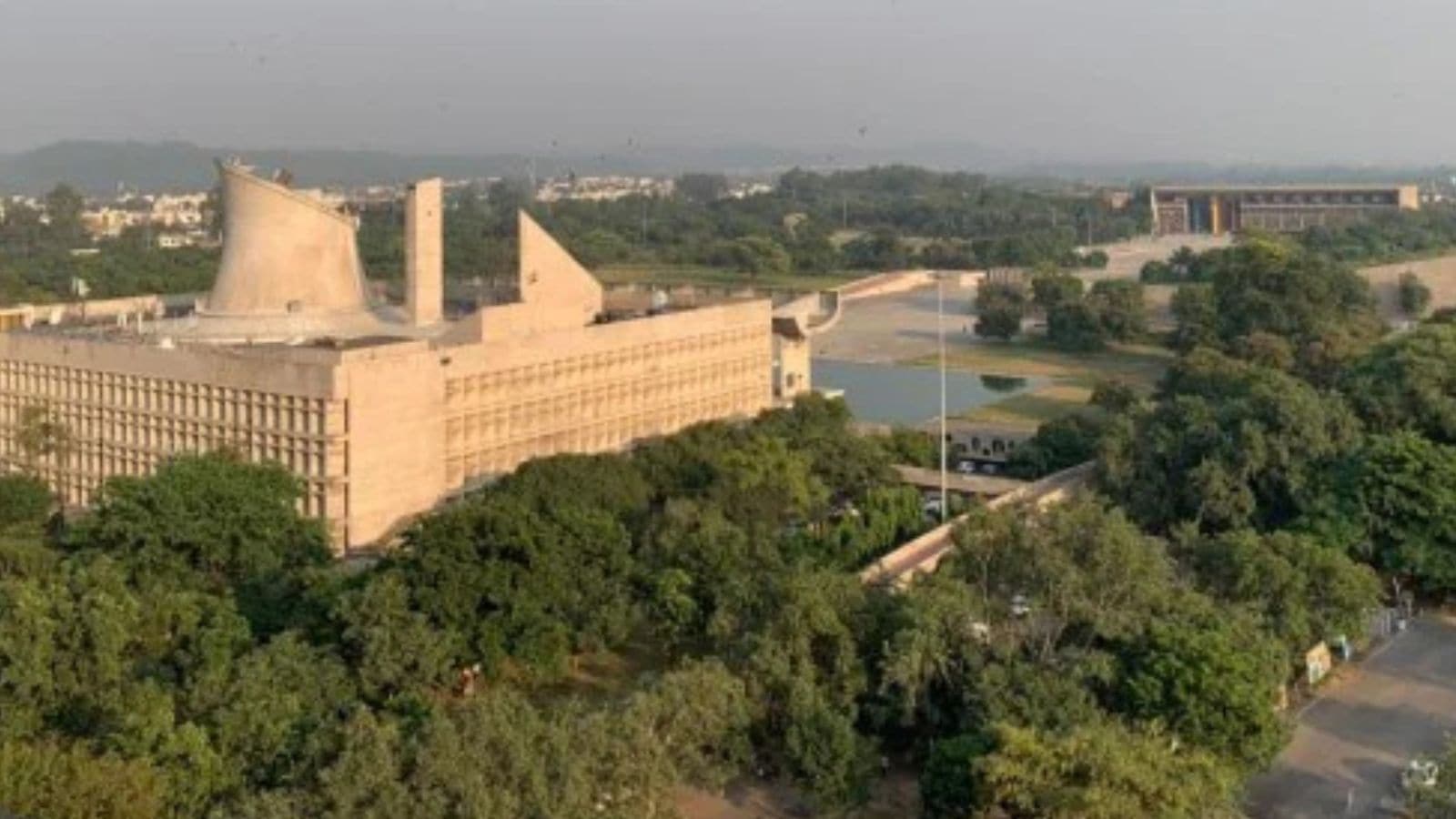
When he arrived in 1951, Chandigarh’s story took a dramatic turn. The curving, garden-city vision of Mayer and Nowicki gradually gave way to a more monumental plan defined by straight lines, concrete forms and bold geometry.
The city that emerged would become one of the world’s most famous experiments in modern urbanism. Yet beneath Chandigarh’s familiar grid lies an intriguing historical footnote — the memory of a different city that might have been: greener, softer and perhaps closer to the rhythms of everyday life.