4 min readJun 15, 2026 03:33 PM IST
First published on: Jun 15, 2026 at 03:33 PM IST
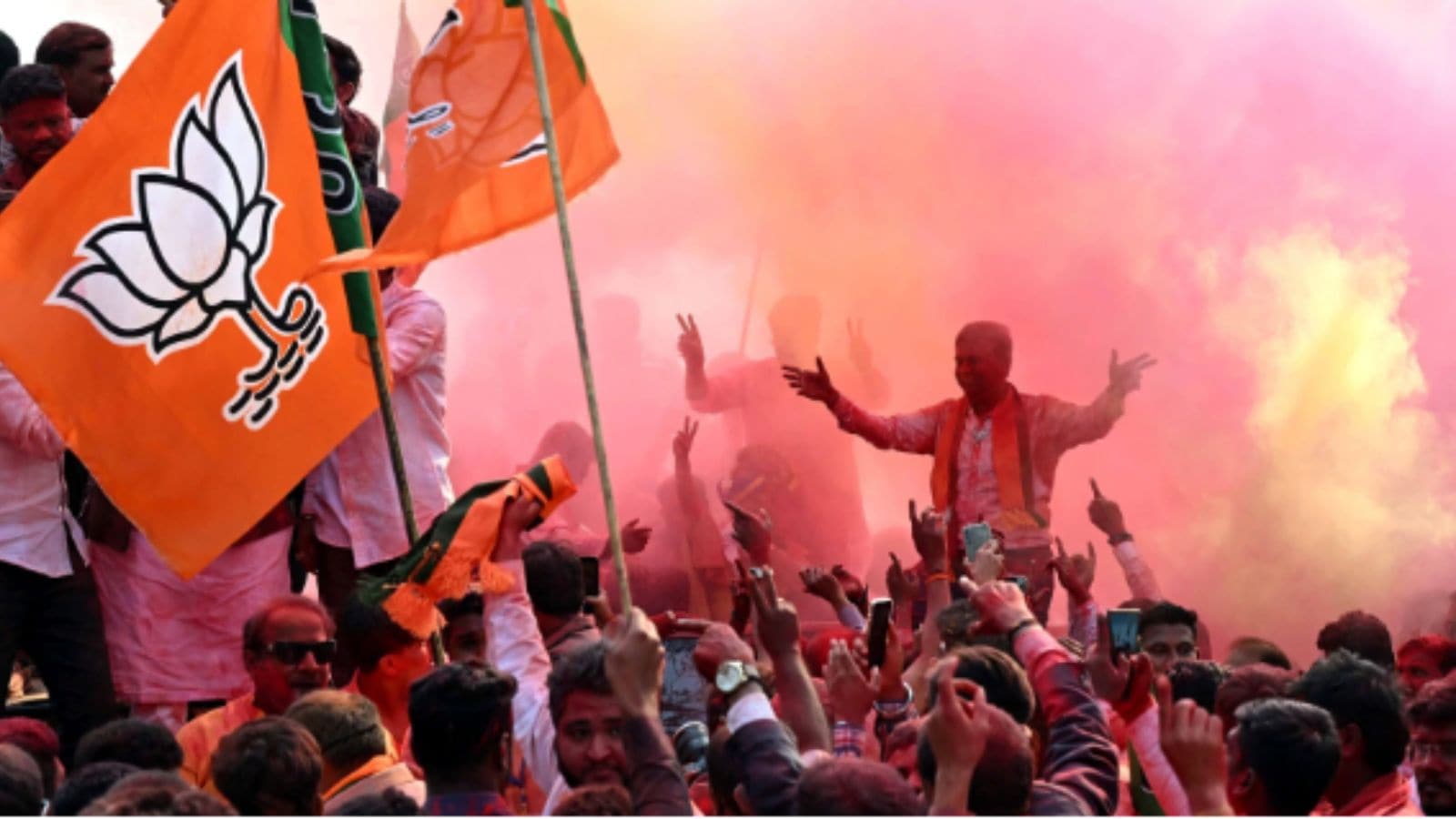
In his article on the BJP’s forty-sixth anniversary (BJP’s relevance owes to ideological clarity, IE, April 4), Ram Madhav talks of ideological clarity triumphing over decades of drift. The party, he argues, shed Gandhian socialism and found its true form in “cultural nationalism” and “integral humanism”. The broader public, he asserts, “seems to identify with this” vision. The lotus, he declares, has bloomed fully. But has it? And how?
The BJP’s rise is not just the story of an ideology whose time has come. It is the story of a vacuum created by the Congress’s downslide, driven not by ideological defeat but by the erosion of generational memory and structural transformation. For nearly five decades after Independence, the Congress drew legitimacy from a political imagination forged in the freedom struggle and sustained through nation-building endeavours. But memory often fades with the generation that carries it. For today’s median voter, born in the 1980s, Congress is less the party that steered Independence, and more the party of coalition compromises, scams, and a leadership speaking to an India that no longer exists. The 1991 reforms deepened this void in three ways: Generating corruption on an unprecedented scale; fuelling a hypercompetitive broadcast culture; and replacing the Nehruvian social contract with a market logic the Congress could never fully own. Into this vacuum stepped the BJP. Cultural nationalism may have supplied the BJP’s narrative, but it found resonance in a society experiencing political dislocation. The triumph was not of ideology alone, but of an ideology that organised anxieties, identities, and divisions.

Madhav credits Advani with steering the party in a “more definitive direction”. But his Rath Yatra was widely blamed for normalising polarisation. He grounds the party in Integral Humanism, a position challenged by the claim that it has rarely operated independently of Hindutva mobilisation.
Under Modi, Hindu cultural assertion braided with modernist economic aspiration. The aspiring middle class could vote for growth; the anxious lower middle class for Hindu identity; both could feel they were voting against corruption. But there remains a tension.
The CSDS 2024 survey found 79 per cent of respondents, including nearly eight in 10 Hindus, believed India belongs to all religions. Only 11 per cent said India is a nation of Hindus. In the 2024 election, the BJP lost its majority. The INDIA bloc won 43 seats in Uttar Pradesh, and a Dalit Samajwadi candidate won Faizabad, the seat containing Ayodhya and the Ram Temple.
Madhav invokes Gandhi. But Gandhi’s concept of religion was Sarva Dharma Sambhava, equal respect for all faiths. When he said religion must inform politics, he referred to a shared ethical core, not the assertion of one cultural identity as the state’s organising principle.
The same voter who said that cultural nationalism will restore Hindu pride is the one who struggles with affordable healthcare and whose children face a job market where around 40 per cent of the unemployed are under 30. All this will impinge on offering cultural identity as compensation for material deprivation.
What is needed now is a redefinition of Viksit Bharat, one that measures development not in GDP alone but in how its gains are distributed across caste, community, gender, and the urban-rural divide. The lotus has bloomed, but no bloom is complete until its petals display variegation, until the pond it grows in is fed by fresh waters of inclusion. For that to happen, parties must reflect beyond their ideological walls.
The writer is a researcher. Views are personal