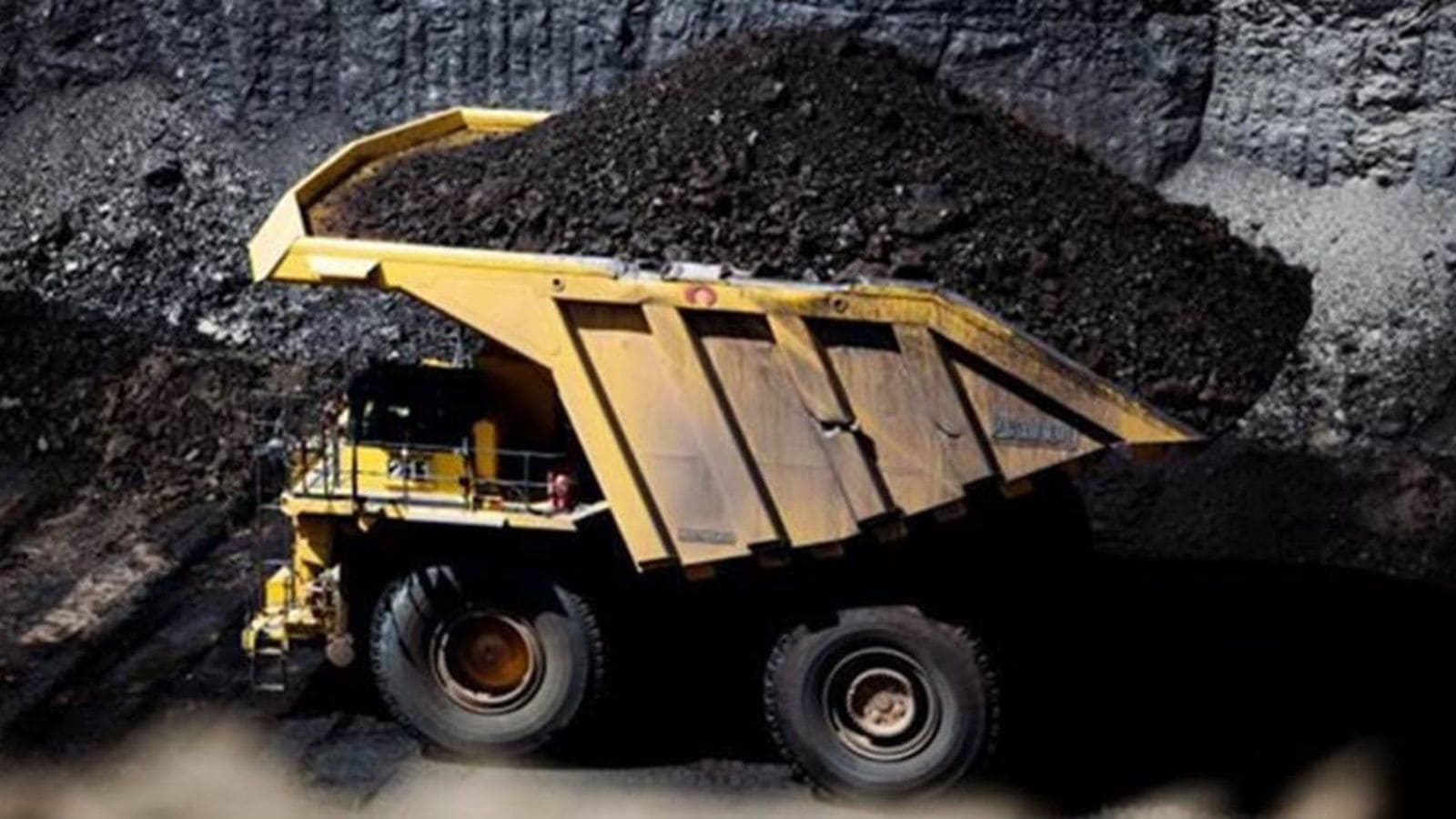
The Union cabinet on Thursday approved a new scheme to promote conversion of coal and lignite into synthesis gas (syngas) through the gasification process in a move to strengthen energy security.
With an outlay of Rs 37,500 crore, the Scheme for Promotion of New Surface Coal/Lignite Gasification Projects seeks to incentivise 25 projects for production of syngas and downstream products, targeting gasification of approximately 75 million tonne (mt) of coal/lignite.
The new scheme is an addition to the existing viability gap funding scheme worth Rs 8,500 crore approved in 2024 for incentivising coal and lignite gasification projects.
According to the government, the new scheme aims at enhancing energy security and reducing dependence on imports of key products such as LNG, urea, ammonia, and methanol.
This comes in the backdrop of growing concerns over disruptions in global energy supplies due to the ongoing crisis in West Asia.
What is coal gasification
India has limited reserves of crude oil and natural gas and is dependent on imports, making it vulnerable to global price volatility and supply disruptions. At the same time, it has the fourth-largest coal reserves globally, with an estimated 389 billion tonnes (bt). Of this, 212 bt are classified as proven reserves, which means they are economically extractable with reasonable certainty based on a detailed Preliminary Feasibility Study.
The Centre believes coal gasification offers a cleaner and more efficient way to utilise domestic coal resources while improving energy security.
Story continues below this ad
Coal gasification is a thermochemical process of converting coal into synthesis gas (syngas), which is a mixture of fuel-rich gases like carbon monoxide (CO), carbon dioxide (CO2), hydrogen (H2), and methane (CH4).
The syngas can be used for producing Synthetic Natural Gas (SNG), electricity generation, energy fuel (methanol and ethanol), ammonia for fertilisers, and chemicals.
The coal gasification process involves oxidation of coal at higher temperatures and pressures to produce syngas. There are two main types of gasification: Surface gasification and Underground coal gasification (UCG).
In surface coal gasification, coal is first mined and then converted into gas in above-ground industrial reactors using oxygen, steam and high temperatures. In contrast, underground coal gasification converts coal into gas while it is still buried deep underground by injecting air or oxygen into coal seams through wells and extracting the resulting gas to the surface.
Story continues below this ad
The newly approved scheme primarily focuses on surface gasification projects.
Key features
The government said the projects under the scheme will be selected through a transparent and competitive bidding process. Under the scheme, financial incentive will be provided at a maximum of 20% of the cost of plant and machinery to be disbursed in four equal installments.
Financial incentive for any single project capped at Rs 5,000 crore; for any single product (except Synthetic Natural Gas and Urea) capped at Rs 9,000 crore; and any single entity group capped at Rs 12,000 crore across all projects.
“Incentive under this scheme is in addition to, and does not restrict access to, incentives under the commercial coal mining regime or schemes of other Central/State Government ministries” it said.
Story continues below this ad
“The scheme is technology-agnostic; adoption of indigenous technologies is encouraged,” it added.
Scheme to attract Rs 3 lakh cr investment
The government estimates that the new scheme could attract investment of around Rs.2.5- 3.0 lakh crore, and generate annual revenue of around Rs 6,300 crore.
During the briefing, Union Minister Ashwini Vaishnaw said all 25 projects under the scheme are likely to be commissioned within the next four to five years.
“Gasification process is a complex one. But there has been a lot of homework done on this. So, the commissioning of all 25 projects will be completed within four to five years,” he added.
Story continues below this ad
Currently, Jindal Steel Ltd operates India’s only gasification project with capacity of 1.80 million tons per annum (mtpa) at Odisha’s Angul district.
Coal India Ltd (CIL) is also implementing four coal gasification projects in partnership with other Central Public Sector Undertakings (CPSUs). These include Talcher Coal-Based Ammonia–Urea Complex and Bharat Coal Gasification and Chemicals Ltd’ coal gasification-based ammonium nitrate plant in Odisha, Coal Gas India Ltd’s coal-to-synthetic natural gas plant in West Bengal and CIL’s Coal-to-synthetic natural gas project at Western Coalfields Ltd in Maharashtra.
Private players are also setting up four coal gasification projects.