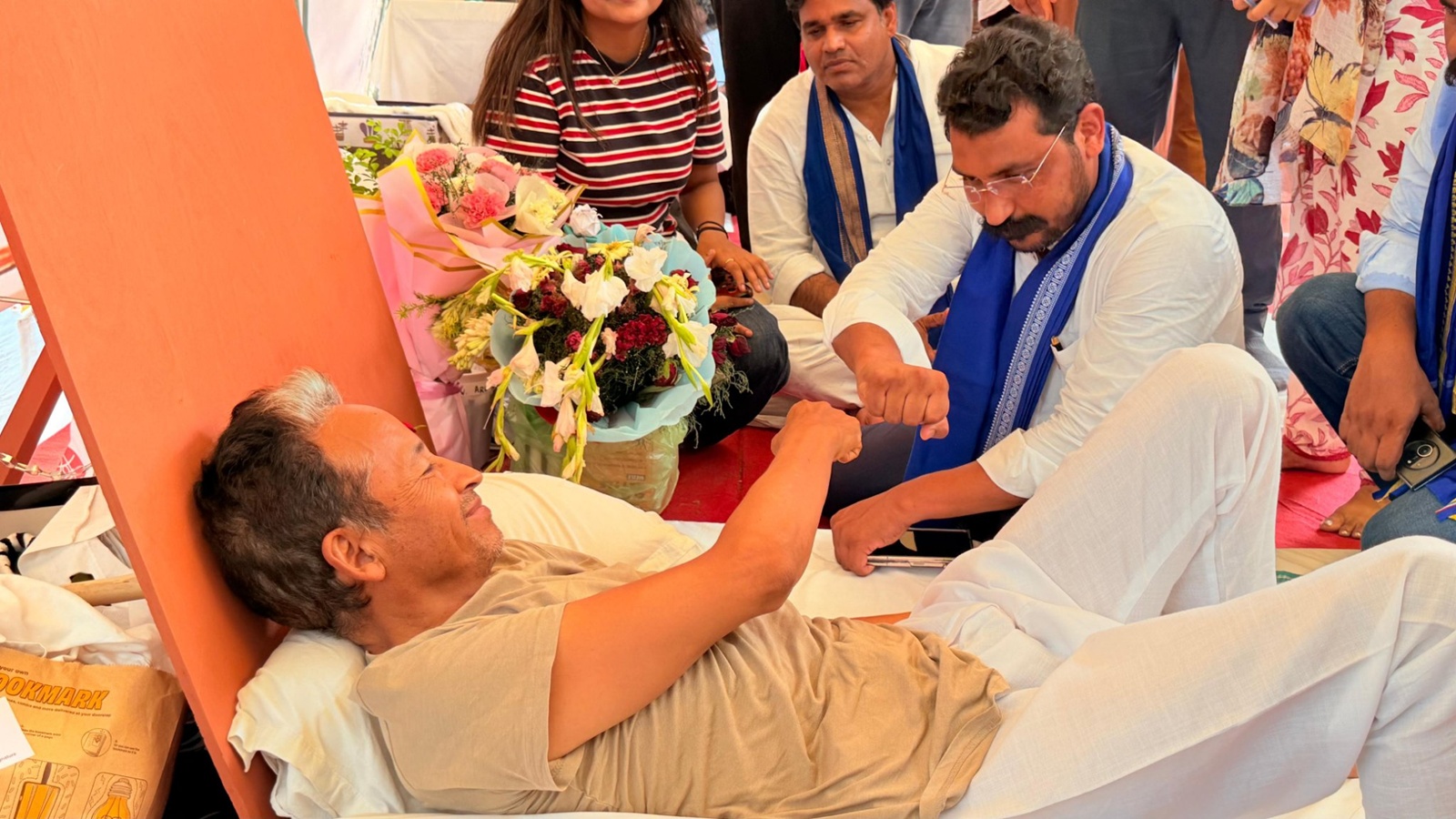
Azad Samaj Party (Kanshi Ram) chief and Nagina MP Chandrashekhar Azad was among the first politicians to engage with the Cockroach Janata Party (CJP)-led youth protests at Delhi’s Jantar Mantar.
Azad speaks to The Indian Express on the reasons behind the protests, the July 20 violence, the government’s response, and the initial reluctance of Opposition parties to engage with it. Excerpts:

* You were among the first politicians to associate with the CJP-led protests. Why did you think it was important when few other Opposition parties openly supported it?
I have a grassroots organisation that extends to the village level, so we understand the anger over the broken education system and rising unemployment. When I saw this movement on social media, I felt that anger would spill onto the streets. Sonam Wangchuk’s entry gave it legitimacy and responsible leadership.
I spoke to Sonam bhai and the CJP organisers. They said they needed support and no political party was coming forward. I issued a letter of support on July 12 and went to Jantar Mantar on July 15. Initially, I wanted to persuade Sonam bhai to end his fast because of his health, but I realised the government, not he, needed to step back. When he said he would end his fast if the July 20 march succeeded, I promised my support.
On July 18, I learnt that the police had picked him up. I flew to Delhi from Mumbai and stayed at Jantar Mantar through the night. By July 19, so many youngsters had gathered that the police could no longer remove them. The government finally called the protesters for talks on July 20. Had it done so a week earlier, none of this would have happened.
* Why did the protests turn violent?
I had advised them (the organisers) not to let the gathering move out of Jantar Mantar. Once that happened, it became difficult to manage. I told them that if such a spontaneous crowd was provoked, it could turn violent because it was not part of any organised group with discipline. There appeared to be no concrete plan.
Then there were elements within the police who wanted violence. Students were targeted brutally; girls were beaten badly. I saw it with my own eyes. It was like the Jallianwala Bagh incident. They are our own children, not terrorists. What happened should never have happened.
* What were the government’s missteps?
The government first ignored the protest. It failed to gauge its seriousness. Its intelligence assessment also failed. It expected around 10,000 people, but several times that number turned up. Had the government spoken to the protesters while they were sitting peacefully and accepted even 60-70% of their demands, this situation would not have arisen. Instead, it showed insensitivity.
* What is the reason for such “insensitivity”?
When you keep winning elections by manipulating the system, you begin to believe you don’t need to listen to anyone. We saw that with the farmers’ protest and with the women wrestlers. During the anti-CAA (Citizenship Amendment Act) protests too, stages were dismantled overnight by force. When you refuse dialogue, it creates anger.
* What was the impact of the lathicharge on the movement?
It has only strengthened it. Young people who are driven to the point of suicide are not going to fear batons or bullets. That is a dangerous situation. You cannot suppress people’s voices through force. Learn to face criticism. Here, criticism of the Prime Minister is treated as criticism of the country. Is this the first time a minister has been asked to resign? Fixing accountability will send a strong message. Refusing dialogue is not the conduct of those who believe in democracy.
* Key Opposition parties stayed away from the protests until July 21. Why?
Many parties were initially sceptical about the movement’s objectives and those associated with it. But once a person such as Sonam Wangchuk joined, the Opposition should have engaged more proactively. It took too long to do so. I also want to say, responsibly, that this protest should have been our job, not the students’. They have already done their duty by voting and studying.
* Is it just NEET paper leak or are there bigger issues?
It is not just about paper leaks. It is about jobs being stolen and the Constitutional promise of equality being undermined. We charge unemployed people for application forms, recruitments take four or five years, and many candidates cross the age limit by the time appointments are made. Examination centres are allotted arbitrarily. A Delhi student is sent to Srinagar while someone from Saharanpur is asked to go to Lucknow. In a country where 80 crore people depend on free ration, who will pay for travel and accommodation? And if you are a minute late, you are not allowed to sit for the exam.
Young people are not getting jobs. Skill development alone is not enough; jobs have to be created. New recruitments are scarce, contractual hiring is rising, schools are shutting down, and the cost of living keeps increasing. All of this has fuelled anger among the youth.
* You have announced plans to take this movement forward. What are you planning?
As I said, this protest should have been our responsibility, not that of students. Every day, there is confrontation between the government and young people. Children are getting injured and ending up in hospitals. Some could have died that day. And if the crowd had breached Parliament, the country would have been scarred like Nepal, Bangladesh, or Sri Lanka.
We have decided to launch agitations in more than 700 districts where our organisation has a presence. On July 25, we will hold sit-ins at district headquarters. Our demands include an overhaul of the examination system, a fixed examination calendar, treating paper leaks as an act of treason, and action against policemen who used brute force against students.
If the government does not accept these demands, we will march to state capitals and then launch a nationwide agitation.
* What is the solution to the current impasse?
First, Dharmendra Pradhan should resign. Around 20 students have died by suicide. If our education system had been robust, they would still be with us. He should take moral responsibility.
The government should create a fixed calendar to ensure examinations are held on time and establish a robust system to prevent paper leaks. Today, question papers are being transported by air. If there is another leak, will they be shipped next? The government asks us to discuss issues in Parliament but is unwilling to engage in dialogue with its own citizens.