4 min readNew DelhiMay 29, 2026 02:04 AM IST
Speed up trial in cases where accused are caught red-handed, draw up heatmaps to flag hotspots where neighbourhood disputes are frequently reported, and ensure legal follow-up in road rage cases: Delhi Police Commissioner Satish Golchha has issued a slew of directions to the Deputy Commissioner of Police (DCPs) across 15 districts of the Capital to fast-track criminal investigation, The Indian Express has learnt.
Under the new order, investigating officers must file chargesheets within seven to 15 days of arrest in the cases where the accused has been caught red-handed, such as snatching incidents. After this, fast‑track trial proceedings should be actively pursued, the police chief said. The target, laid down in directions issued by Golchha, is part of a broader push to accelerate investigations and secure convictions, said officers.

The directives were issued in the Crime Review Meeting held last week, according to officers.
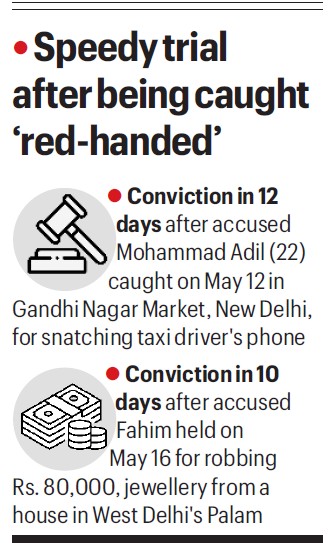
With court trials dragging forever in a majority of cases, there has been a mounting pressure to improve conviction rates and fast-track criminal investigations, said officers. In the last two weeks, at least 10 to 15 ‘quick-chargesheet’ cases have been finalised, filed and pushed toward trial, officers added.
Senior officers have been instructed to monitor compliance closely. Joint Commissioners of Police have been tasked with reviewing districtwise progress every fortnight and report directly to the CP’s office. “The message is simple: disposals cannot slow down,” said an officer familiar with the implementation of the directives, adding, “Every fortnight, numbers have to go up.”
The focus is not limited to filing chargesheets. In another set of directions, investigating officers have been asked to coordinate closely with public prosecutors to maximise conviction outcomes in contested trials. Acquittals have to be personally reviewed by district DCPs to identify “systemic investigation lapses”, Golchha directed.
He also directed that the high volume of PCR calls linked to quarrels and neighbourhood disputes across Delhi must be constantly reviewed. District units have been asked to prepare detailed monthly analyses of quarrel-related calls, mapping call volumes, geographical concentration, time-of-day patterns and repeat callers, and heatmaps to identify “hotspots”. Repeated complainants and habitual offenders are to be tracked through data analysis, the direction mentioned.
Story continues below this ad
The instructions also called for ‘red-flagging’ individuals involved in repeated complaints over time.
“Officers are expected to initiate preventive legal action from the second recurring complaint onward. Road rage incidents received special mention in the directives, with orders that such calls should not be closed as routine quarrels without legal follow-up,” the directive stated.
The push extended to surveillance too. CCTV footage from identified hotspots has to be proactively collected, preserved and reviewed in all significant cases. PCR calls have also to be sub-classified by location, recurrence and timing to identify ‘underlying socio-spatial factors’.
One data point has appeared to shape deployment strategy more than others: the bulk of quarrel-related PCR calls, the documents noted, are received between 8 pm and midnight. All districts are instructed to
Story continues below this ad
increase police presence during those hours, with time-specific deployment plans.
On paper, the directives reflect a policing model built on speed, data analysis and preventive enforcement. But several officers said the cumulative effect was a culture where numerical compliance became central to day-to-day functioning. Said another officer, “Eventually, targets stop looking administrative, and begin shaping decisions on the ground.”


Stay updated with the latest – Click here to follow us on Instagram