India may have won two of their first three matches at the Women’s T20 World Cup and remain in contention for a semi-final berth, but their six-wicket defeat to South Africa at Manchester exposed a concern that has quietly followed them through the tournament – the inability of the middle-order to build on the platform laid by the top-order.
At the centre of that conversation is captain Harmanpreet Kaur.
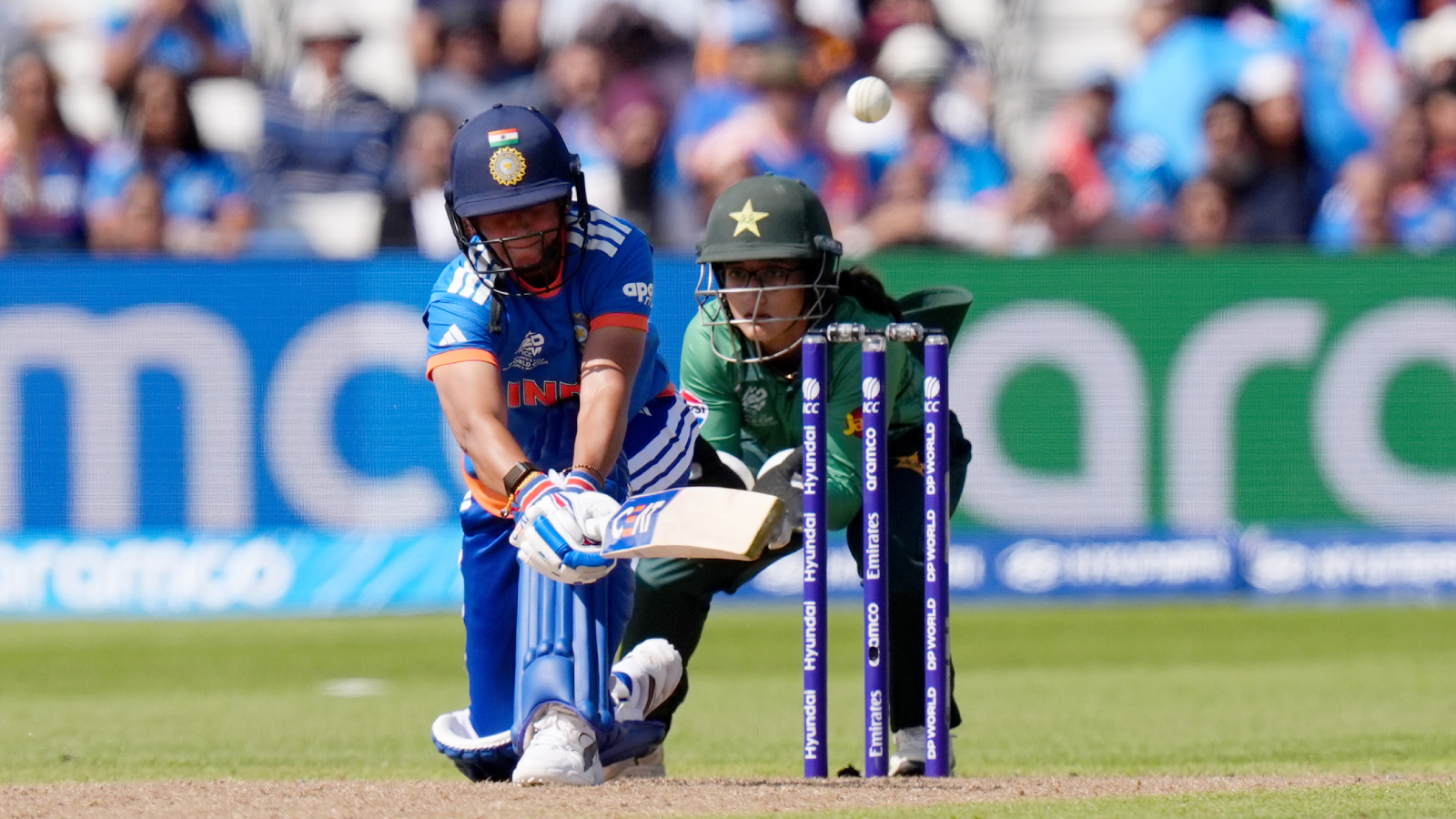
Her scores of 36 off 35 balls against Pakistan and 24 off 22 against South Africa look respectable on paper, but a closer look tells a different story. In both matches, India lost early wickets and needed someone experienced to rebuild the innings before launching at the death.
Harmanpreet did the rebuilding, but could not manage the acceleration towards the later overs which the innings needed.
Against Pakistan, her strike rate was just above 102 despite facing enough deliveries to dictate the innings. She hit four boundaries but also played 13 dot balls, allowing Pakistan’s spinners to build pressure through the middle overs before holing out while trying to force the pace.
ALSO READ | Harmanpreet Kaur becomes first player to feature in 200 T20Is
The pattern repeated against South Africa. Harmanpreet made 24 from 22 deliveries with five dot balls. Once she settled in, the innings never shifted gears. There were singles; gentle pushes into the gaps and strike rotation, but very little intent to attack either the seamers or the spinners.
Story continues below this ad
It is this middle phase that has begun to be a cause of concern. In modern T20 cricket, rebuilding is only half the job. The batter who absorbs pressure is also expected to cash in once set. Harmanpreet had reached that point in both innings but struggled to find the gears required to push India to a big score.
Falling numbers
The numbers also suggest this is not simply a two-match blip.
Since 2023, Harmanpreet has scored 909 runs in 42 innings in the middle overs at a strike rate of 116.24, which is noticeably lower than the likes of Amelia Kerr (125.55) and Heather Knight (120.55).
She has also chewed up 244 dot balls, more than Kerr (207) and Knight (204), thereby leaving India with more work to do at the death. Her own teammate, Jemimah Rodrigues, has struck at 132.29 in the same number of innings and has consumed only 158 dot deliveries.
Story continues below this ad
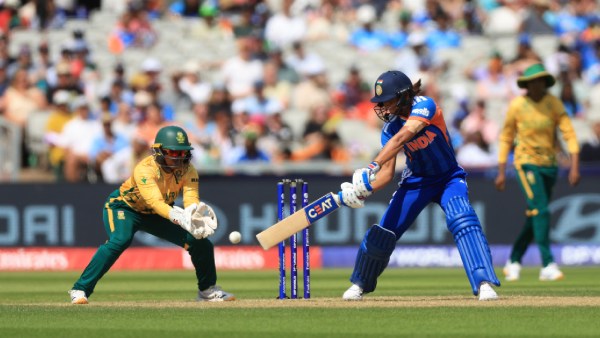 India’s Harmanpreet Kaur batting during the Women’s T20 World Cup match against South Africa. (AP)
Even her own career graph points towards a gradual shift. After striking at over 130 in 2021, Harmanpreet has largely hovered between 109 and 126 in recent seasons. In 2026, she scored 265 runs at a strike rate of 126.2. Respectable but not quite matching the explosive standards expected from India’s premier middle-order batter.
The statistics only reinforce what has been visible during this World Cup. Harmanpreet is spending enough time at the crease to influence matches, but is not consistently turning starts into innings that take the game away from the opposition.
Pressure on others
The concern is not that Harmanpreet has failed. It is that she has not imposed herself after doing the difficult part of surviving. That has created an increasing burden on India’s lower middle-order, particularly Richa Ghosh.
Against Pakistan, Richa produced the late flourish that Harmanpreet could not, helping India finish with a match-winning total. Against South Africa, however, a far stronger bowling attack prevented a repeat. Without that final assault, India were restricted to 158, a total that proved inadequate in the end. After coming out to bat at number four against Pakistan, Harmanpreet walked out to bat at number five on Sunday.
Story continues below this ad
Former India captain Mithali Raj believed that Harmanpreet should consider coming one position higher and have Rodrigues bat at number five.
ALSO READ | Why Shreyanka Patil’s injury has created a big hole for India in T20 World Cup
“We haven’t seen Harmanpreet bat that late at number five very often, so perhaps she can come in at number four and Jemimah at number five. Jemimah has played there before and could be better suited to facing spin later in the innings,” she told JioStar.
India still have two must-win matches against Bangladesh and Australia. Qualification remains in their hands, but the margin for error has reduced considerably.
Story continues below this ad
The batting order may not need wholesale changes, but India do need Harmanpreet to trust her range once she is set. They need her to take on the bowling, force captains to spread the field and turn starts into match-defining innings.
Because if that acceleration does not return over the next few days, India may once again find themselves leaving another World Cup wondering what might have been.
(With stats inputs from Lalith Kalidas)