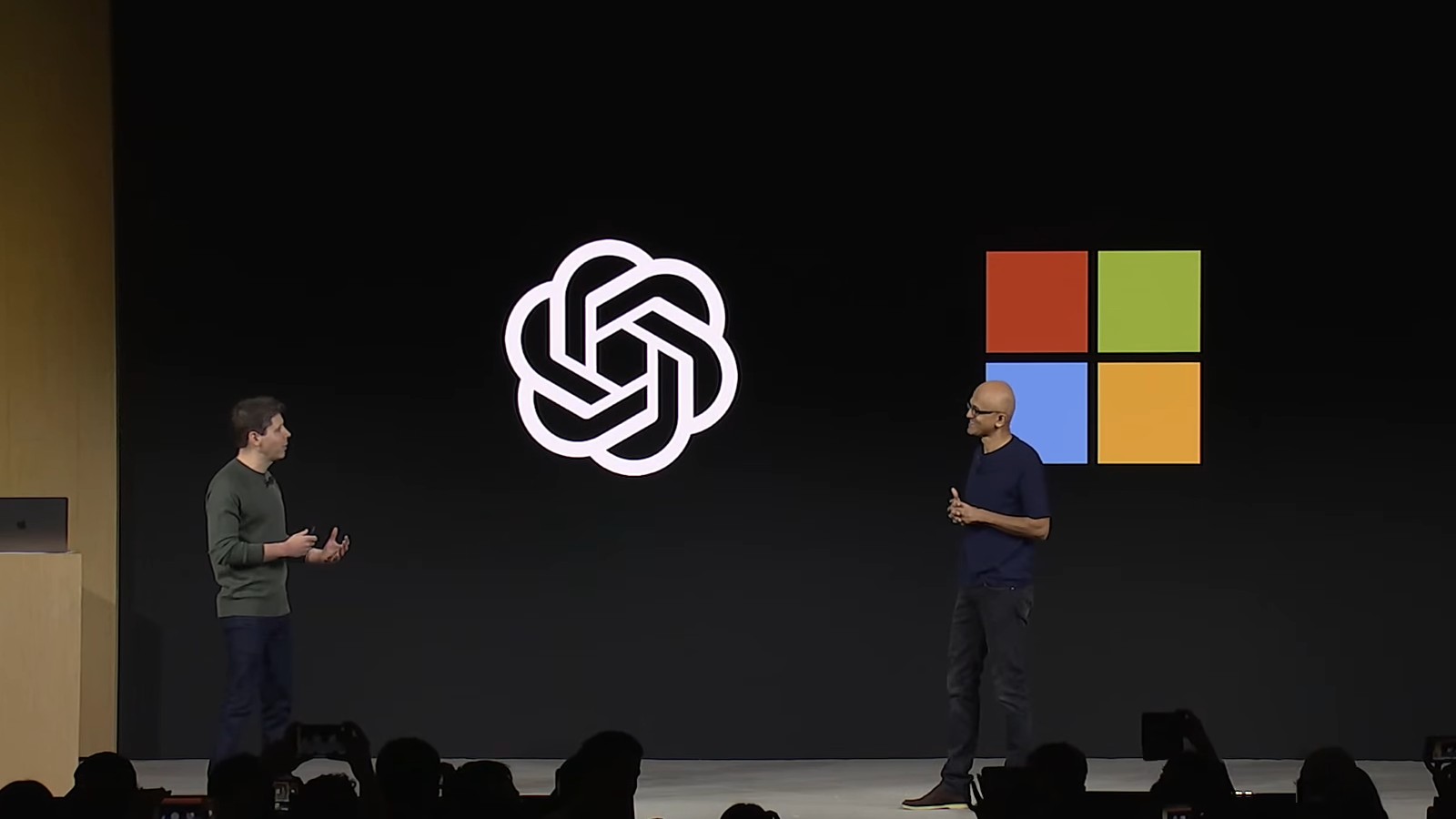
Microsoft is often lauded for backing OpenAI years before ChatGPT catapulted generative AI into the mainstream and sparked the ongoing AI arms race.
But at the time, was the Windows-maker confident it was the right call? How much conviction did Microsoft’s top executives really have in OpenAI? What doubts surfaced behind the scenes? And did the threat of losing ground to cloud rivals such as Amazon ultimately force its hand?
These questions may have likely remained unanswered, if not for the legal battle between Elon Musk and OpenAI. The ongoing civil trial taking place in a US federal courthouse in Oakland, California, United States, stems from Musk’s lawsuit accusing OpenAI of betraying its original nonprofit mission to develop artificial general intelligence (AGI) for the benefit of humanity, by transitioning to a for-profit structure.
Besides changes to its leadership, Musk is seeking $150 billion in damages from OpenAI as well as Microsoft, one of its largest investors.
Even as the trial continues to unfold, court documents released as evidence showed private communications among Microsoft’s top executives, including CEO Satya Nadella, about investing in OpenAI and their fears that the AI startup could “storm off to Amazon” if the deal collapsed.
It offers a rare look into the early days of the partnership between Microsoft and OpenAI, which has increasingly frayed in recent times. In April this year, both companies announced a renegotiated pact that gives OpenAI the flexibility to strike deals with Microsoft’s cloud rivals, namely Amazon Web Services (AWS) and Google Cloud.
A day later, OpenAI announced a deal with AWS to bring its AI models, Codex assistant, and other tools to the cloud giant.
Story continues below this ad
OpenAI CEO Sam Altman said that the company will continue licensing its AI technology to Microsoft through 2032, while the revenue-sharing arrangement between the two will remain in place until 2030.
Notably, the AGI clause was omitted from the new partnership agreement, which comes after OpenAI said last year that an “independent expert panel” would need to declare AGI before Microsoft no longer receives a cut of OpenAI’s revenue.
What do the emails say?
The recently released emails date back to the years before ChatGPT, when OpenAI had just shown that its AI bot could beat a professional Dota 2 gamer in 2017. Following the milestone achievement, Nadella congratulated Altman who responded with a proposal for further investments from Microsoft to fund OpenAI’s next phase of AI research.
In 2016, Microsoft had already given OpenAI a huge discount on Azure computing for the Dota project, in which OpenAI paid Microsoft $10 million for $60 million worth of computing. But in 2017, Altman emailed Nadella and said they needed a lot more to expand the Dota 2 project in order to achieve the new goal of competing in a match with two five-player teams.
Story continues below this ad
“I think it will lead to major new breakthroughs in Al but will require huge amounts of compute, probably something like $300MM at Azure list prices. We could figure out how to fund some of it but not that much,” Altman wrote.
Microsoft’s doubts
The email thread from 2017, which included Nadella, CFO Amy Hood, and a large group of Microsoft executives, showed that many of them were skeptical of further massive investments in OpenAI.
“Overall I can’t tell what research they are doing and how if shared with us it could help us get ahead. From what Elon is telling everyone… he feels Open Al is at verge of some big AGI breakthroughs. I know they are working t o push some NPU designs etc. They clearly are pushing Al at a level none of our first party or third parties are,” Nadella wrote.
Weighing on the discussion, Microsoft CTO Kevin Scott said that he was not sure what Microsoft was “going to get out of [the deal]” and how the Dota efforts would benefit the company.
Story continues below this ad
“I visited OpenAl about a year ago, and was not able to see any immediate breakthrough in AGI,” wrote Harry Shum, another Microsoft executive. “For those numbers to make sense we’d have to be generating significant incremental revenue directly due to the deal ($500 million+) that couldn’t be gained in a more efficient way,” said Jason Zander, who was Microsoft’s Azure chief at the time, wrote in an email to Nadella.
Months later, Altman offered an alternative proposal to “create a partnership with Xbox around gaming, and an open offer to share their technology and IP in exchange for expanded sponsorship for their Dota research,” according to Brett Tanzer, VP of Azure solutions and ecosystem.
Amazon rivalry
If Microsoft’s top leadership felt this way at that time, what changed? How did Microsoft end up betting more heavily on OpenAI? The one word answer appears to be Amazon.
Microsoft CTO Kevin Scott was concerned about OpenAI moving over to Microsoft’s biggest cloud rival. “I guess the other thing to think about here is the PR downside of us not funding them, and having them storm off to Amazon in a huff and shit-talk us and Azure on the way out,” he wrote in a January 2018 email.
Story continues below this ad
“They are building credibility in the AI community very fast, recruiting well, and are going to be an influential voice. All things equal, I’d love to have them be a Microsoft and Azure net promoter. Not sure that alone is worth what they’re asking,” he added.
“My worst case scenario is having them ditch Azure for AWS, as Kevin [Scott] says bad-mouth then land with some big new innovation that is shared with our competition,” Eric Horvitz, another Microsoft executive wrote.
But in 2019, Scott seemed to walk back his comments on OpenAI. He admitted in an email to Nadella and Microsoft cofounder Bill Gates that he had been “highly dismissive” of AI efforts at OpenAI and Google DeepMind when the companies were competing to see who “could achieve the most impressive game-playing stunt.”
A month after Scott’s email, Microsoft announced a $1 billion investment in OpenAI. And after OpenAI released ChatGPT in November 2022, Microsoft ended up investing billions of dollars more.