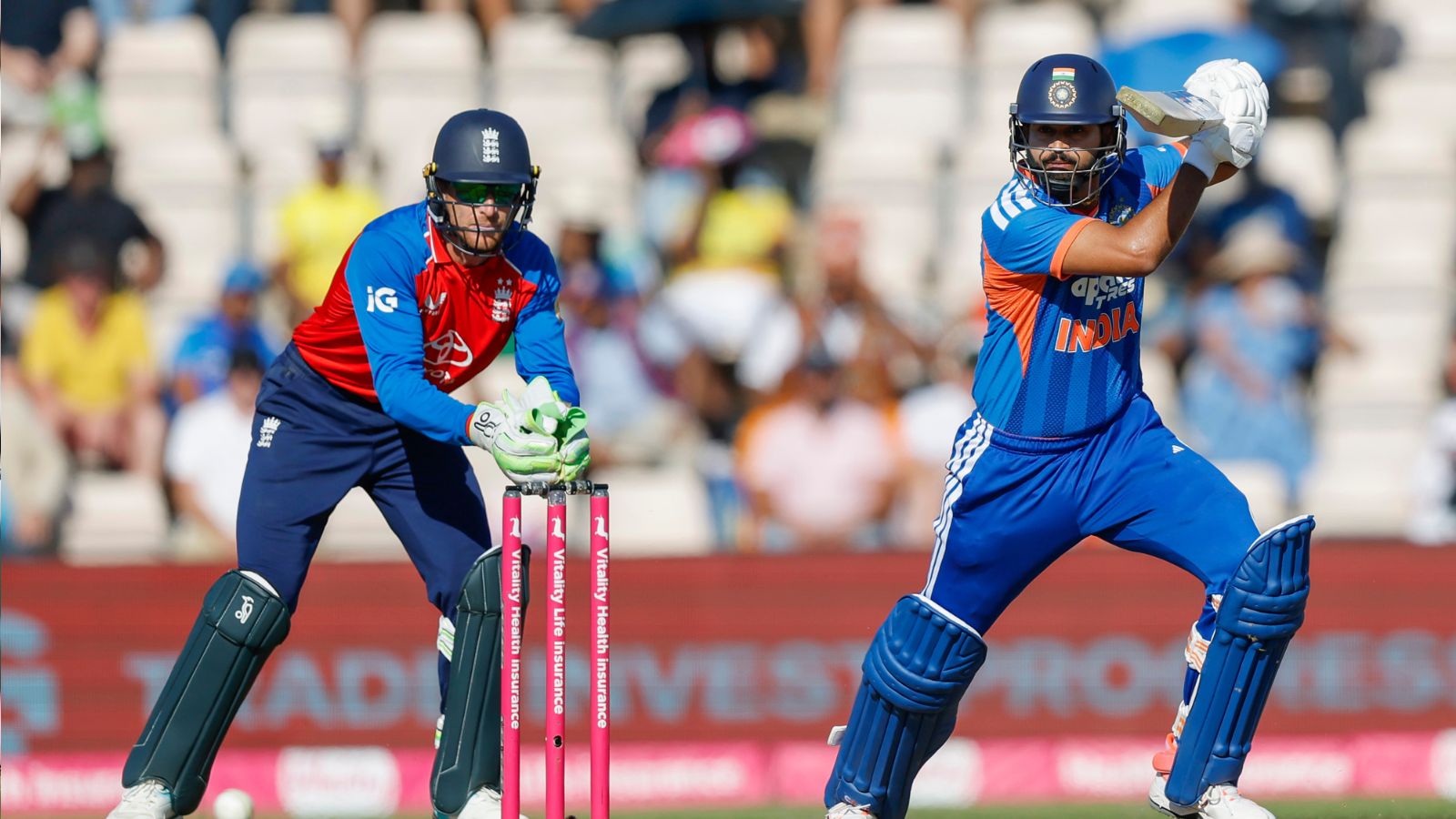
Six defeats and a washout across Shreyas Iyer’s first seven matches as captain. England put the last one beyond doubt in Southampton on Saturday, sweeping the series 4-0, Jos Buttler and Harry Brook adding 233 for the second wicket, the highest second-wicket partnership in T20I history, and taking with it the world No. 1 T20I ranking India had held since 2022. The series is over. What it was actually testing, is not.
Two weeks ago, before a ball was bowled at Durham, the argument was that India’s batting problem wasn’t personnel, it was method. Built entirely around bat speed and boundary hitting, it asks one thing of a batter: commit early, trust the ball to arrive where it’s supposed to. Extra bounce or seam movement punishes exactly that pre-determined committing. Four matches later, the claim holds up, confirmed by a coach who has taught power-hitting technique for years, and by India’s own captain, independently describing the same failure.

Julian Woods, who has worked with T20 batters across several franchise leagues, watched the collapse and diagnosed a refusal to adjust, not a lack of skill. “The key thing playing over here is the bounce. In the IPL, the wickets are very flat, the boundaries are small and the ball sort of sits up waist height. Whereas over here, it is higher than that. One thing the Indians are very good at, is they know how to use the pace, not fight the pace. The impression I got here was that they sort of tried to fight the pace.”
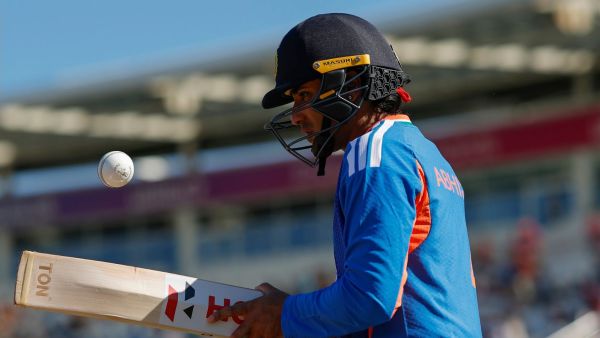 Abhishek Sharma in action. (Deepak Malik / CREIMAS for BCCI)
He is specific about why England punished it. “Someone like Jofra (Archer), (Josh) Tongue, they hit the pitch hard, they run in and almost smash the ball into the pitch. On certain pitches, you can’t play those cross-batted shots.” The stats back it up: England’s pace bowlers took 12 wickets across the five matches specifically by going short, not an isolated tactic but the plan, run again and again because it kept working.
This played out match by match. In Manchester, England introduced spin early to remove Vaibhav Sooryavanshi, and it worked, he was stumped inside five overs, an over-eager charge down the pitch rather than a shot beaten by pace. “He used the pace, didn’t fight against it,” Woods says of the one occasion Sooryavanshi did find the adjustment, working a short ball to third man. “You can’t criticise him, the experienced batsmen should have done this.”
By Bristol, England had widened the trap. Abhishek Sharma and Shivam Dube fell to mis-hits off spin; Tilak Varma and Washington Sundar were both caught off slower-ball bouncers, pace taken off rather than added to. By Southampton, chasing 258, Sanju Samson discovered the same trap from a different angle: recalled to open, he went after Sam Curran’s slower ball expecting more pace, and picked out a fielder.
It wasn’t one method beating India. It was India’s single-gear approach, their only method being tested by several weapons in turn, pace, spin, bounce, the absence of pace, and failing every one of them the same way. Curran nailed the bias after Manchester: “The batters are strong on leg side, Archer was not letting them play there,” he said.
Story continues below this ad
Woods calls it fighting the angle instead of going with it. “You set yourself up to hit the ball straight. If it’s not straight, you go with the angle.” Bowler and coach, working independently, reached the same diagnosis.
Woods also has an example of what doing it right looks like, even though the player in question didn’t feature this series: Rohit Sharma’s pull shot, the technical answer to the exact problem those 12 dismissals describe. “He gets his hands up very high, gets in good positions, extends his hands through the ball… he gets on top of the ball.” Control, not equal force. “Him and Virat (Kohli) know exactly how to play. They’ve toured England before.” The second gear — this order hasn’t built.
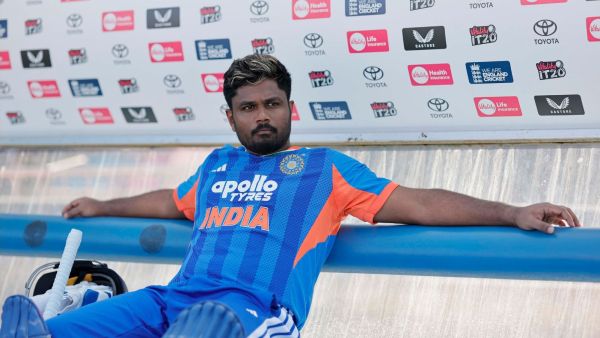 Indian batter Sanju Samson. (Deepak Malik / CREIMAS for BCCI)
The numbers from Bristol show this isn’t about India lacking gears entirely, only how narrowly those gears are shared. Iyer made an unbeaten 80 there, 44 of those runs off Adil Rashid alone, 27.85 percent of India’s total scored off one bowler by one batter; off everyone else, just 36 from 33 balls. When the batting worked at all this series, it was one player finding that range while the rest kept swinging for the shot the IPL rewards and England had already taken away.
“Nobody’s doubting their ability. Nobody’s doubting their talent,” Woods says. “You’ve just got to be a bit smarter when it comes to playing overseas.”
After Southampton, without prompting, without a coach’s technical language, Iyer described the same problem in his own words, at the end of a tour with no matches left to prove it in. “We lost wickets in a cluster. We were going after the chase rather than building partnerships. We have to target bowlers, take time.”
Story continues below this ad
The same sentence, arrived at independently, from the dressing room. India shed one kind of caution in 2023 and became champions playing at only one speed. The question this series was actually asking, and the one the captain answered without being asked directly, is whether the side that built one ferocious gear has any idea yet how to find a second one.