Ebola has haunted the world for decades, but no country has suffered more outbreaks than the Democratic Republic of Congo, which is in the middle of its latest one. There have been 17 Ebola outbreaks there since it was first discovered in the 1970s (and named after a river in the north of the country). But this is one of the deadliest, in part because it was caught late.
My colleague Declan Walsh, our chief Africa correspondent, is in Congo, where he spent time in an Ebola ward watching underequipped health workers trying to treat multiple patients with little outside support. I spoke to him about what he saw.
A race against time in Congo
Declan, you are in the epicenter of this latest Ebola outbreak. Where exactly are you, and what is it like?
I’m in Bunia, the capital of Ituri Province in Congo, and have been reporting in Mongbwalu, a town 50 miles north of here, where the outbreak is believed to have started.
Driving there told us quite a lot about the outbreak. There were soldiers and checkpoints all along the way, a product of the long history of ethnic violence in this area. It’s also a gold-mining area with thousands of migrant workers from other parts of Congo. All of that makes this an ideal launchpad for a virus.
How are locals coping?
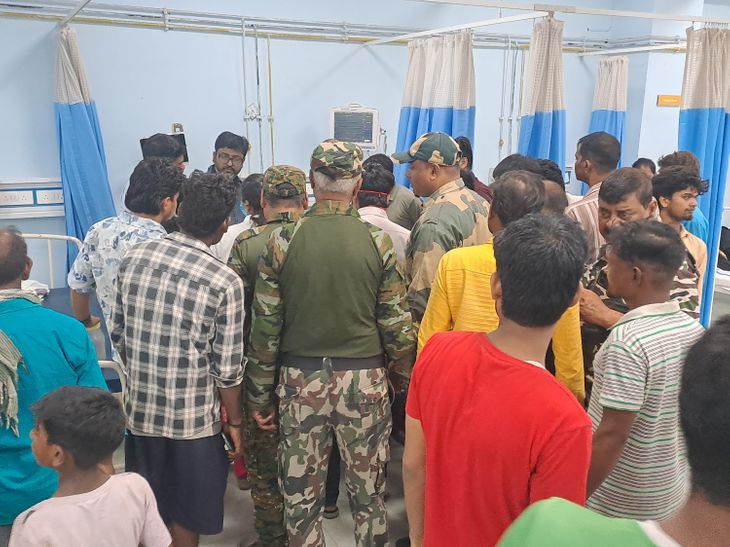
The doctors and health workers do heroic work. But they’re completely swamped. The Ebola ward in Mongbwalu was disturbingly unsecured: people wandering in and out, nobody wearing much protection. They were lacking in all forms of equipment, medicine, basic supplies. And they had almost no testing kits, which are crucial to reducing the spread of the disease.
How bad is this outbreak compared with past ones?
It’s already the third-largest outbreak — and it’s still early days.
Congo has had many Ebola outbreaks, but a few factors make this one different. One is that it is being caused by a different species. The main Ebola virus is known as the Zaire virus, and there are now several vaccines for it. But this virus — the Bundibugyo virus — has no approved vaccine or treatment yet. The mortality rate can be as high as 50 percent.
It was also discovered late. There was an enormous lag between the apparent start of the outbreak, possibly as early as March, and the first identified case on May 15.
We wrote last week that this outbreak was bad but unlikely to spread across the world. Does that remain true?
Yes, according to experts. It’s an extremely serious outbreak here. It has spread into at least two other Congolese provinces, into neighboring Uganda and potentially into South Sudan. But, for now, it has been largely contained within this region. That’s no consolation, of course, to the people who live here and are really struggling.
Fighting this outbreak is not just a matter of money and medicine. It’s also about combating perceptions and customs that are inadvertently helping the virus to spread. Conspiracy theories have been circulating that health workers and foreign nongovernmental organizations somehow conspired to either bring this virus to the area or to use it to kill the population. I cannot tell you the number of conspiracies we’ve heard.
But aren’t people used to Ebola outbreaks by now?
Well, this is a town that escaped the last outbreak, so locals don’t have a common memory of dealing with Ebola. From their perspective, there was this wave of mysterious deaths all through April into early May until Ebola was finally declared.
When people get sick here, they often go first to a traditional healer. That means that by the time they go to the hospital, the illness is at an advanced stage, and they often die within days. People have come to associate the hospital with death, not survival. They see loved ones going in to be treated and then they see coffins coming out.
On top of that, one of the main vectors for transmission has been funerals. People here tend to embrace the dead as they say goodbye. But the body of an Ebola victim is extremely contagious, and so traditional funerals effectively become superspreader events.
How do you stop that from happening?
You have to educate people and convince local communities that it’s in their interest to ensure they bury their loved ones in a safe manner.
What really struck me was that even in this chaotic, dangerous, difficult situation, local volunteers were throwing themselves into the line of fire. These are people who only a week ago were farmers and gold miners and traders. They signed up as volunteers with the Red Cross. They undertook some very hasty training. They were given protective equipment. And since then, they’ve been going into these communities, helping to disinfect bodies and to persuade people to engage in safe burials. It’s incredibly inspiring.
What’s the world doing to help?
The response has been hampered by reductions in international aid, including the closure of U.S.A.I.D. Surveillance systems that were once in place are much reduced. Ebola specialists and international aid groups are starting to flow into the area, bringing their expertise and resources to bear on the problem.
While we were visiting that Ebola ward, Doctors Without Borders was erecting an isolation ward outside and trying to secure the compound so that the people who worked there and the relatives of dead people would not get infected.
But it’s a race against time because this virus has had such a head start.
FASHION EXPERIMENT OF THE DAY
They are the Romeo and Juliet of fashion, our fashion critic Vanessa Friedman writes: forever torn asunder, only to find their way back together. The combo, which dates back to the Roman Empire, has since become associated with unfashionable nerds. But the pendulum may be about to swing back, with one stylist recommending the pairing for a streamlined silhouette.
MORNING READ
The oil-rich Canadian province of Alberta is hurtling toward a referendum that will ask citizens if they want to have a binding referendum to secede.
The mere asking of the question has lit a political fire. One Alberta resident, Steven Lovelace, is not sure if the landlocked province should become its own country. “I love Canada — that’s the hard part,” he said. But he signed a petition demanding a vote on the question anyway. Read more.
Too many potatoes in Europe
For months, the price of a metric ton of potatoes on the spot market in Belgium, the world’s biggest exporter of frozen fries, has languished at precisely zero. One farmer dumped his crop, the equivalent of 200 million frites, back into his fields.
In Germany, a farmer with 4,000 tons of unwanted potatoes arranged a series of giveaways that locals referred to as the “Kartoffel-Flut,” or potato flood.
The glut is the result of several factors, some meteorological and others geopolitical. Among them is the war in Iran, which has made refrigeration and transport more expensive and reduced exports to the Middle East. Read more.
RECOMMENDATIONS
Ogle: The owner of this gorgeous patio house near the beach in Costa Rica “wanted something that looked like a ruin.”
Connect: Grandparents and grandkids both benefit from chats across the generations.
Watch: In “Spider-Noir,” Nicolas Cage plays a mutant in a superhero-film noir mash-up.
Read: The Pulitzer Prize-winning historian Ada Ferrer chronicles her family’s life after the Cuban Revolution in the memoir “Keeper of My Kin.”
Eaten across Turkey, Armenia and Central Asia, manti are typically meat-filled dumplings. This mushroom version is vegetarian and uses the shortcut of wonton wrappers instead of the usual egg and olive oil dough. Serve it with garlicky yogurt and a spiced tomato sauce.