The White Paper is expected to provide a clearer picture of the State’s financial health and help guide future policy decisions.
| Photo Credit: REUTERS
A special committee chaired by retired civil servant and former Vice-Chairperson of Kerala State Planning Board K.M. Chandrasekhar has been entrusted with the task of preparing a White Paper on the State’s finances by the new United Democratic Front (UDF) government, which assumed office on Monday (May 18, 2026).
The special committee will have Additional Chief Secretary (Finance) K.R. Jyothilal as the convener, economist and the former Director of the Gulati Institute of Finance and Taxation D. Narayana, and Professor and Director of the Centre for Development Studies C. Veeramani as members.

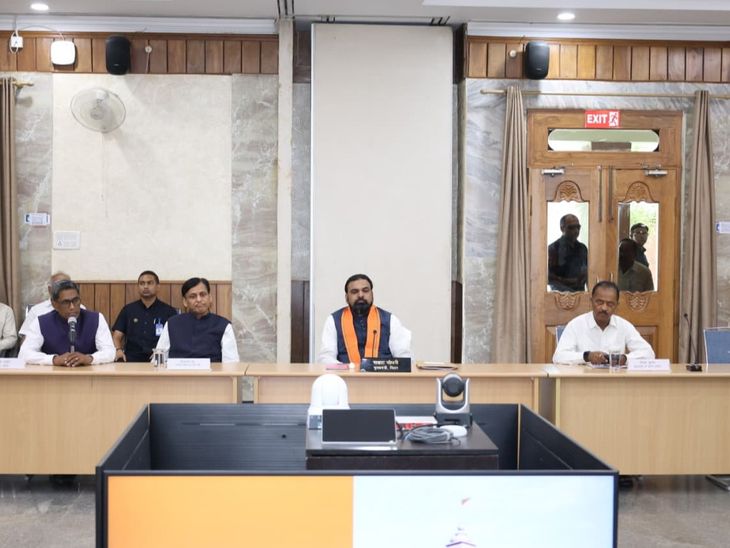
The committee held its first meeting, chaired by Chief Minister V.D. Satheesan on Tuesday (May 19, 2026).
The Chief Minister who convened his first Cabinet meeting on Monday had said the government intended to engage a group of experts to come out with a White Paper on the State’s actual fiscal situation within 10 days.
A White Paper on the State’s finances is meant to explain, in clear terms, how much fiscal room the new government actually has, at a time when people’s expectations are riding high and the welfare pledges or “Indira guarantees” are being watched closely.
This is not the first time that Mr. Satheesan is using a White Paper to make his point about the State’s fiscal health. In 2023, just ahead of the State Budget, Mr. Satheesan as the Leader of the Opposition, had brought out a ‘white paper’ on the State finances to argue that the State was heading into a debt crisis.
Statement on fiscal transparency
Mr. Satheesan had expressly stated that the White Paper would not be a mere technical exercise but that it would be a statement on fiscal transparency and the limits of government spending, especially since the Congress party had announced major welfare initiatives as pre-election promises, for which revenue sources would have to be identified.
Fiscal constraints have been holding up many development initiatives in the State in recent years. Recent Budget analyses had flagged that fiscal and revenue deficit remains significant in the State. The 2026-27 revenue deficit was estimated at ₹34,587 crore and fiscal deficit at 3.40% of GSDP.
Welfare promises
The UDF’s election campaign had been heavily welfare-driven, with promises of higher social security benefits and a higher package of free health insurance. It had also promised free travel for women on the State’s public transport buses, as part of its “Indira guarantees,” which alone poses a significant funding challenge—rough estimates indicate that this measure alone would cost approximately ₹3 crore a day, given that 60% of those travelling on Kerala State Road Transport Corporation (KSRTC) buses are women. A White Paper would show, how far these welfare measures may be fiscally sustainable.
Veteran Congress leader A.K. Antony had pointed out a few days ago how precarious the State’s fiscal situation was right now and that the government may need to announce austerity measures in the initial period, before populist initiatives can take off. The people may have high expectations, but the new government would have to do a balancing act, given the hard choices. The White Paper could be a practical road map on what welfare measures are possible immediately, what may need sequencing and what would have to wait.
Published – May 19, 2026 03:12 pm IST