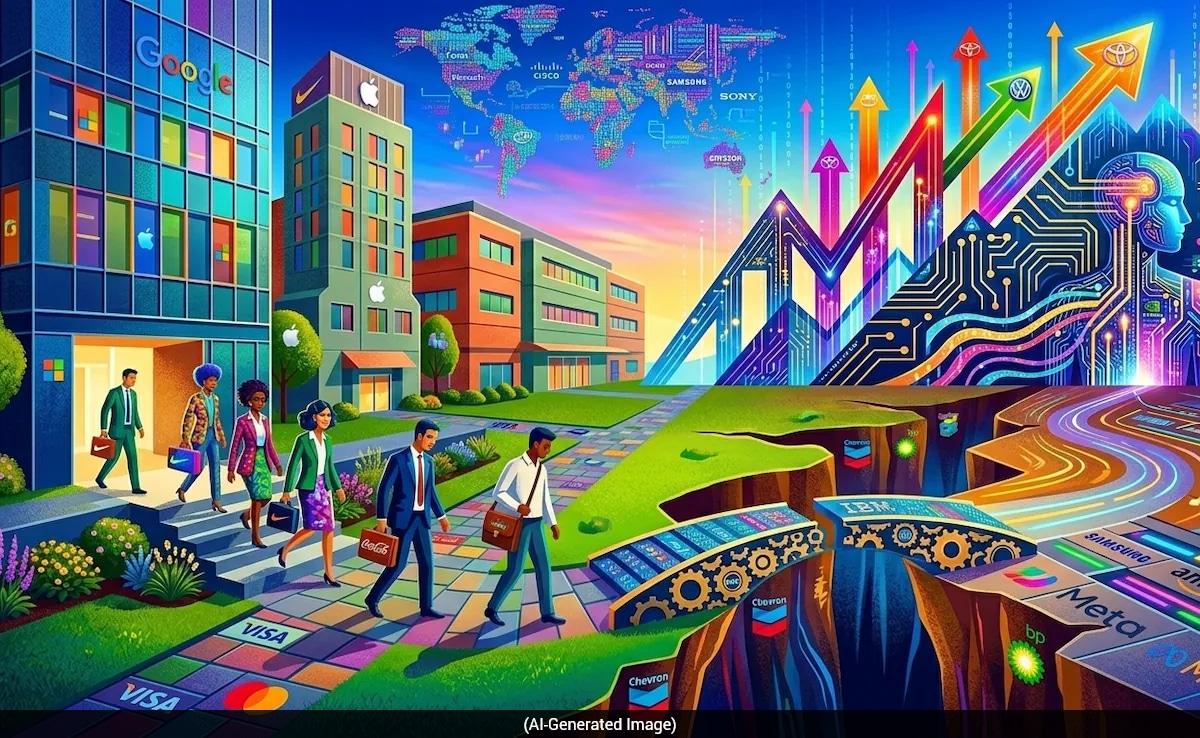
Three of America’s biggest companies have announced plans to cut nearly 25,000 jobs in what experts are calling one of the most significant single-day workforce reductions in recent corporate history. Meta, Microsoft and Nike have each confirmed sweeping redundancies, and whilst the reasons differ on the surface, a common thread runs through all three announcements: artificial intelligence is reshaping the way large businesses operate, and workers are paying the price.
The Numbers Are Hard to Ignore
Meta will cut around 8,000 employees, roughly 10 per cent of its entire workforce, with the process beginning on 20 May. On top of that, the company has quietly shelved plans to fill 6,000 open positions, meaning the true scale of its pullback from human hiring is closer to 14,000 roles.
Microsoft has confirmed voluntary buyouts for approximately 7 per cent of its US staff, covering around 8,750 employees. According to New York Times, Nike, meanwhile, is cutting 1,400 jobs, primarily in its technology division, following 775 redundancies earlier this year.
In a single news cycle, three household names have signalled that their future requires fewer people than their present.
So Why Is Everyone So Unsettled?
On paper, corporate restructuring is nothing new. Companies shed jobs during downturns, mergers and strategic pivots all the time. But this wave feels different to many workers and analysts, and for good reason.
These cuts are not happening because business is bad. Meta remains enormously profitable. Microsoft is spending billions expanding its AI infrastructure. Nike is executing a deliberate growth strategy it has branded “Win Now.” These companies are not cutting jobs because they cannot afford their staff. They are cutting jobs because they believe they will not need them.
Meta has been candid about this. The company acknowledged it trails rivals such as OpenAI and Anthropic in the generative AI race and is redirecting significant resources to close that gap. It has also confirmed it is replacing human content moderators with AI systems, a signal that the automation of white-collar and knowledge-based work is no longer a distant concern but an active corporate policy.
Microsoft’s buyout programme, the first in the company’s 51-year history, arrives precisely as it pours investment into AI-focused data centres. The timing is not coincidental. Even Nike’s technology team reductions reflect a broader shift toward automated supply chain management and leaner digital operations.
The Worry Hiding in Plain Sight
What unsettles workers most is not any single announcement but the pattern they collectively reveal. These are not struggling businesses desperately trimming costs. These are dominant, cash-rich companies choosing to restructure because AI is making certain roles redundant faster than most people anticipated.
For millions of office workers, technology professionals and mid-level managers watching from the sidelines, the question is no longer whether AI will affect their industry. It is how soon, and whether their employer will be as generous with a redundancy package as Microsoft, or as swift as Meta.
The 25,000 people affected this week did not lose their jobs because the economy faltered. They lost them because the companies they worked for decided the future looked different from the present. That distinction is what is making everyone nervous.