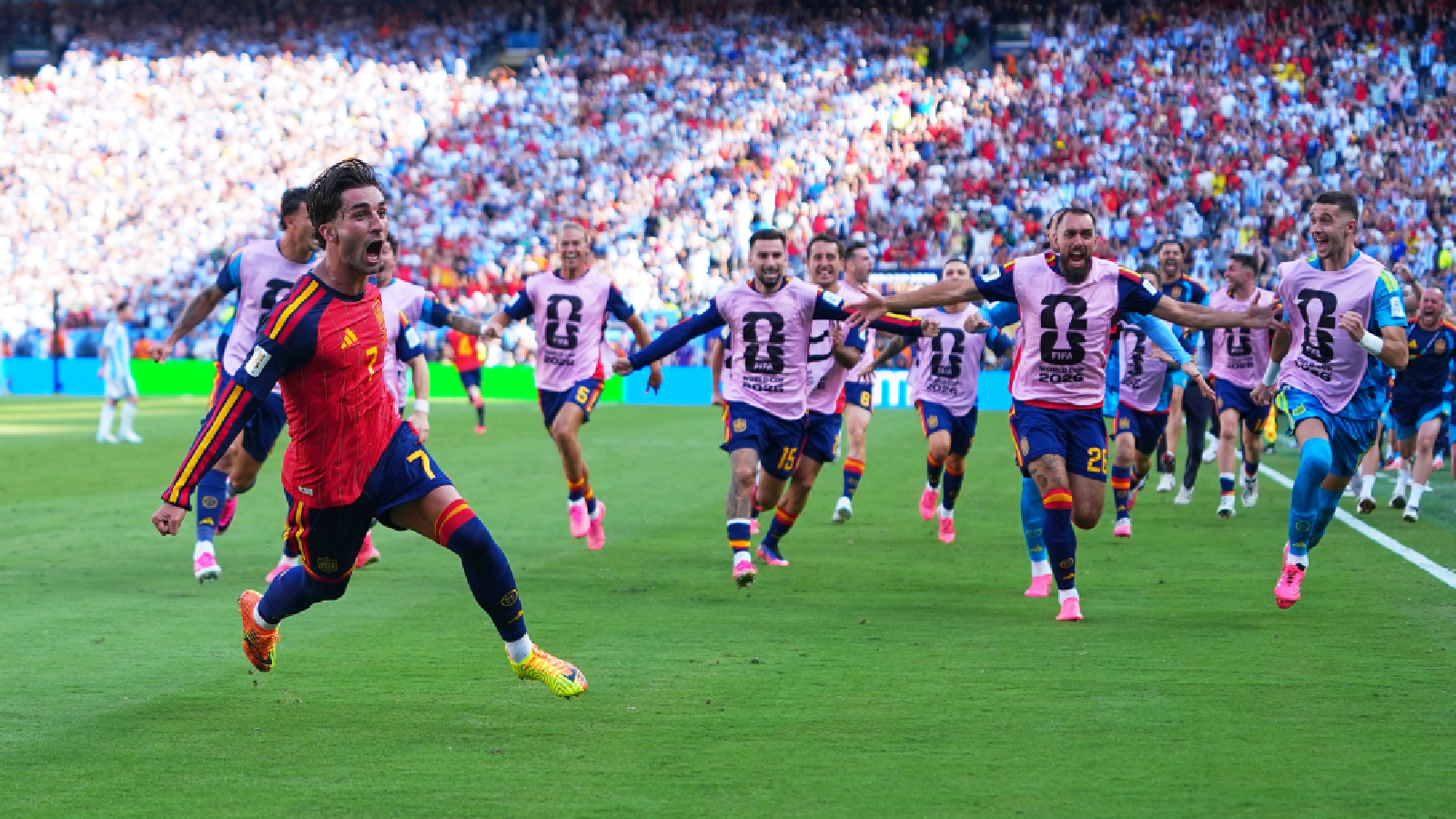
A World Cup hosted by a nation at war with one of the participating countries, in an age of bitter polarisation, ended in warmth and bonhomie. This was football’s quiet triumph over geopolitics. Spain’s tactical masterclass shut Lionel Messi out of the final and ensured Argentina couldn’t pull off yet another jailbreak. In a hard fought, though one-sided game, there was no bitterness between the stars after the final
whistle.
When the teams waited in the tunnel before taking the field, Messi walked up to his Spanish rivals and shook hands. After the match ended, Lamine Yamal did the same. He walked up to the GOAT, held him tight, rubbed his back, conveying his respect and sympathy. One Barcelona legend, another in the making, it was a frame worth many thousand words, an advertisement of what the sport stands for.

Many non-sporting narratives got woven through the tournament but none survived for long. The American government’s dodgy and discriminatory visa policy, the overturning of a red-card given to a home hero by the Donald Trump administration and Iran’s complaint of ill-treatment made it to the headlines but football would soon reclaim the spotlight.
In the lead-up to the World Cup, FIFA was investigating the Spanish federation over anti-Muslim chants. Yamal’s brilliance pushed that controversy into the background. Argentina too got labels — cheaters, FIFA’s pets, arrogant, racist. In the final, they got a contentious red card and played with 10 men. Messi’s artistry, the moments of magic he gave to the World Cup, and his teary face after the loss made it tough to see him as a villain.
But why does football find itself in a non-sporting mess so often? Why can’t it be seen as just a sport?
Football’s strength comes with a strange problem. Its overwhelming global popularity is a boon and something of a curse at the same time. The game has universal presence, it puts on the turf nations that have gone to war and are still nursing old unhealed wounds. Also, no other sport fosters such rich and diverse cross-cultural interaction.
This extremely engaging game also attracts all kinds of commentators — historians, political analysts, sociologists as well as opinion writers who write on football at times. Some of these writers, who might be incisive and impartial in their area of expertise, can’t be detached and get irrationally nationalistic or behave like fanboys when it comes to football.
Every four years, football comes under non-footballing scrutiny, only to be unnecessarily over-interpreted and intellectualised. This complicates a sport whose greatest virtue is its simplicity. Football needs to be left alone. Give it a break, it’s merely a contest between two sides of 11 players, aiming to put the ball in the two cages on either end of the field.
Football’s beauty lies in the skills of its greats. This World Cup had many. Every other day, there was a classic with jaw-dropping spectacle. Messi, Ronaldo, Kylian Mbappe and Erling Haaland — all have different identities and styles of play. What bound them together was the joy they brought to fans and the memory of a lifetime. There were other Cinderella stories that drove away the negativity.
Iran’s football team had expected hostilities when they entered the US. Those fears were not unfounded. The team’s captain was interrogated for hours at the airport. Even when the tournament started, things didn’t improve. Even when they travelled to America for their games, from their base in Mexico, they were mistreated.
Within minutes after the conclusion of their matches, Iran’s footballers would be bundled in cars and driven to the airport. Iranian goalkeeper Alireza Beiranvand, from a sheep-herding nomadic family, had seen many such struggles. When he was teenager, it was the pull of football that made him run away to Tehran with empty pockets.
To be a full time goal guard, he managed part time gigs as a car-washer and pizza shop worker. Against Belgium’s reputed strikers, he would keep the sheet clean. Watching his spectacular saves, America would fall in love with him.
US president Donald Trump’s government, known for his hardline anti-immigrant stand, deported a FIFA-approved Senegalese referee for reasons that weren’t convincing. A feel-good Canadian immigrant story glossed over that unreasonable act.
As a toddler, the Canadian captain Alphonso Davies and his family had to flee Liberia to neighbouring Ghana because of civil unrest that left 50,000 dead. They lived in a tiny tin hut, the size of a minivan. Their life changed when Canada accepted their refugee request. Little Alphonso couldn’t speak English, but the central defender could communicate fluently with his forwards. The language found acceptance in alien land — so much so that they named him captain when Canada got their first chance to host the World Cup. Alphonso repaid their faith, his goal made history. Canada reached the last 16 for the first time because of Alphonso’s goal. Canada got a national hero, he was the one they welcomed with open arms when the rest of the world deserted him.
America’s exorbitant visa fees got them bad press but there emerged a story that was uplifting. The mother of Cape Verde’s goalkeeper Vonzinha couldn’t witness her son’s finest hour from the stands. She couldn’t afford a visa. The $15,000 fee that the US government had imposed on nations like Cape Verde, the countries whose citizens it believed might become illegal immigrants, was too high.
In the monumental draw against eventual champions Spain that the mother missed, Vonzinha was a human wall. Nothing went past him, he saved about 7 possible goals. His mother had been his biggest backer. She worked as a house-cleaner but ensured that Vonzinha got the best training.
After the Spain game, Vonzinha was unhappy. He spoke about missing his mother to the press. The US government intervened. For the next game, the mother was in the stands and focus was back on football. Once again football had prevailed. The more the World Cup drifted away from football, the more the footballers dragged it back.
The writer is National Sports Editor, The Indian Express
sandeep.dwivedi@expressindia.com