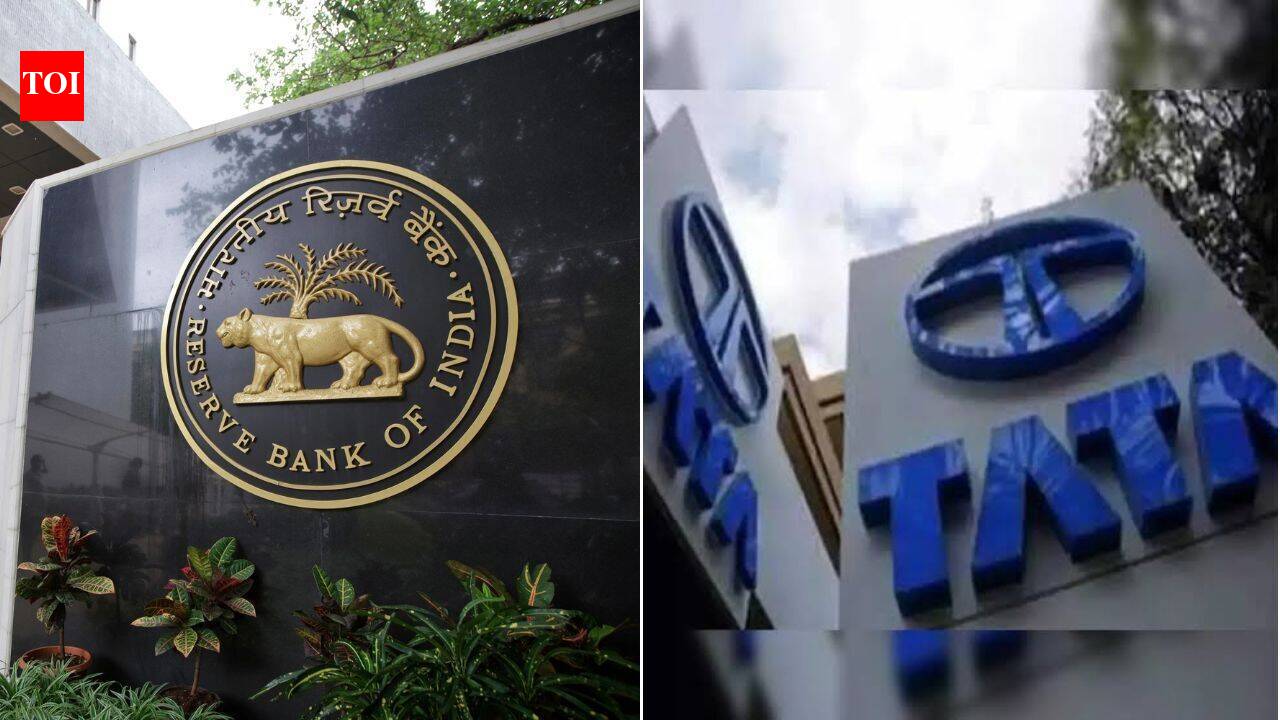
MUMBAI: An update to RBI’s master directions as of July 1, 2026 has tightened rules for non-banking financial companies, effectively blocking Tata Sons’ attempt to exit regulatory oversight and avoid a mandatory listing.In its “Reserve Bank of India (Non-Banking Financial Companies – Registration, Exemptions and Framework for Scale Based Regulation) Directions, 2025”, the central bank introduced key definitional changes that disrupt Tata Sons’ plan to transition into an unlisted, unregulated core investment company. According to the updated document, stricter rules on public funds, overseas investments, and a look-through approach leave little scope for the holding company to exit the scale-based regulation framework.Tata Sons was classified as an upper layer NBFC under RBI’s framework, triggering a mandatory listing requirement. According to paragraph 24 of the document, “The Upper Layer shall consist of NBFCs having asset size of Rs 1,00,000 crore and above as per the latest audited balance sheet for the financial year.” With standalone assets exceeding Rs 1.7 lakh crore, Tata Sons meets this threshold. To avoid a public listing, which key shareholders such as Tata Trusts oppose to retain control, the company repaid its borrowings and applied to surrender its certificate of registration as a CIC.The strategy relied on the definition of a core investment company, which allows an entity to remain unregistered if it holds at least 90% of its net assets in group companies and does not access public funds. After becoming debt-free on its balance sheet, Tata Sons argued it no longer accessed such funds and should be allowed to deregister.The RBI, however, altered this interpretation through a clarification in Chapter I, paragraph 6(18) of the document. It stated, “Explanation: Indirect receipt of public funds means funds received not directly but through associates and Group entities which have access to public funds.” This change expands the definition beyond direct liabilities to include funds routed through group companies.According to this framework, Tata Sons’ linkages with listed group firms such as Tata Steel, Tata Power, and Tata Chemicals bring it within the scope of indirect public funding. These companies access bank loans, debt markets, and equity capital, and their investments in the holding company are treated as indirect public funds. This interpretation invalidates Tata Sons’ claim that it no longer uses public funds and weakens its case for deregistration.The RBI also restricted overseas investment routes for unregistered entities. According to Chapter III, paragraph 38A(9), “Notwithstanding the exemption granted… if an ‘Unregistered Type I NBFC’ intends to undertake overseas investment in financial services sector, it shall be required to be registered with the Reserve Bank… Further, the ‘Unregistered Type I NBFC’ shall not undertake overseas investment in non-financial sector.” These provisions limit the ability of unregistered entities to deploy capital abroad.For Tata Sons, this creates operational constraints. Even if it were to secure unregistered status, it would be barred from investing in overseas non-financial businesses and would require RBI approval for financial sector investments abroad. For a group with global operations, these restrictions reduce the feasibility of operating outside regulatory oversight.The changes indicate that the RBI is tightening supervision by focusing on economic substance rather than legal form. By expanding the definition of public funds and restricting offshore investments, the regulator has effectively kept Tata Sons within the upper layer framework. According to the current rules, unless the RBI grants a specific exemption, the company’s path to deregistration appears blocked, leaving a public listing as the remaining option.