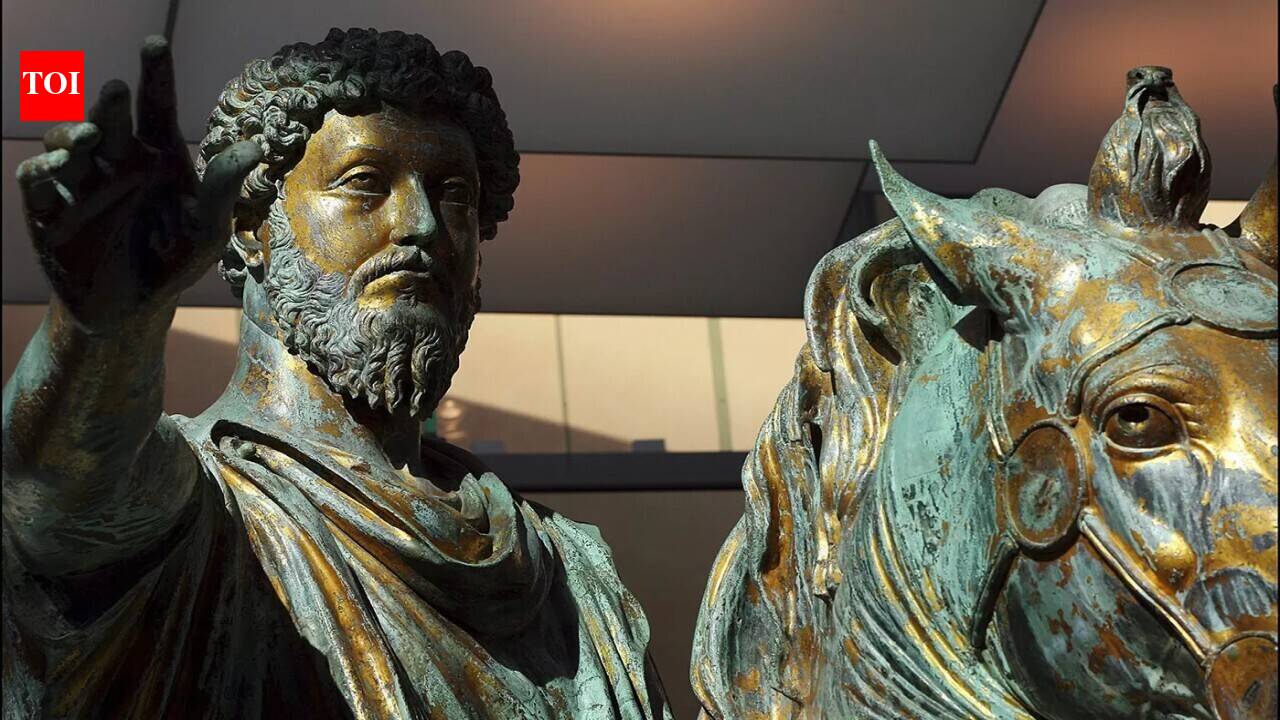
Some of life’s biggest turning points arrive disguised as problems.A rejected application can force someone to reconsider a career. An unexpected failure can expose a weakness that had gone unnoticed. A difficult responsibility can teach a person skills they would never have developed otherwise. The obstacle remains an obstacle, though the experience of dealing with it can alter the direction of a life.Marcus Aurelius captured this idea nearly 2,000 years ago with a sentence that has remained remarkably relevant: “What stands in the way becomes the way.”The Roman emperor and Stoic philosopher wrote the words in Meditations, a collection of private reflections on discipline, responsibility and the difficulties of living well. He was writing during a period filled with war, political pressures and personal loss. His observation came from a philosophy that placed great importance on how a person responds to circumstances.
When the obstacle becomes part of the journey
An obstacle usually attracts attention because it interrupts a plan. Someone preparing for an examination fails to achieve the expected result. An athlete suffers an injury before an important competition. A business idea collapses after months of work. A person loses a job they had expected to keep for years.The first instinct is usually to think about how to get back to the original path. Marcus Aurelius offers another way of looking at the situation. The difficulty itself can become part of the path.A failed examination can reveal gaps in preparation and force a better approach to studying. An injury can teach an athlete patience and introduce forms of training they had previously ignored. Losing a job can push someone towards a profession they had considered too risky to pursue.The obstacle changes the route. This idea appears repeatedly in the stories of people who achieved something after experiencing serious setbacks. Abraham Lincoln lost several elections before eventually becoming president of the United States. Stephen Hawking was diagnosed with motor neurone disease in his early twenties, at a time when doctors expected his life to be drastically shortened. He went on to become one of the world’s most recognised theoretical physicists.Their struggles were not secretly beneficial events waiting to happen. They were difficult experiences. Their significance came from what followed.
The Stoic idea behind the words
Stoicism placed great importance on distinguishing between circumstances and responses. Marcus Aurelius could not control whether armies would win battles, whether illness would strike or whether other people would behave as he hoped. He could examine his own conduct in response to those events.That principle remains useful in ordinary situations. A person cannot control every decision made by a manager, every rejection from an employer or every unexpected change in circumstances. They can decide what to learn from the experience and what to do next. This does not mean pretending that hardship is good. Some events cause lasting damage and deserve to be recognised as painful. The Stoic lesson lies elsewhere. Once an event has happened, fighting its existence does little to change it. Attention can instead move towards the choices that remain available.That shift can change the question a person asks. Instead of wondering why an obstacle appeared, they can ask what the obstacle requires from them. Patience, perhaps. A new skill. A different strategy. More preparation. Sometimes the answer is simply the courage to begin again.
Why the quote still matters
Modern life encourages people to think in terms of uninterrupted progress. Careers are expected to move upwards. Plans are expected to work. Setbacks are treated as interruptions that should be overcome as quickly as possible.Real lives rarely follow such clean paths. A detour can introduce someone to a place they would never have visited. A difficult job can teach skills that later become valuable. A failed project can reveal which ideas deserve another attempt and which ones should be abandoned.The lesson in Marcus Aurelius’ words is therefore less about defeating obstacles than about using them as part of the journey. The road changes when something blocks it. A person changes too.Sometimes the thing that forces us to slow down teaches us patience. Sometimes the closed door sends us towards a different room. Sometimes the problem that seemed to delay progress becomes the experience that makes future progress possible.The obstacle becomes part of the way forward because the person facing it has learned something from having to move through it.