3 min readNew DelhiUpdated: May 14, 2026 05:08 AM IST
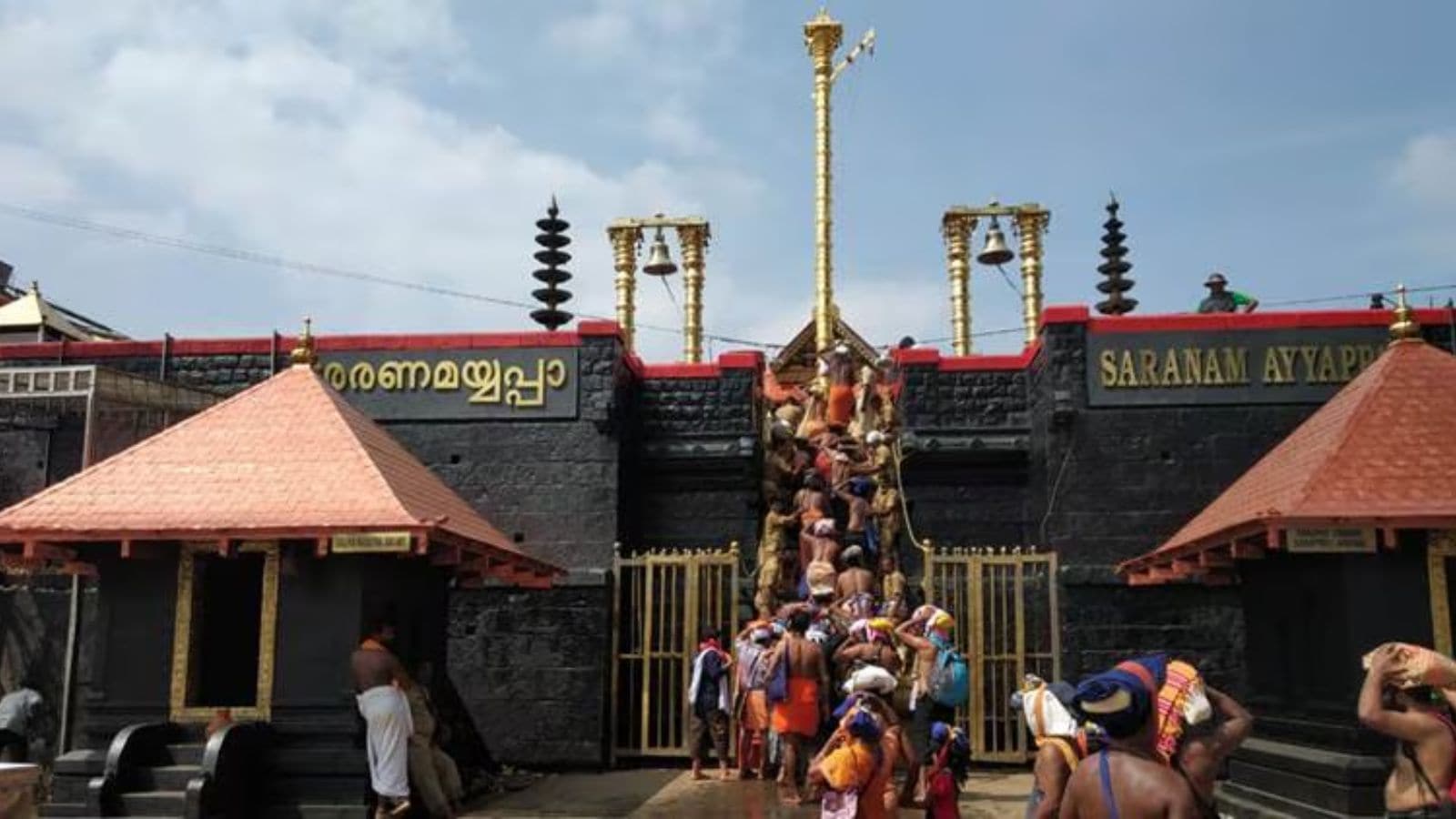
The Constitution “did not create a secular court as the reformatory overlord of the religious traditions of 1.4 billion citizens” and entrusted the mechanism of religious reform to the legislature “to be exercised at the pace at which a democratic society arrives at consensus”, the Centre told the Supreme Court on Wednesday, pitching for denomination status for devotees of the Sabarimala temple deity Lord Ayyappa.
“If courts may reform religion in the absence of legislation, whenever they determine that a practice offends the Constitution, there is, in practice, no limit on the judicial reformation of religious traditions. Every denomination’s internal discipline, every temple’s mode of worship, every faith’s institutional arrangements become permanently available for constitutional challenge. This consequence is not hypothetical; it has occurred in the Sabarimala case,” the Centre stated.

These submissions are part of Solicitor General Tushar Mehta’s rejoinder to the arguments made by parties defending the SC intervention in allowing women to enter the Sabarimala temple.
Mehta, appearing for the Centre before a nine-judge bench hearing the Sabarimala reference, said the Constitution had instead “created fundamental rights on religious freedoms, with a specific and democratic mechanism of reform” vested in the legislature. Courts could intervene when something was contrary to public order, health, or morality, he said, “but not as a part of reform”.
The bench presided by Chief Justice of India Surya Kant and also comprising Justices B V Nagarathna, M M Sundresh, Ahsanuddin Amanullah, Aravind Kumar, A G Masih, Prasanna B Varale, R Mahadevan and Joymalya Bagchi, is considering questions arising from petitions seeking review of the SC’s September 28, 2018, judgment striking down age restrictions on entry of women to the Sabarimala temple in Kerala.
Mehta argued that Article 25(2)(b), which provides for legislation for social welfare and reform, consciously entrusted reform to the legislature, to ensure that “such reform and welfare emanate from a constitutional body reflecting the will of the people”. Reform and welfare measures, he said, “must emanate from within the people to be acceptable and long-lasting”.
During the hearing, Justice Amanullah sought to disagree with the argument and said: “Saying leave it to the legislature may not be tentatively acceptable as it would mean … majoritarianism.”
Story continues below this ad
Mehta said he was only arguing that if a practice is directly challenged, the court will ask those challenging it to go to the legislature, but if a law is challenged, the court must examine it.
CJI Kant also intervened and said that “the question of religious practice has nothing to do with the majoritarian principle or minority principle. Minorities can have their own religious practice, and the majority can have their own. All are protected under Article 25 … We are only examining the extent of that”.
Justice Bagchi also raised questions on the Centre’s stand. “It’s not majoritarianism that the court is bothered about. The court is bothered about majoritarianism trumping constitutionalism. And that is the Lakshman rekha. We are committed to a democracy, which is definitely a test of numbers, but we are also a constitutional democracy. So even if a majority feels that a particular thing is to be done, the courts have that role to test that decision from constitutional principles,” he said.


© The Indian Express Pvt Ltd