The biggest and most explosive issue in the West Bengal Assembly elections this time has been the Special Intensive Revision of voter lists — an exercise the ruling Trinamool Congress alleges is politically motivated. The Opposition BJP and the Commission have denied the allegation and now the question everyone is asking is whether the revision could help topple the three-term government of Mamata Banerjee.
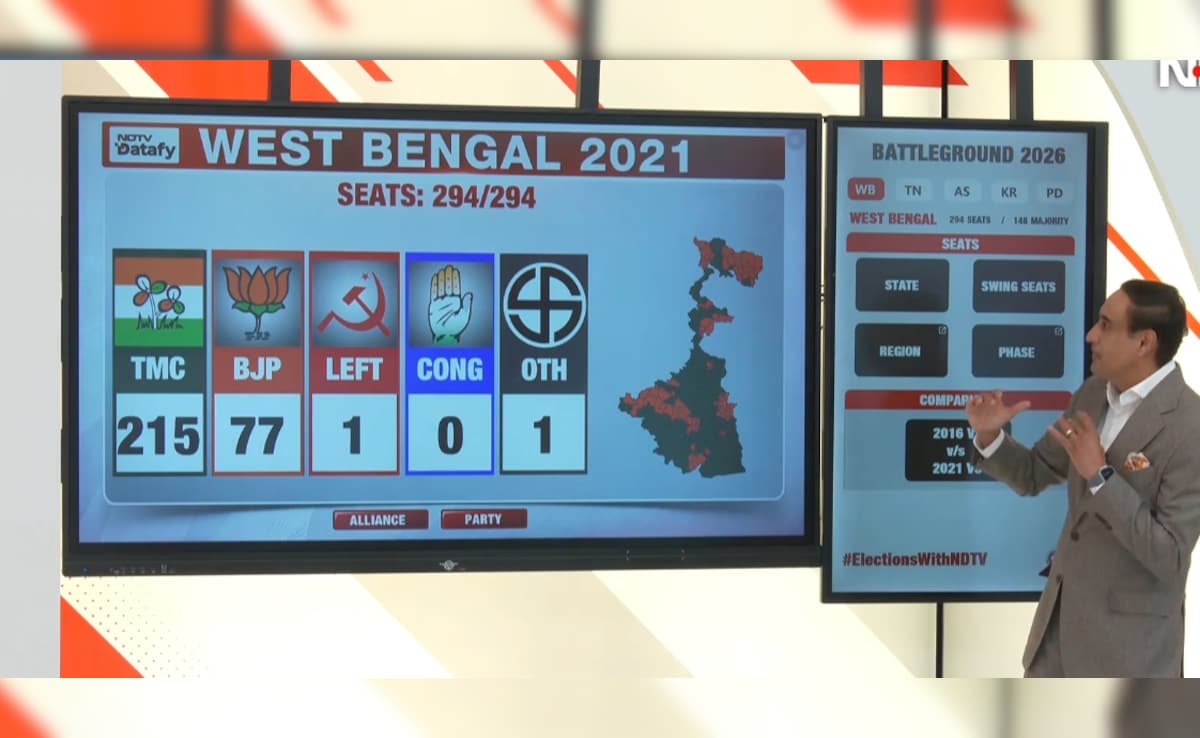
Bengal has 294 assembly seats, and the majority mark stands at 148. In 2021, the Trinamool had won 215 seats to the BJP’s 77. The Left and “Others” had won one each.
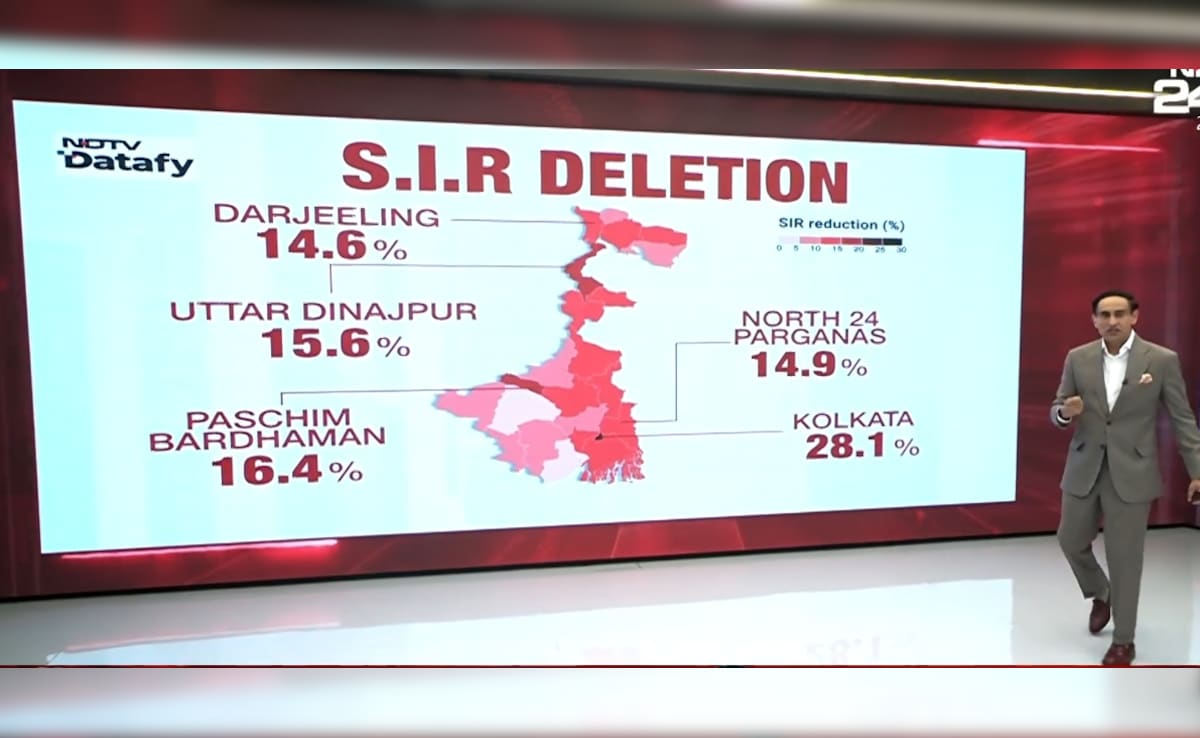
This time, the revision has taken around 89 lakh voters off the list, the number corresponding to roughly 11.6 per cent of the state’s electorate.
The figure is slightly more than the winning margin of the Trinamool Congress in 2021. Banerjee’s party had polled 10 per cent more votes — 48 per cent to the BJP’s 38 per cent.
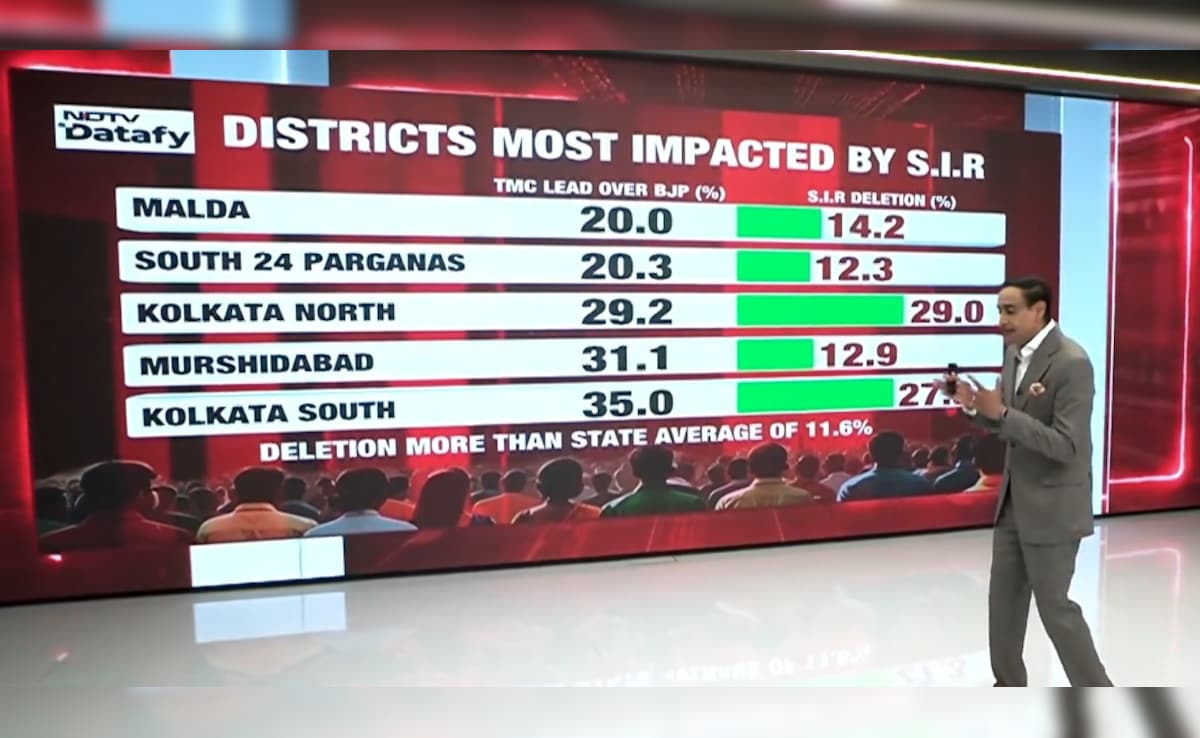
The SIR impact, figures show, have pared down the voter list by more than 11.6 per cent in multiple districts — among them West Burdwan and South Dinajpur, where the Trinamool’s winning margin is slim and North Kolkata, where the deletion is almost as much as the winning margin.
In the districts where largescale voter deletions happened, the Trinamool won 129 of the 156 seats.
Will SIR affect the chances of the ruling party on these seats? This is what the Trinamool has been extremely vocal about and cites as evidence of deliberate tinkering.
A simulation indicates that if all the deleted voters happen to be Trinamool supporters, the BJP could end up with 174 seats. But a little tweaking of the scenario — deleting the seats on which there have been close fights and dialing down anti-incumbency, the BJP appears to gain 129 seats. And a one per cent swing against the Trinamool gives the BJP 160 seats.
Considering that the deleted voters were Trinamool-BJP supporters in a 80:20 ratio and including a 1.5 per cent swing against the ruling party, there would be 54 seats up for grabs. This would give a projection of 128 seats for the BJP. A 3 per cent swing, however, could give the BJP 177 seats and place it in a position to comfortably form government.
In case the political divide is a more conservative 70-30 and the swing against the Trinamool 1.5 per cent, that could give the BJP 116 seats.
So what could be the possible scenario out of these multiple possibilities? This, and other questions were up for discussion between experts and reporters on the ground. Opinions varied widely, with some declaring it to be 2011 re-run with BJP in place of Trinamool. Others declared that the anger within the families where a member was knocked out of the voter list would swing the election in Trinamool’s favour.
Yashwant Deshmukh of C Voter pointed out that in Bihar, the BJP had lost in the districts where SIR had taken the maximum toll. On the other hand, it is also a fact that in most cases, the sitting MLA is not given another term.
Watch LIVE | #TheNumbersGame with @rahulkanwal: SIR and other factors that matter in #BengalElections https://t.co/qAecqeZpcV
— NDTV (@ndtv) April 21, 2026
But there is also the possibility that if the deletion of Muslim voters is huge – and obviously they are not Muslim voters – this can harm the Trinamool in north Bengal and the Muslim-dominated areas, said one of the experts.
Senior journalist Kanchan Gupta pointed that the situation on the grounds points to much anger and disappointment among voters over corruption and law and order. As such, there is considerable anti-incumbency that could play into the hands of the BJP.
As of now, there is no clarity on how many voters have been deleted for each seat and the situation on the ground is fluid.
Bengal votes in two phases on April 23 and April 29. The counting of votes will take place on May 4.