The recent results of recruitment examinations conducted by the Haryana Public Service Commission (HPSC) have sparked a serious debate on the quality of higher education and subject competency among aspiring teachers. The data is deeply troubling.
For 84 posts of college cadre Assistant Professors in Psychology, only three candidates managed to secure the qualifying score of 35 per cent out of 150 marks in the subject knowledge test. Candidates who clear the test then face interviews for final selection. In Mathematics, only 17 candidates qualified against 163 advertised posts. For PGT Computer Science, merely 39 candidates qualified for 1,711 vacancies. In English, 145 candidates cleared the test against 613 posts. Defence Studies saw only five selections against 23 posts, while in Physical Education, only 89 candidates qualified against 126 vacancies.
The situation is even more concerning in reserved categories. In several subjects, Scheduled Caste and Backward Class posts remained vacant because candidates failed to secure even the minimum qualifying marks. In Economics, not a single Scheduled Caste category position could be filled. Similar trends were observed in Botany, Chemistry, and other disciplines.
At a time when major examinations such as NEET UG, NEET PG, and JEE often face allegations of paper leaks, unfair practices, and litigation, one striking aspect of the HPSC examinations stands out: no serious questions have been raised regarding transparency, fairness, favouritism, or cheating in the recruitment process. Instead, the results shift attention to a more fundamental issue – the declining quality of higher education.
Haryana today has nearly 66 universities across the public and private sectors. Yet, if postgraduates and NET-qualified candidates are unable to secure even 35 per cent marks in examinations related to their own subjects, what does this say about standards of teaching, curriculum delivery, academic accountability, and institutional leadership?
The issue goes beyond recruitment for government posts. It touches the very future of education. Candidates who fail to demonstrate minimum subject competence cannot be expected to effectively teach the next generation. Universities, vice-chancellors, regulatory bodies, policymakers, colleges, and faculty members must take responsibility and introspect seriously.
Story continues below this ad
Competitive examinations are undoubtedly tough, but candidates have not complained that questions were outside the syllabus. The real issue is not the examination format; it is the preparedness of candidates and the strength of their academic foundations. Besides this, the overall teaching outcomes of universities in the state are a matter of serious concern.
In the NIRF 2025 rankings, no university from Haryana featured among the top 100 in the overall category, while Jammu and Kashmir secured three positions despite having only 16 universities in total. Meanwhile, several state-run universities in Haryana are grappling with governance concerns, as many vice-chancellors continue into their second or third terms, and nearly half a dozen are reportedly under vigilance inquiry, according to recent press reports.
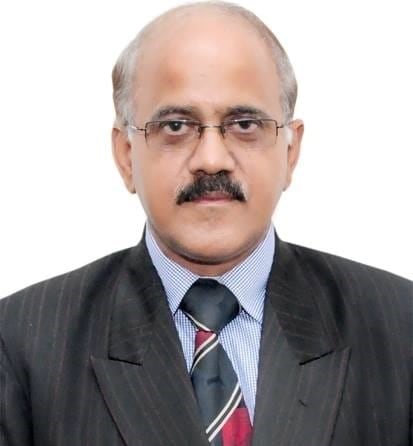 Prof Ashok K Sarial (Photo Credit: Special Arrangement)
This situation demands a statewide and national debate on the quality of higher education, teacher training, recruitment standards, academic accountability, and the competence of institutional leadership. At the same time, the transparent and fair conduct of examinations by the HPSC deserves appreciation. Merit-based selection, free from controversy, is essential for restoring public confidence in recruitment and in the education system itself.
Transparency and meritocracy
The unprecedented success of Haryana Civil Service (HCS) officers in the UPSC Civil Services Examination is further testimony to the transparency and meritocracy of HPSC’s functioning. Recent trends in national civil service selections provide strong evidence that the examination standards, evaluation methods, and screening protocols adopted by HPSC are aligned with the rigorous benchmarks maintained by the UPSC.
Story continues below this ad
For instance, from the HCS 2021 batch, as many as seven officers were selected in the UPSC examination in 2022, while from the 2023 batch, four officers were selected in the 2024 UPSC examination.
Together, these developments underline both the challenges and strengths of Haryana’s recruitment system. While the fairness of examinations appears beyond doubt, the poor performance of candidates exposes a crisis in higher education that demands urgent attention.
(Prof Ashok K Sarial is a former Vice-Chancellor of Himachal Pradesh Agricultural University, Palampur.)