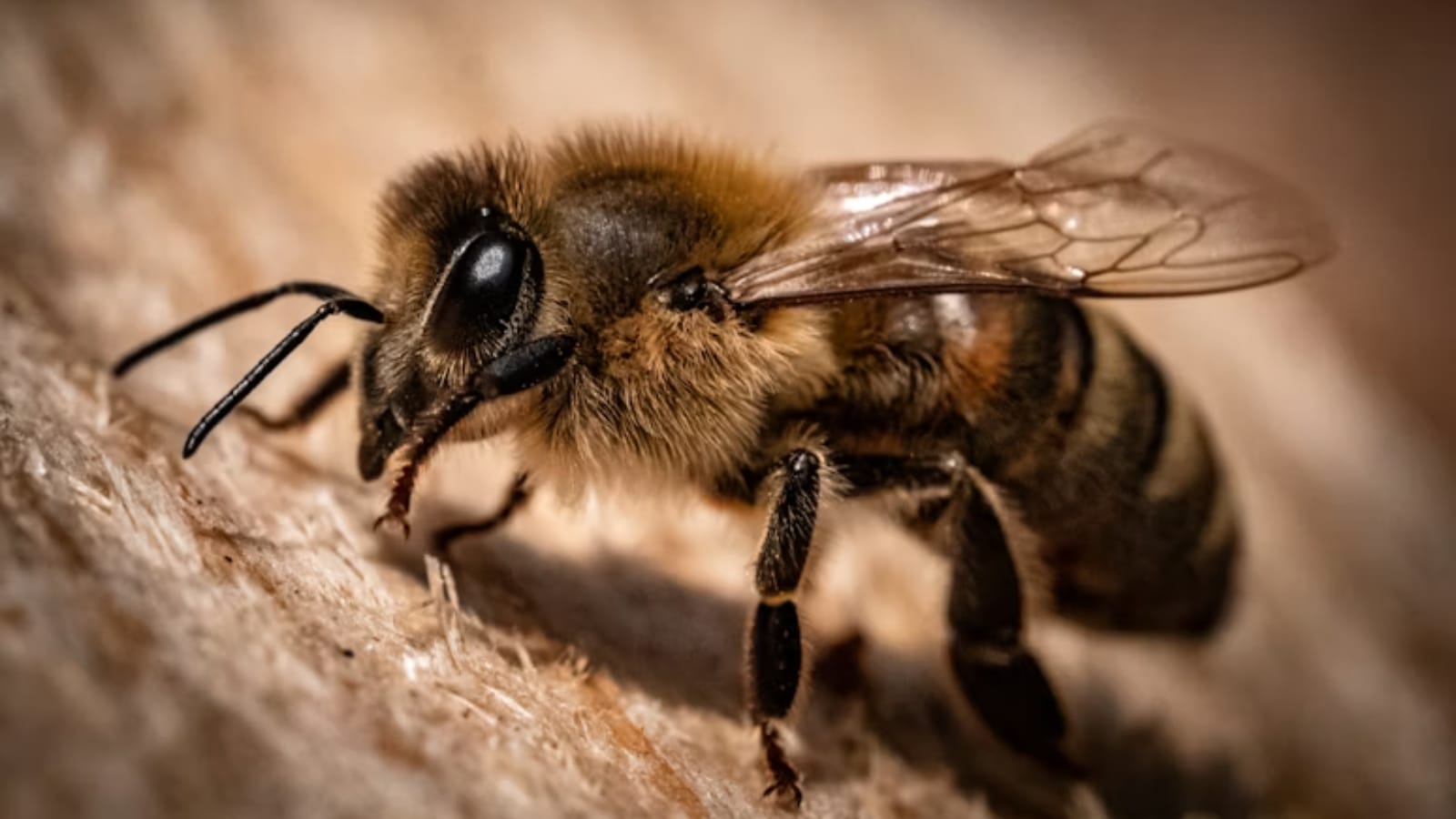
Think about what you ate today. The coriander in your dal. The mango at breakfast. The sunflower oil in the curry. Somewhere between seed and plate, a bee was almost certainly involved – quietly moving pollen from flower to flower, enabling plants to fruit, seed, and grow. The work goes on, often unseen and unthanked.
On May 20, as the world marks World Bee Day, this year’s theme is “Bee Together, for People and the Planet”. It is a call to pause and consider one of nature’s most underappreciated contributors to the food on our plate, and why it is gradually disappearing.

For most of us, bees mean honey, or they mean a sting. What they rarely mean, but should, is food security.
More than honey
Over 75 per cent of the world’s major food crops depend on pollination. And the crops bees service are not the calorie-heavy staples we eat in bulk. Wheat, rice, and potatoes manage fine without them. Bees work on the nutritious end of the food chain – fruits, vegetables, nuts, seeds, oils. The foods we associate with health and variety: mangoes, almonds, tomatoes, and coffee, among others.
A single honeybee is estimated to visit anywhere from 1,000 to up to 7,000 flowers a day. It takes four million flower visits to produce one kilogram of honey. Well-pollinated plants also produce larger, better-shaped, and tastier fruits, because pollination signals to the plant how much energy to invest in its fruit. A misshapen tomato or lopsided apple is often not a farming problem and can be due to pollination issues.
The economic value of this invisible or unaccounted labour, according to the Intergovernmental Science-Policy Platform on Biodiversity and Ecosystem Services, runs between $235 billion and $577 billion globally every year.
India’s quiet deficit
According to a study by Tamil Nadu Agriculture University (TNAU), in India, around 50 million hectares of crops depend on bee pollination. Oilseeds like mustard, sunflower, and safflower; vegetables like onion, cucumber, and carrot; fruits like mango, litchi, and apple – all rely significantly on pollinators. Research shows yield improvements in cotton and apple range between 17 and 44 per cent when pollinator presence increases. Even crops that do not strictly need pollinators tend to benefit from their presence.
Story continues below this ad
Yet, the TNAU study estimated that India required around 150 million bee colonies to service its pollination needs. The country had only 1.2 million as recently as 2014.
Pollination, despite this, barely figures in mainstream agricultural policy. Beekeeping is still largely treated as a rural livelihood activity – not as ecological infrastructure that underpins farming itself.
A farmer under pressure
The threats to bee populations are not new, but they are intensifying. “Monocropping has replaced the mixed, flowering farm landscapes that once gave bees food across seasons,” said Devendra Jani, a Pune-based bee conservationist, adding that pesticide use harms pollinators alongside the pests it targets. Climate change is shifting flowering seasons, pushing bees and blossoms out of sync.
Ecological shifts and habitat fragmentation across the Western Ghats have impacted the behaviour of wild bees, pushing them into nearby urban landscapes, where they are routinely treated as a nuisance.
Story continues below this ad
“Bees are under threat from the combined effects of climate change, intensive pesticide use, and biodiversity loss,” said Dr Kiran Uikey, Director of the Central Bee Research and Training Institute (CBRTI), Pune. “Habitat loss and the declining presence of diverse flowering trees, particularly in cities, are among the urgent concerns today.”
Still recoverable
Unlike the slow collapse of groundwater or decades of soil degradation, pollination deficits can be reversed relatively quickly. Bee populations rebound when habitats improve, and pressure eases. That is the understated message of World Bee Day – the crisis is real, but the window to act is still open.
In Pune, that work is already happening. CBRTI runs training programmes for farmers, urban residents, and communities on sustainable beekeeping. Conservationists like Devendra Jani, Amit Godse, among others, work on awareness – helping people understand that a beehive in a neighbourhood is an ecological asset, not an infestation – and on safely relocating urban colonies back to farms and natural habitats where pollination is needed.
Jani’s advice is practical: reduce pesticide use, leave bee-nesting sites undisturbed, and plant native flowering plants that bloom across different months of the year. FAO echoes this – even a kitchen garden or balcony with native plants can make a small but real difference.
Story continues below this ad
At a policy level, Jani added, “Managed pollination needs to be built into agricultural support frameworks, the way soil health and water policies already are. With India’s push toward natural farming gaining momentum, bees must proactively get the policy attention they deserve.”