The 2026 FIFA World Cup has been an out-of-this-world business success And perhaps, a surprising one. In the lead-up of the event — co-hosted by Canada, Mexico, and the United States — the sentiment was not good. At all. Fans were complaining en masse about the exorbitant ticket prices. Others weren’t happy the United States was hosting, given politics and the fact it’s not a “soccer culture” country.
Welp, none of that mattered whatsoever. Across the board, stadiums are packed to the brim — and ticket prices have actually gone up during the group stage games. Even less marquee matchups like Iran and New Zealand are selling out. This has led to booming TV ratings and gambling revenue that dwarfs anything cricket betting (or other sports) could dream of.
Maybe we shouldn’t be surprised at this massive success, though. This is the FIFA World Cup, after all. It has 96 years of history, and at this point, it’s sort of too big to fail, no matter the price or who’s hosting (Qatar was another controversial choice in 2022).
But for our purposes, is there something cricket can learn about hosting its own World Cup? We’re not saying cricket’s World Cup will ever rival FIFA’s — the history and fanbase are just completely different.
But surely, cricket’s governing body could borrow some lessons from FIFA, right? We think they can, and in this article, we’ll cover a few of those in-depth!
The Scarcity Business Model
The biggest thing FIFA has going for it is simple: you have to wait four years for it.
Naturally, that wait creates anticipation so when the real tournament finally arrives, it just feels bigger. The wait also gives qualifying more weight. It makes the random draw a major event. It turns every match into something that feels like part of a rare global moment.
Cricket does not have that anticipation, despite being a global game enjoyed by billions of people, too. The biggest issue? The ICC has leaned into having major events almost constantly.
In the current cycle, there are T20 World Cups in 2024, 2026, 2028, and 2030, plus 50-over Cricket World Cups in 2027 and 2031. Add in the Champions Trophy and World Test Championship Finals, and global cricket never really goes away.
That sounds good from a content standpoint. More tournaments means more TV inventory that can be sold, more sponsorship windows, and more chances to sell big matchups…. but there is a downside too.
A cricket World Cup just feels less special because there’s seemingly always one happening. The sport just has too many different products fighting for the same “World Cup” feeling. There’s the ODI Cricket World Cup, the T20 World Cup, the Champions Trophy, the World Test Championship Final, and so on. See how this can get quickly confusing to the average fan?
More Matches Are Good
Another area where FIFA was criticized for was expanding the tournament. Gone was the exclusive 32-team format. In was the 48-team format, which critics thought would dilute the games and “special feeling” we mentioned before.
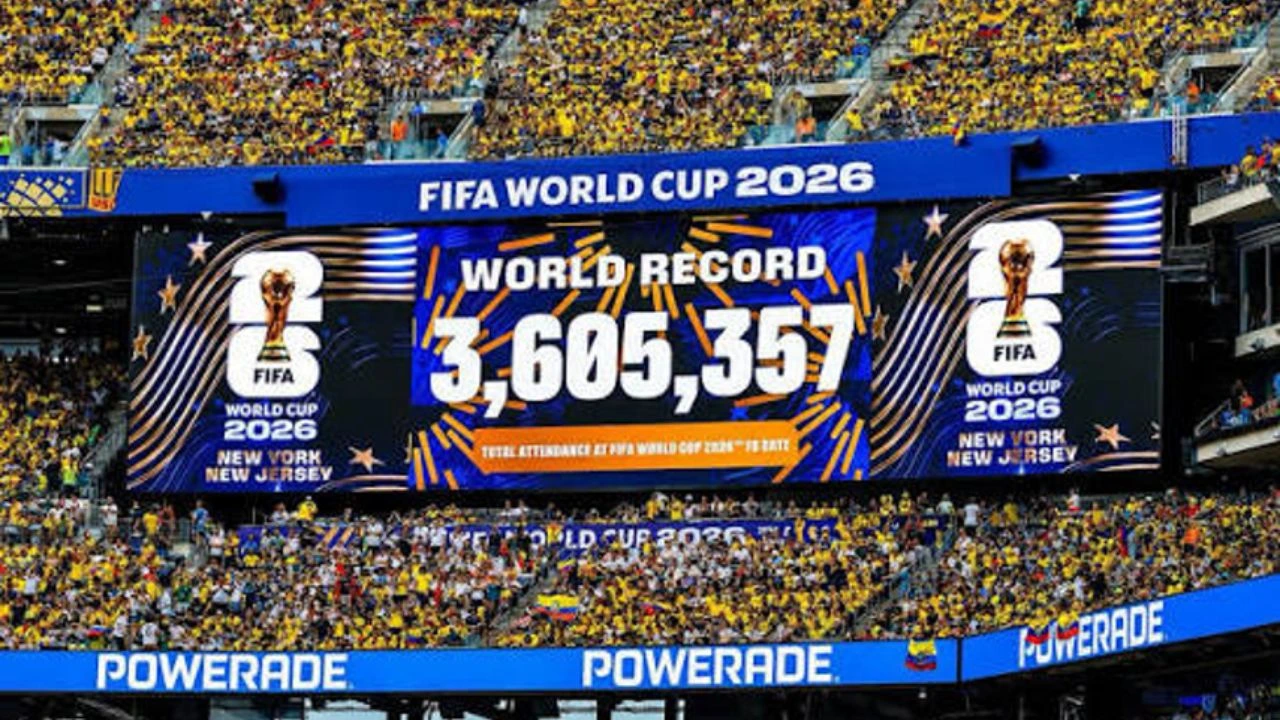
Surprise surprise, the critics were wrong again. The increase in games, a whopping 104 matches now, only skyrocketed the business of the World Cup. As we said, stadiums have been passed no matter who’s on the pitch as everyone wants to be part of the special moment. Reuters reported the 2026 tournament already passed the all-time World Cup attendance record during the knockout round, surpassing the nearly 3.6 million fans from 1994, with stadiums averaging over 99% capacity.
Those are monster numbers. And get this, it didn’t come at the cost of worse games. Sure, there were a few one-sided games (Germany beat Curaçao 7-1), but upsets were very common. And expanding the knockout round has just added more intense moments for fans to latch onto.
Cricket should be taking notice. Expansion is not automatically bad. More teams and more matches can work IF the event still feels premium.
That is where cricket sometimes struggles. A T20 World Cup can be fun, but does every edition feel like a world-shaking event? Not always. The 50-over World Cup has more history, but does it get the same global takeover treatment FIFA creates? Not really.
That is the major, major difference between the two governing sides. FIFA did not just add matches. It made the larger tournament feel like a bigger event.
The Fans Became Part Of The Product

The business success of the 2026 World Cup is not just about what happened inside stadiums. If anything, what’s happening outside is just as big a story.
So much of the FIFA discourse is around the fanbases and their must-see and must-experience tradition. Dutch fans marching through Houston in a wall of orange. Mexican fans embracing South Koreans despite playing one another. Argentina fans traveling city to city like this is a pilgrimage to see their messiah, Messi. Scotland fans drinking Boston dry or alcohol.
FIFA knows how to market its fan culture just as much as the product on the field. It’s one area that cricket could learn a lot from.
That is not just cute fan culture. That is part of what FIFA is selling — the experience of being part of a global moment with thousands of other people. With that pitch, suddenly, spending $2,000 on nosebleed seats starts to feel ok.
We know what you’re thinking, “football is more global. It has more fans to do this.” Maybe, but maybe not.
The rivalry between India and Pakistan can take over any city in the world. England and Australia have the Ashes history. The Caribbean brings a style and atmosphere nobody else can really copy. We’re not saying cricket should match FIFA, all we’re saying is it could do much better than it currently is at these fan moments.
The fan experience cannot just be “show up for the match and go home.” It needs more festivals, more public viewing areas, more citywide events, and more storytelling around traveling supporters — FIFA makes it a point to do all this.
To reiterate, cricket does not need to become football, and the Cricket World Cup does not need to become FIFA’s World Cup. That is not the point. But if the ICC wants its biggest events to feel bigger, it should look at what 2026 has proven. Scarcity, scale, and fan culture matters big time to success. FIFA has mastered it and proven it. Cricket has the ingredients to do the same, but only if it packages the event better, too.