Maharashtra Chief Minister Devendra Fadnavis has announced that the Dharavi Redevelopment Project will be developed on the lines of modern housing projects in Singapore and Hong Kong. The first phase is expected to be completed by March 2028.
Reviewing the project on Monday, Fadnavis said the initiative is aimed at the overall development of Dharavi residents and is not limited to building new homes. The project, being implemented by the Maharashtra government and Adani Group, seeks to transform Dharavi into a modern township.
“The Dharavi Redevelopment Project is not just about constructing buildings. It is an initiative for the holistic development of Dharavi residents, and the people living there must remain at the centre of the project,” he said.
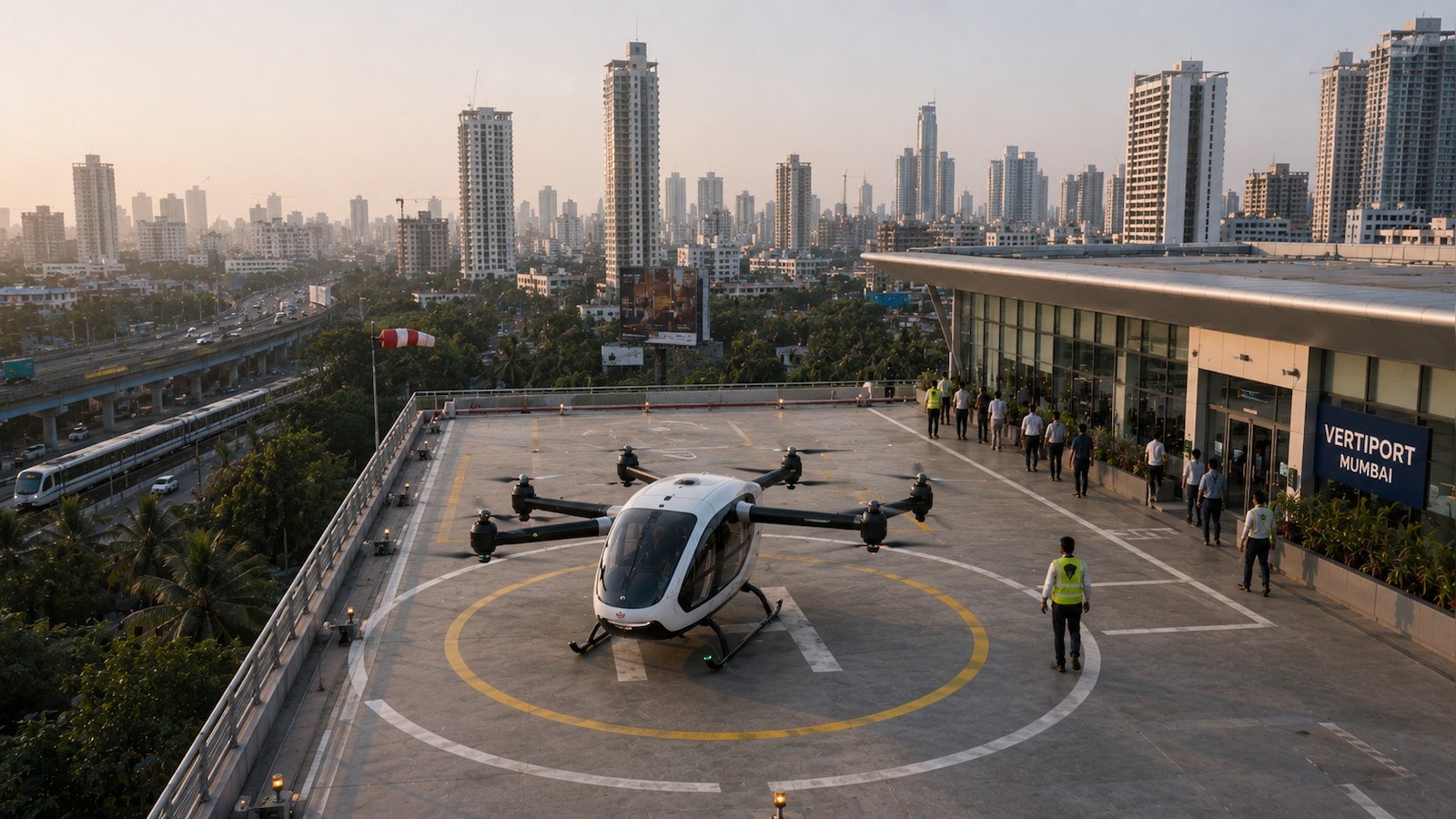
The project will feature India’s first multi-modal transport hub, integrating railway lines, metro corridors and future transport systems. Officials said the project will include a vertiport to support upcoming air taxi services, making Dharavi a key transport centre in Mumbai.
Among other things, plans also include a city check-in facility for airline passengers and a fast jetty for water transport connectivity, etc. Following the announcement, significant buzz has been generated around the project’s futuristic transport infrastructure, particularly the proposed vertiport for air taxi services.
ALSO READ: Rail, Metro, Jetty, Vertiport: Dharavi Redevelopment Puts India’s First Multi-Modal Hub On The Map
What Is A Vertiport?
A vertiport for future air taxi services will be developed as part of the Dharavi Redevelopment Project’s proposed multi-modal transport hub. The hub will connect the Western, Central and Harbour railway lines with multiple metro corridors. As per the plan, future bullet train connectivity is also being explored. A fast jetty for water transport is also being considered. The project aims to bring rail, metro, road, water and air transport under one integrated network.
A vertiport is a facility where future air taxis and other Advanced Air Mobility (AAM) aircraft can take off, land and park. They are designed to connect air transport with existing road, rail and metro networks.
To identify suitable vertiport locations, many factors are considered, NASA explains on its website. These include proximity to public transport, noise levels, land use, zoning regulations and passenger demand.
According to the European Union Aviation Safety Agency (EASA), vertiports can be an area of land or water and can be either at street level or on top of buildings. The key goal is to have these infrastructure easily accessible, with good connecting services to streets, railway stations, buses, etc.
Through vertiports, it is anticipated that electric or highly automated aircraft will help reduce traffic congestion and improve connectivity in cities in the coming years. They will also help reduce emissions.
(Disclaimer: New Delhi Television is a subsidiary of AMG Media Networks Limited, an Adani Group Company.)
Essential Business Intelligence,
Continuous LIVE TV,
Sharp Market Insights,
Practical Personal Finance Advice and
Latest Stories — On NDTV Profit.