6 min readNew DelhiJul 24, 2026 04:01 AM IST
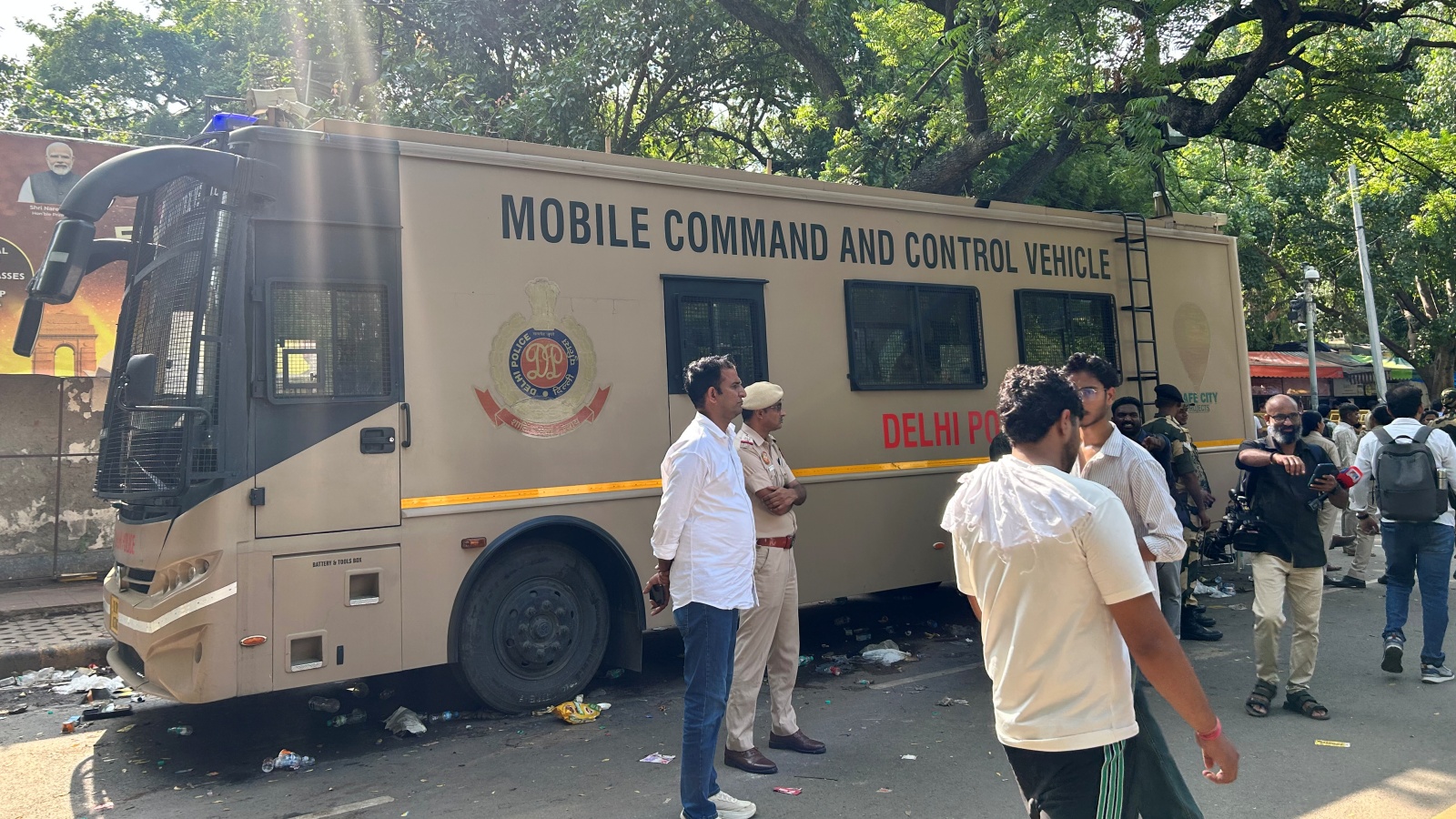
Parked outside the Kerala House building near Jantar Mantar — the heart of the ongoing student protests in the Capital — are two highly-equipped surveillance and monitoring vans deployed by the Delhi Police, keeping a constant watch on people joining the stir.
In the bigger van, called the ‘Mobile Command and Control Vehicle’, some Delhi Police personnel are examining live CCTV footage of people at the protest. Opposite to it is a smaller van, called ‘Ikshana’ (Sanskrit for to look or sight), where two officers stand watch as the footage is run through an Artificial Intelligence (AI)-aided facial recognition software, which shows green boxes around each face as it tries to match it with a police database.

The Delhi Police had inducted the Ikshana van, describing it in a social media post as a “live CCTV surveillance vehicle”, ahead of the G20 Summit in New Delhi in 2023. The vehicle is equipped with eight “state-of-the-art fixed cameras” for 360-degrees field of view, and is manned by trained CCTV operators.
A senior Delhi Police officer confirmed that they were using live facial recognition on protesters at the site, saying it was being done to identify any known criminals.
“We have a large database of criminals, with their pictures. So, we run facial recognition on the footage that is received from the various CCTVs in the area, to see if it flags any face the software matches with someone on our criminal database,” said the officer, requesting anonymity as he was not authorised to speak to the media.
However, students at the protest said the constant surveillance was having an intimidating effect, forcing them to cover their faces for fear of repercussions later in their lives.
“I and my friends have made such amazing posters for the protests. But because of the cameras constantly monitoring and recording us, we are having to cover our faces while holding up our posters. We are all preparing for competitive exams for government jobs, and don’t want to risk getting profiled in police databases,” said a student from Rajasthan who is preparing for the UPSC exam in Delhi.
Story continues below this ad
Another student, who was also covering her face, said: “What if the footage of me sloganeering and holding up posters, that the police are recording, somehow finds its way to my parents? They don’t know I am here because they don’t understand why I need to be here.”
A second senior police officer said there weren’t any specific data retention guidelines that they were adhering to during the protests. “If and when something unruly happens at the protests, it could merit an investigation either today or three months from now. To carry out the probe, the police would need access to footage from the site, even if the protests are over by then. So it is hard to conclusively say how long the videos could be in our systems,” the officer said.
The Delhi Police did not respond to queries on the issue.
The unease protesters are facing over the constant monitoring by the police has also reached the courts. In a petition before the Delhi High Court, former president of the JNU Students’ Union, Aishe Ghosh, has alleged that Delhi Police had subjected the protesters to “continuous, indiscriminate and intrusive surveillance”, including installation of a permanent surveillance tower and blanket deployment of videographers.
Story continues below this ad
The plea argues that such round-the-clock monitoring violates protesters’ fundamental rights to privacy, dignity, free speech and peaceful assembly.
During a hearing in the case on July 20, the Delhi Police, represented by Solicitor General Tushar Mehta, told the High Court that the videography and photography at Jantar Mantar were being carried out solely to maintain law and order and ensure public safety, and “not for surveillance or snooping”. The HC has sought the Centre’s response on the plea and will hear the matter next on Friday.
From a regulatory standpoint, the usage of facial recognition technology on citizens is covered under the Digital Personal Data Protection Act, 2023. The legislation, however, grants wide-ranging exemptions to government agencies — including security forces like the Delhi Police — from adhering to much of the protections the law offers.
Across India, digital surveillance systems are increasingly becoming an integral part of modern policing, with law enforcement agencies deploying networks of CCTV cameras, facial recognition technology, drone-based monitoring, automated number plate recognition systems and AI-powered video analytics. While authorities argue that such tools improve public safety and policing efficiency, their growing use has also raised concerns among civil liberties groups over privacy, proportionality, transparency and the absence of a comprehensive legal framework governing surveillance.
Story continues below this ad
Facial recognition systems analyse a person’s facial features from an image or video, convert them into a unique digital template, and compare that template against images stored in a database. If the similarity score crosses a predefined threshold, the system flags a potential match for further verification. In response to a Right to Information (RTI) request in 2022, the Delhi Police had revealed that it considered a match to be “positive” if its system showed an accuracy rate of 80%.


Stay updated with the latest – Click here to follow us on Instagram