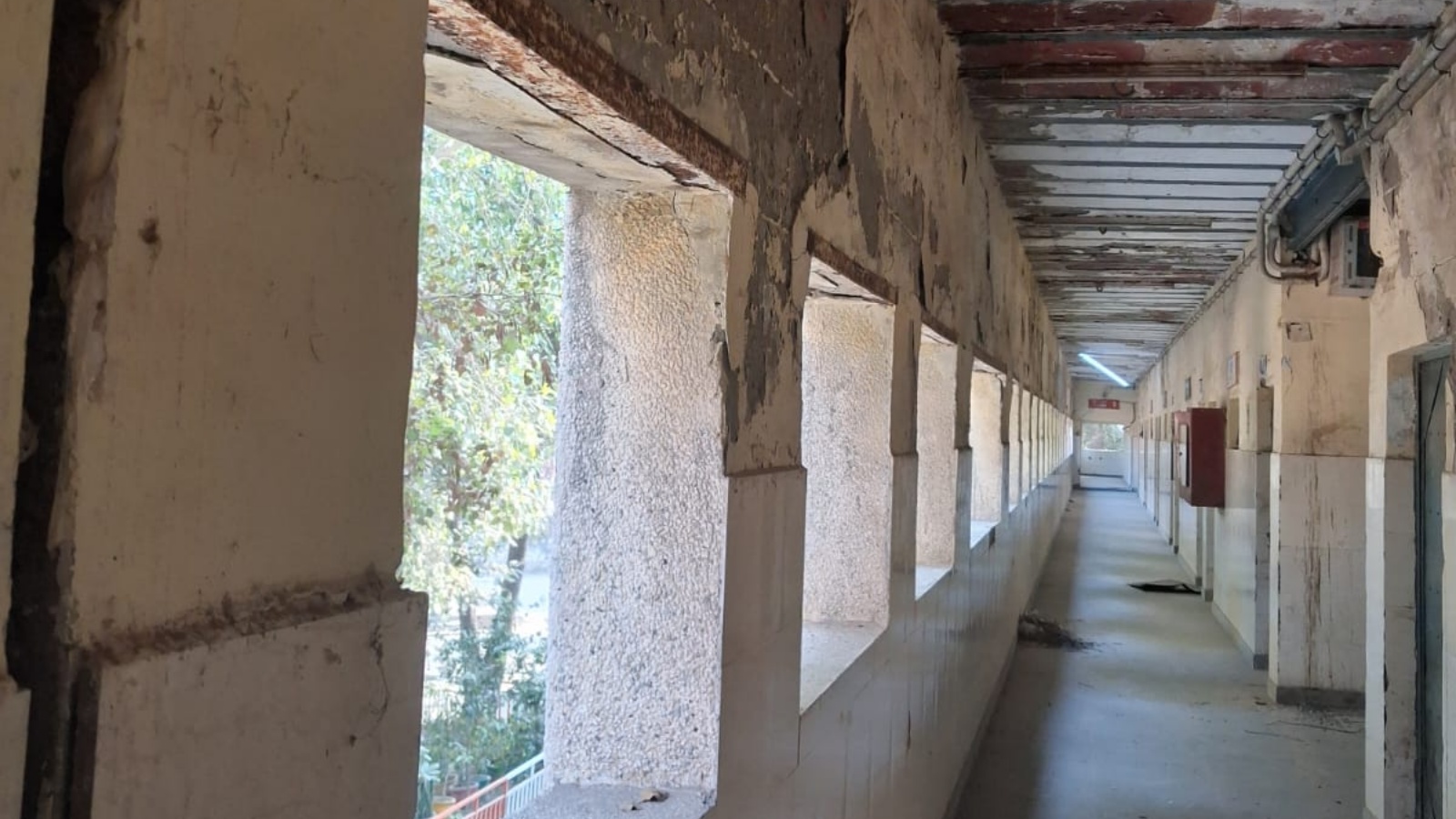
The Delhi government has identified 108 of its school buildings — roughly one-tenth of such schools in the Capital — as “unsafe” and “dangerous”, and ordered structural audits for their demolition and reconstruction.
Of these, 54 school buildings have been found to be in “very poor condition” with cracks in the walls and ceilings. Seven have been approved for demolition, with action expected in the coming months.
The matter was recently discussed in a meeting chaired by Chief Minister Rekha Gupta, officials said, adding that she directed the Education department and the Public Works Department (PWD) to conduct structural audits of all existing school buildings to prevent any untoward incident.
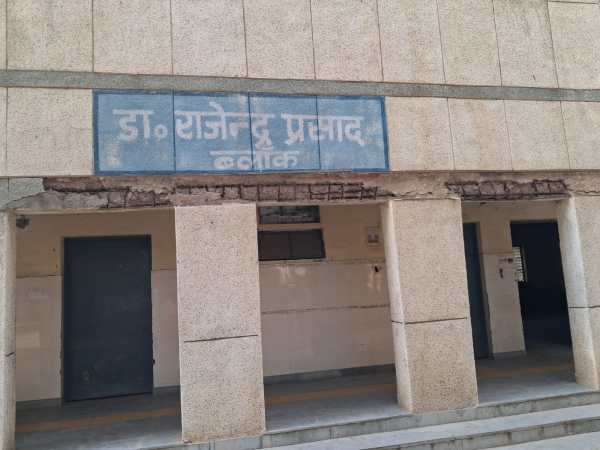 Gupta also visited some of these schools and directed the departments concerned to expedite the audit process, ensure timely removal of unsafe structures and facilitate redevelopment activities, officials said.
Gupta also visited some of these schools and directed the departments concerned to expedite the audit process, ensure timely removal of unsafe structures and facilitate redevelopment activities, officials said.
According to an official document, of the 108 schools, “54 demolition proposals are presently under process/submission for joint inspection for structural audit before demolition, 14 proposals have received for structural audit and survey reports for demolition to be submitted by PWD and seven have been approved for demolition by the Competent Authority, i.e. Lieutenant Governor (LG)”.
The seven school buildings expected to be razed in the coming months are CM SHRI School, Chilla Village; Government Girls Senior Secondary School (GGSSS), Jasola Village; Sarvodya Kanya Vidyala, Karala; Government Boys Senior Secondary School, Baprola; SKV Matiala; GGSSS, Neb Sarai; and GGSSS, Shivaji Park.
According to officials, the Directorate of Education (DoE) is carrying out a comprehensive ‘digital profiling’ of all existing school buildings in the city to assess the structural stability and overall condition of each building, including electrical, plumbing and fire safety systems.
Story continues below this ad
“… in some schools, students and teachers are struggling to sit and study. These are buildings which are very old, constructed about 30-40 years ago. Some of these schools do not even have a proper roof, students are studying under tin roofs, there are cracks in walls and ceilings, and the washrooms and toilets are in poor condition with no proper windows and doors,” said officials.
Officials added that they have found that some schools, constructed three-four years ago, are also suffering “wear and tear”. These buildings were also inspected by PWD engineers.
“Once the audit report and findings are out, we will know when these were last revamped, the current issues, the student-teacher ratio etc,” said officials.
“Before the finalisation of each proposal, the PWD conducts detailed structural audits and prepares cost estimates. Then survey reports are submitted mentioning unsafe or dangerous portions of the buildings that require demolition. Demolition proposals are processed only after obtaining necessary technical recommendations and statutory approvals, including the approval of the LG…,” officials said.
Story continues below this ad
“The repairing and revamping will also be done by the PWD,” an official said.
Officials said the buildings will be removed in phases and that the government is working on a plan to ensure students’ education is not affected. “In the first phase, 54 school buildings will be taken up so that students do not get affected. Students might be shifted to nearby schools or the demolition will be carried out block-wise and at night,” said a senior official.
The profiling also includes evaluation of the accessibility features of school premises in accordance with universal accessibility standards to ensure an inclusive learning environment for all students, including children with disabilities.
Besides, officials said, the government is developing a digital database through the digital profiling exercise. It will “provide a robust foundation for evidence-based planning and decision making. It will support the preparation of futuristic infrastructure development plans, enable optimal allocation of resources, prioritize renovation and redevelopment works, and facilitate the creation of world-class, safe, sustainable, technologically enabled and accessible educational infrastructure across all schools”, the official document said.
Story continues below this ad
Following the demolition, the DoE will construct modern, earthquake-resistant and permanent (G+4) school buildings. “In addition to redevelopment projects, proposals have also been initiated for the construction of G+4 permanent school buildings on 27 vacant land parcels available under the DoE. These projects are expected to substantially increase classroom availability, reduce overcrowding, improve the Student-Classroom Ratio and provide better educational facilities for students across Delhi,” the document said.
As per the Delhi Economic Survey 2025-26, there are 5,556 recognised schools in the city with an enrolment of around 44.91 lakh students. The Capital has a total of 1,270 government and government-aided schools under the DoE, accounting for 22.85% of all schools in Delhi. However, these schools accounted for 39.75% of the total enrolment recorded during 2024-25.