Roosevelt Avenue in Jackson Heights, Queens, has been flying the tricolor since the squad announcement. The bakeries, the bars, the faces painted yellow. They had crossed oceans to watch this team. On Thursday, for the first time, the ocean had come to them.
Nilson Angulo is 23. He was born in Quinindé, in Esmeraldas province, a coastal town of oil palm and red earth. He grew up running on the Malecón del Río, the riverbank track where the ball bounced unpredictably off the dirt and you learned to adjust or you went home. José Cabezas, one of his early coaches, told the Ecuadorian newspaper Expreso that he remembered Angulo arriving at six: skinny, restless, with the need to kick everything.
When he was eight years old, a truck hit him. Broken jaw, broken leg, hospital, cast. His mother, Dora Ramírez, told Expreso that even then he would climb out of the bed to kick a ball. He could not stay still.
Growing up, his childhood wasn’t easy. If not for football, he could have easily drifted away. “In a way, I grew up in a neighborhood where everyone knows and helps one another, but as a young guy, you can easily end up on the wrong path. The truth is that many of my childhood friends made bad choices — I saw it with my own eyes — and many of them are dead now. I was lucky enough to choose the right path. Football gave me a way to help my family. That’s also why I’m loved back home,” he told Niewsbald.
As a teenager, when the career first took him to Belgium, he would call home and tell Dora he wanted to come back. She still remembers the early-morning calls, his voice from Anderlecht. “He cried and told me he wanted to come home.”
Dora’s visa for this World Cup was denied the first time she applied. She did not give up. On Thursday she had made it to the United States. Back in Quinindé, neighbours sat on motorbikes outside their houses and waited.
Ecuador entered the match with zero goals in two games. In 1930 and 1950, Bolivia finished their entire World Cup campaigns without scoring. Ecuador had been edging toward that company. Germany, already through, four-time world champions, eleven consecutive wins. Win, and Ecuador might survive. Anything else, and they were done.
Story continues below this ad
The second minute had not been kind. Leroy Sané side-footed past Galíndez. Germany 1-0. The Ecuadorian end of the stadium absorbed it. They had learned, in two weeks, how to absorb things.
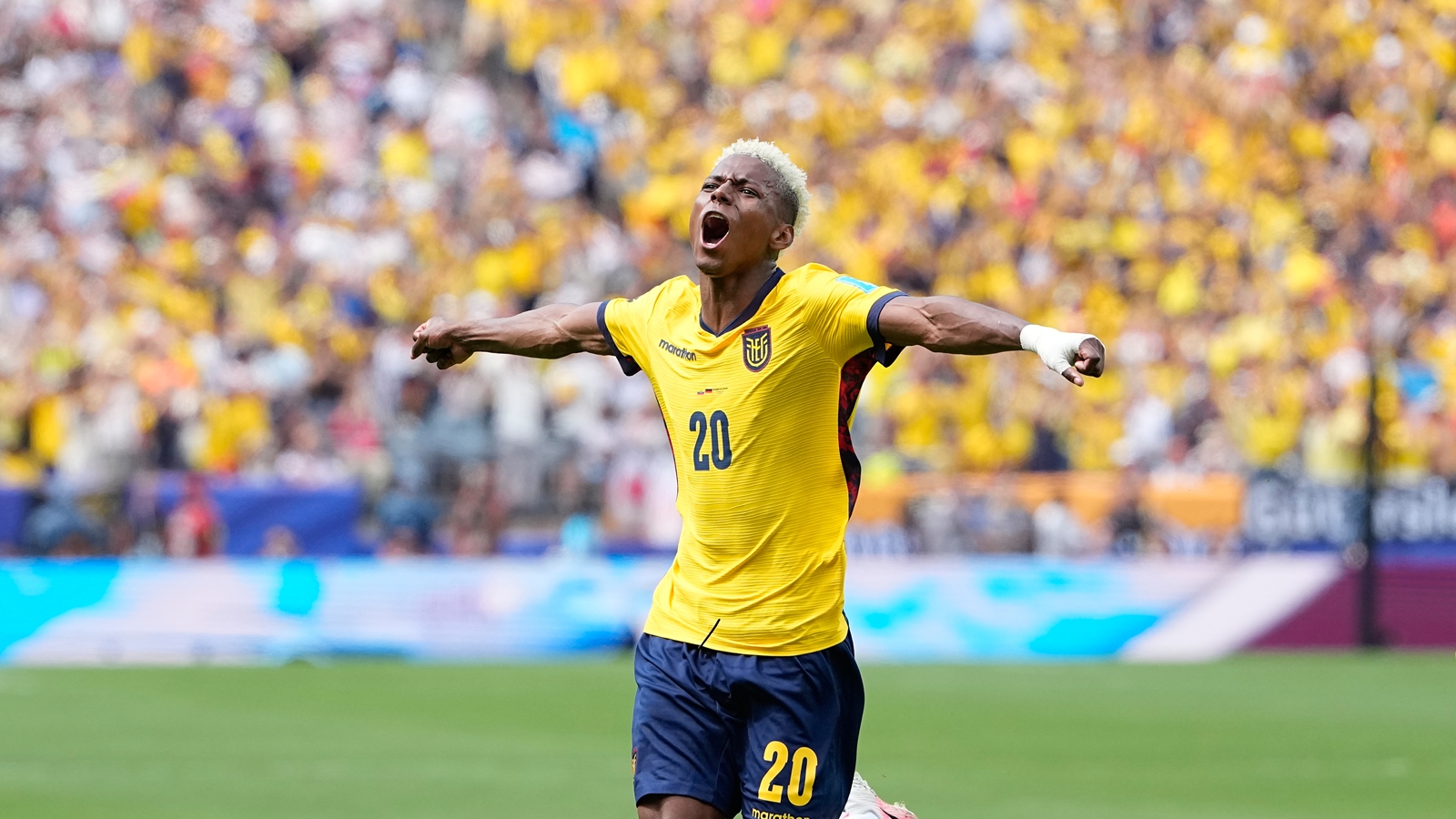
In the ninth minute, Pedro Vite stole the ball in the German half and played it wide. Nilson Angulo received it with space. Twenty-six yards out, he pulled the trigger: a right-footed strike threaded between the legs of Aleksandar Pavlovic, who was closing in. Manuel Neuer, playing his fifth World Cup at 40, got nothing on it.
In Quinindé, on the Malecón and in the side streets, nobody moved for a second. Long enough to confirm it was real. Then came the roar.
Germany thought they had a penalty early in the second half. VAR overturned it: Sané had fouled Vite in the build-up. The same people who had gone quiet made a sound MetLife has probably not heard before. From that point Ecuador pressed. Enner Valencia had a fierce effort beaten away. Moises Caicedo found Gonzalo Plata at the far post. The effort dropped wide. The clock ran.
Story continues below this ad
“The difference was today that the opponent wanted to win more than us,” said Joshua Kimmich. “You could really feel it, especially in the second half. This is why they won today, really deserved.”
The 77th minute. A corner, a headed flick-on, Gonzalo Plata at the near post. Neuer was slow. Plata poked it in. Drinks flew into the air. Manager Sebastian Beccacece, booed before kickoff by some of the same fans now in ecstasy around him, found his wife and daughters on the edge of the technical area and held them.
“Life is different now,” Plata said. “We suffered a lot. We suffered too much in the first two matches.”
Seven minutes of stoppage time. Germany had chances. It didn’t matter.
E-cua-dor. E-cua-dor. Sí se puede.
Story continues below this ad
Ecuador went through as one of the eight best third-placed teams, their first knockout appearance since 2006, only the second time in their history. At the press conference, Beccacece said: “For as long as we are still alive, we need to seek the light.”
After it all, Angulo stood with a microphone and thought about home. “I can’t imagine what it’s like back there. At the very least they’ll be dancing salsa.”
Expreso reporter Luis Cheme visited Dora Ramírez’s house in the barrio Central before the tournament. When you cross the threshold, the first thing you hear is Los Van Van playing. The walls hold Angulo’s medals from Cabecitas FC, school diplomas, framed goals, jerseys from Liga de Quito and Belgium. And one she keeps with particular care: the shirt he wore against Brazil.
On Thursday she was not in Quinindé.