The Supreme Court’s latest indictment of Rajasthan, Madhya Pradesh and Uttar Pradesh over illegal sand mining in and around the inter-state National Chambal Gharial Sanctuary reflects years of judicial frustration with persistent administrative apathy, leading to an environmental and governance crisis.
The apex court, which took suo motu cognizance of the matter in March, was particularly harsh on Rajasthan in its May 26 order, slamming its “wholly casual, indifferent and indolent” conduct, and rebuking the state administration for demonstrating “persistent inaction” and a “disturbing lack of seriousness”.
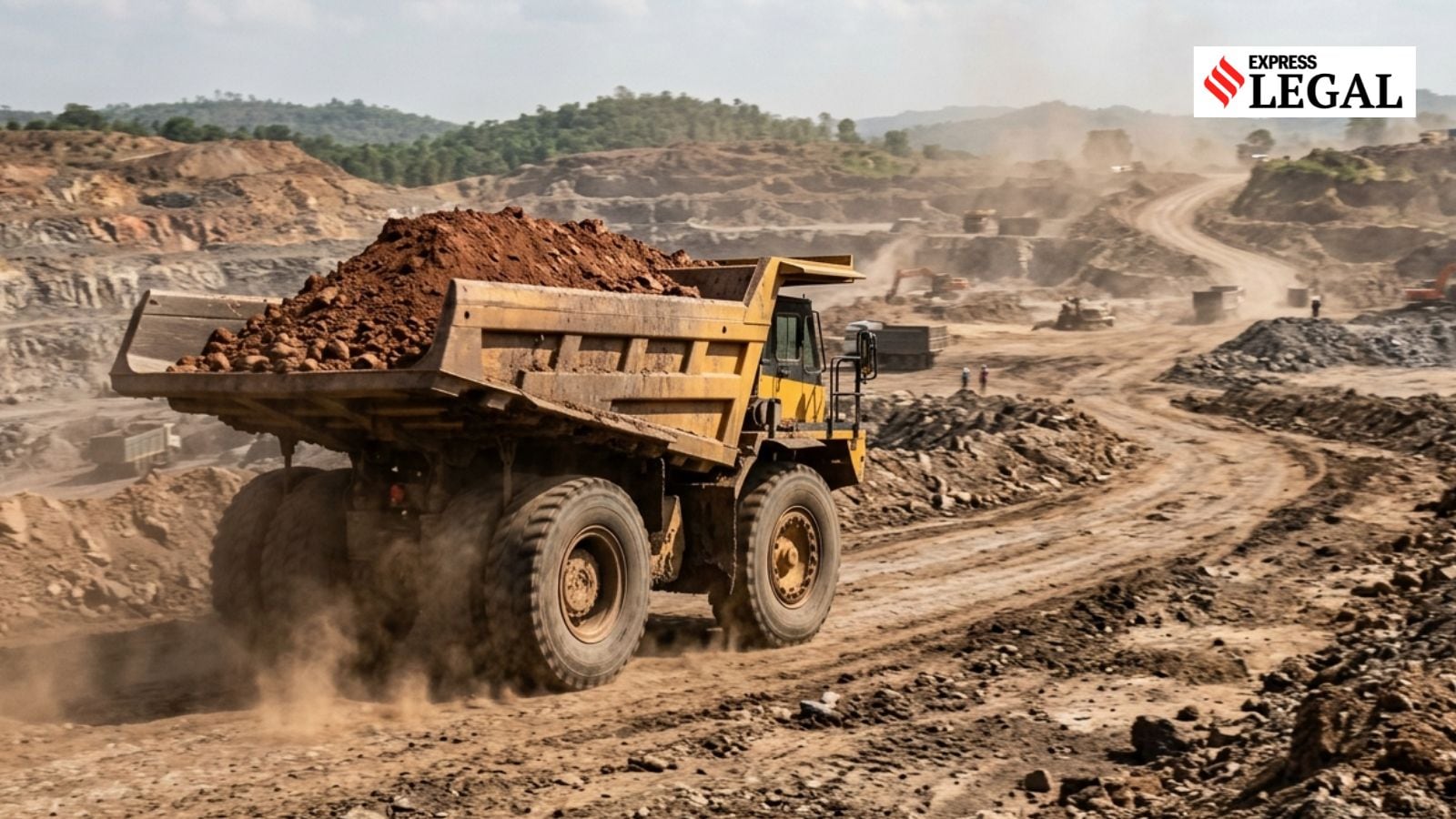
Sand mining was prohibited in the Chambal sanctuary in 2006 but illegal extraction has continued and flourished over the years under organised syndicates. The indiscriminate sand extraction has severely disrupted the Chambal’s riverine ecosystem, damaging aquatic habitats and threatening environmental flows, putting at risk the survival of endangered gharials, freshwater dolphins and turtles.
In 2012, an IPS officer was crushed to death by a tractor carrying illegally mined sand in Morena, Madhya Pradesh. The Court’s May 26 order referred to the killing of two forest guards this year alone – one again in Morena last month, and another in Dholpur, Rajasthan, this January – to emphasize what it called a “serious erosion of the rule of law” in the region.
At a hearing on May 14, the Supreme Court expressed concern that authorities appeared to prosecute only vehicle drivers, while failing to investigate the financiers, contractors, operators and masterminds controlling illegal mining syndicates. “Such a lackadaisical pattern of investigation… raises serious concerns regarding… possible connivance at various levels of the administrative and enforcement machinery.”
The Court stressed that environmental governance could not remain dependent on repeated judicial intervention and authorities must ensure “sustained and proactive enforcement” to curb illegal mining in the Chambal sanctuary landscape.
On forest personnel allegedly lacking adequate weapons to counter heavily armed mining mafias, the Court said: “The State cannot be permitted to plead helplessness.”
Story continues below this ad
‘Helplessness’
However, helplessness is what Madhya Pradesh effectively cited as long back as December 2021, when it proposed opening 292 hectares for mining across five stretches of the Chambal and its tributary Parvati rivers. The state argued that allowing regulated mining would free the Forest Department from devoting too much time, resources and efforts to fighting illegal extraction inside the sanctuary.
In 2022, the National Green Tribunal (NGT) accepted the findings of a committee constituted to prepare an action plan for the Chambal sanctuary that “mafias are using interior routes for conducting illegal mining in the national park, which are supported by political persons and are well equipped with weapons”.
In January 2023, Madhya Pradesh went ahead and denotified 207 hectares of the Chambal sanctuary. But, it failed to justify the decision before the NGT and had to withdraw it in February 2025.
Similarly, Rajasthan denotified 732 hectares of the Chambal sanctuary in December 2025 to facilitate mining and urbanisation projects. The Supreme Court stayed the notification last month.
Story continues below this ad
Importance of Chambal
Because of dark, foreboding myths around the Chambal – from a story linking its origins to a mountain of dripping leather, to the belief that Draupadi cursed its waters – the river, by all means mightier than the Yamuna, has remained one of India’s most pristine. No great cities or shrines came up on its banks, with the isolation later fostering the badland reputation of the Chambal ravines as a place where all manner of black sheep — rebel tribesmen and later bandits – found refuge.
The Chambal’s splendid isolation started to wane after people living in the arid districts of Rajasthan and Madhya Pradesh started moving into the region. By 1960, the first dam on the Chambal – Gandhi Sagar – was built on the Rajasthan-Madhya Pradesh border. In the next five decades, six major irrigation projects – Rana Pratap Sagar, Jawahar Sagar and Kota barrage, Parbati Pick-up Weir, Harish Chander Sagar and Gudha dam – 12 medium, 134 minor and several panchayat-level projects came up in the Chambal basin. There are many more in the pipeline while work continues on several dozen.
Sand mining is an additional challenge. Since there is still no technology to use desert sand for construction, the pressure is entirely on riverbanks, reservoirs, and coasts.
According to a rough estimate published in its Sand Mining Framework in 2018, the Ministry of Mines put India’s sand demand at around 700 million tonnes in financial year 2016-17, growing at 6-7% annually. For supply, the framework reported 229 million tonnes of river sand production and another 22 million tonnes manufactured from coal-mine overburden.
Story continues below this ad
Production data from four major sand-producing states – Uttarakhand, Maharashtra, Andhra Pradesh and Punjab – was not included in the 2018 framework. Even so, a supply gap of at least 40% underlines the scope for illegal mining.
However, sand is still the best insurance against coastal and riverbank erosion. And despite the threats to it, the Chambal still has the highest conservation value among rivers in the greater Gangetic basin. Its aquatic ecosystem and forest landscape support more than 550 species, it hosts the largest contiguous and most viable breeding populations of the critically endangered gharial and the red-crowned roofed turtle, and has one of the most important habitats of the Gangetic dolphin, Indian skimmer, black-bellied tern, sarus crane and a host of endangered turtle species.
Besides, the Chambal is a vital corridor for dispersal of wildlife in an otherwise fragmented forest landscape across more than a dozen national parks and sanctuaries, such as Ranthambore, Keladevi, Kuno-Palpur, Madhav and Darrah-Mukundra.